
Firearm storage is an important part of responsible firearm ownership. A firearm should never be left unsecured when it is not being used. Proper storage helps reduce the risk of unauthorized access, accidents, theft, and improper handling.
The right storage method depends on several factors, including where the firearm is kept, who has access to the property, how frequently it is used, and whether it is being stored at home or transported in a vehicle.
A good firearm storage plan should do more than simply hide a firearm from view. It should create a reliable barrier between the firearm and anyone who should not have access to it.
This guide explains common firearm storage options, important safety considerations, home and vehicle storage, ammunition storage, and practical ways to maintain a secure storage routine.
Firearm Storage Options for Different Lifestyles
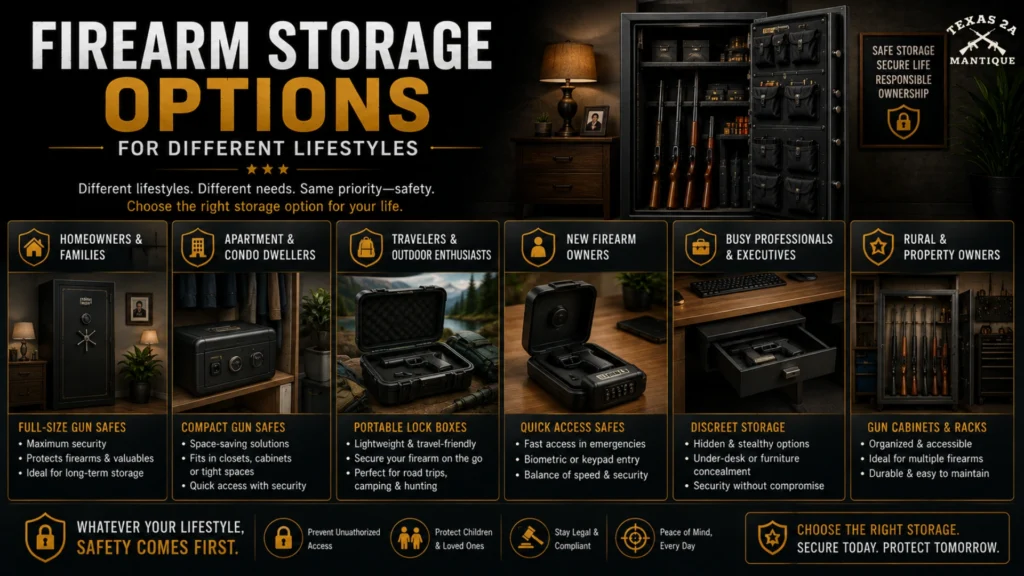
Every firearm owner has different storage requirements. Someone who owns one firearm and lives alone may have different needs from a household with children, several firearms, or frequent visitors.
For some owners, a compact lockable case may be sufficient for their particular situation. Others may prefer a larger safe that keeps several firearms together in one controlled location.
When considering firearm storage options, think about:
- The number of firearms that need to be stored
- Who lives in or regularly visits the home
- Whether children could be present
- How often the firearms are accessed
- Whether the firearm is stored permanently or transported
- The level of protection needed against unauthorized access
- Available storage space
- The security of the room or area where storage will be located
- Applicable firearm storage and transportation laws
Convenience also matters. A storage system that is difficult to use may eventually be ignored. The best firearm storage solution is one that provides an appropriate level of security and can realistically become part of your everyday routine.
Core Firearm Storage Safety Rules
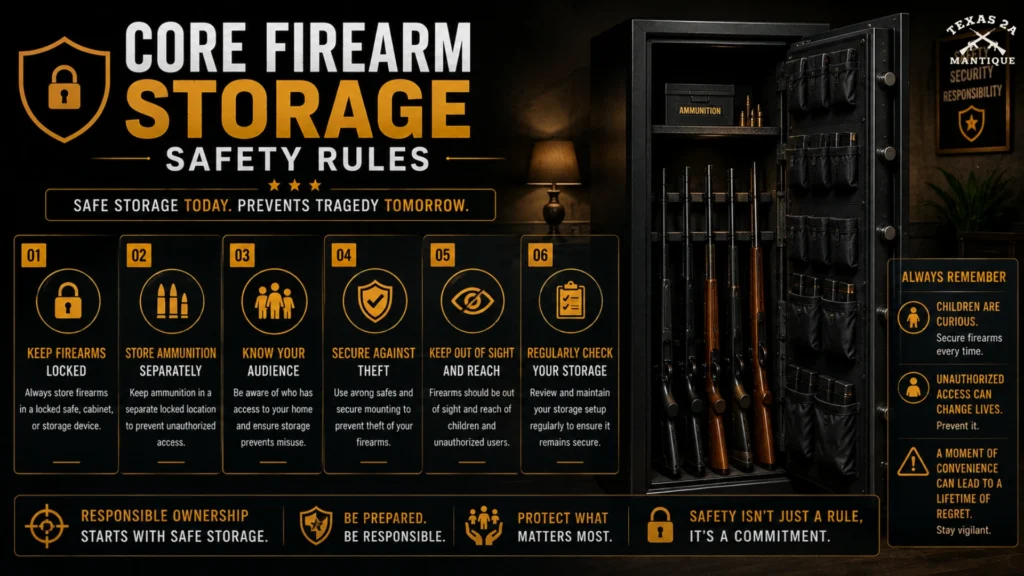
Good firearm storage starts with consistent habits.
When a firearm is not being used, keep it secured against unauthorized access. Do not rely on a hidden location, unlocked drawer, closet, or other ordinary household storage area.
Some basic principles include:
- Keep unauthorized people away from firearms. Access should be limited to people who are legally permitted and appropriately responsible for handling them.
- Use appropriate locking equipment. A firearm lock, lockable case, lock box, or safe can provide a physical barrier against unauthorized access.
- Follow the manufacturer’s instructions. Different firearms and storage products have different requirements. Always use compatible equipment and follow the instructions supplied with the product.
- Control keys and access codes. A locked container is only useful when unauthorized people cannot easily obtain the key, combination, code, or other means of opening it.
- Consider ammunition separately. Ammunition should also be stored responsibly and protected from unauthorized access.
- Check your storage regularly. Locks, electronic systems, mounting hardware, and other components should be inspected periodically.
- Know the law. Firearm storage requirements can differ between states and local jurisdictions. Always confirm the current requirements that apply to your situation.
How to Choose the Right Firearm Storage Option
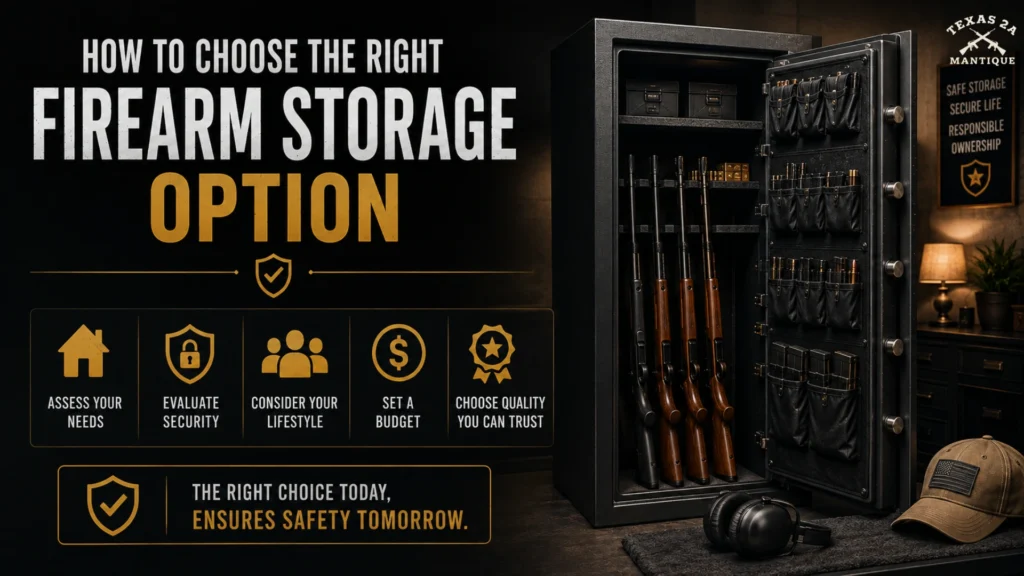
There are many types of firearm storage products available. Each serves a different purpose, and not every product provides the same level of protection.
Before choosing a storage solution, consider what you are trying to protect against.
For example, preventing accidental access by children may require a different solution from protecting several firearms against theft. Similarly, a storage solution for transportation may have different requirements from permanent home storage.
Look at the construction, locking system, capacity, portability, installation requirements, and intended use of the product before making a decision.
Cable Locks
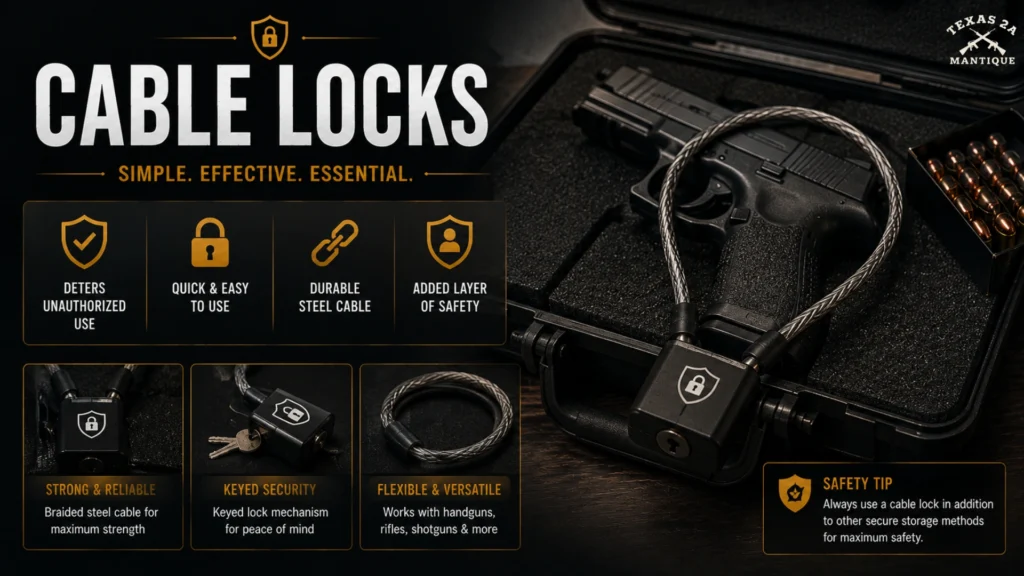
Cable locks are compact locking devices that can be used as an additional security measure for compatible firearms.
They are generally lightweight and easy to store or transport. Their portability makes them useful in situations where a larger storage container is not practical.
However, a cable lock is not the same as a heavy-duty safe. Consider the overall security requirements of the location where the firearm will be stored and use a storage method appropriate for the situation.
Always confirm that the lock is designed for the particular firearm and use it according to the manufacturer’s instructions.
Typical price range: Approximately $5–$50, depending on the brand, design, and locking mechanism.
Trigger Locks
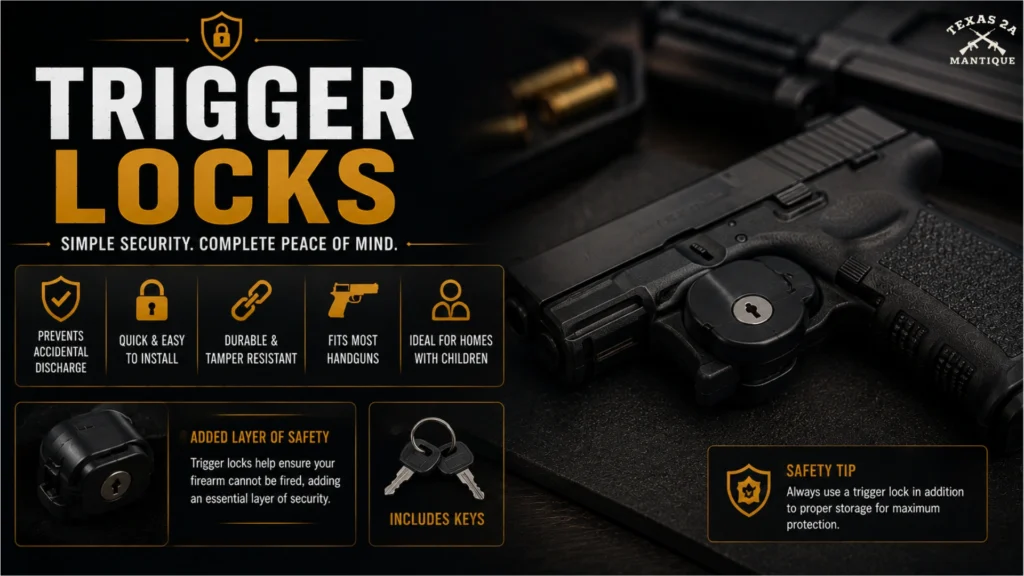
Trigger locks are designed to restrict access to the trigger area of a compatible firearm.
They can provide an additional layer of protection, but compatibility is important. A locking device should fit the firearm properly and should never interfere with safe handling or damage the firearm.
Trigger locks should be considered as part of an overall storage strategy rather than automatically assuming they are suitable for every storage situation.
Typical price range: Approximately $5–$75.
Lockable Gun Cases
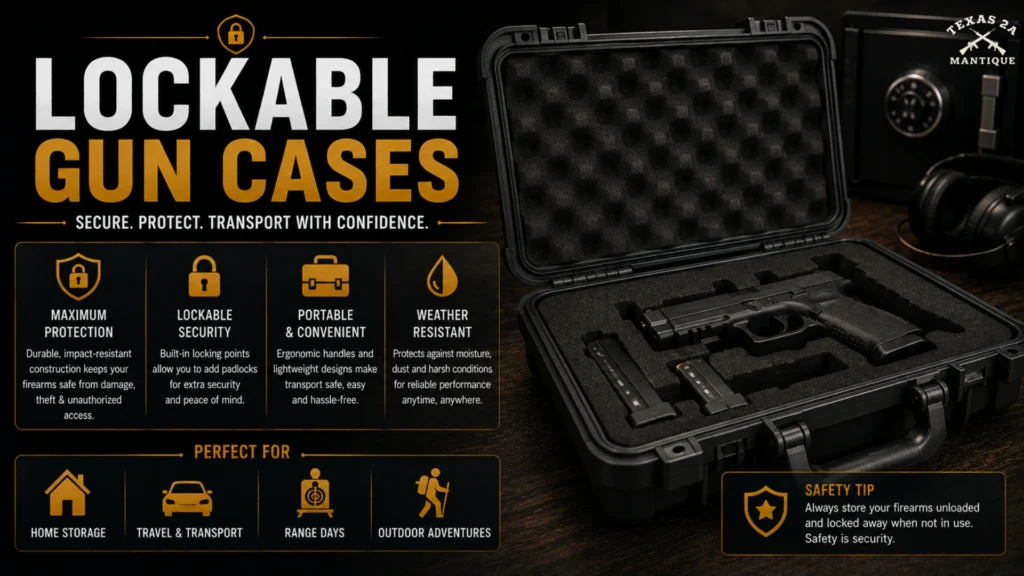
Lockable gun cases provide a practical option for both storage and transportation.
They are available in a variety of sizes and designs. Depending on the product, a case may offer protection from unauthorized access, impact, dust, and other environmental factors.
A lockable case can be especially useful for owners who need to transport a firearm while keeping it secured.
When selecting a case, consider its construction, locking points, size, portability, and compatibility with your firearm. Transportation laws should also be reviewed before traveling with a firearm.
Typical price range: Approximately $15–$150 or more, depending on size, construction, locking features, and materials.
Mechanical Lock Boxes
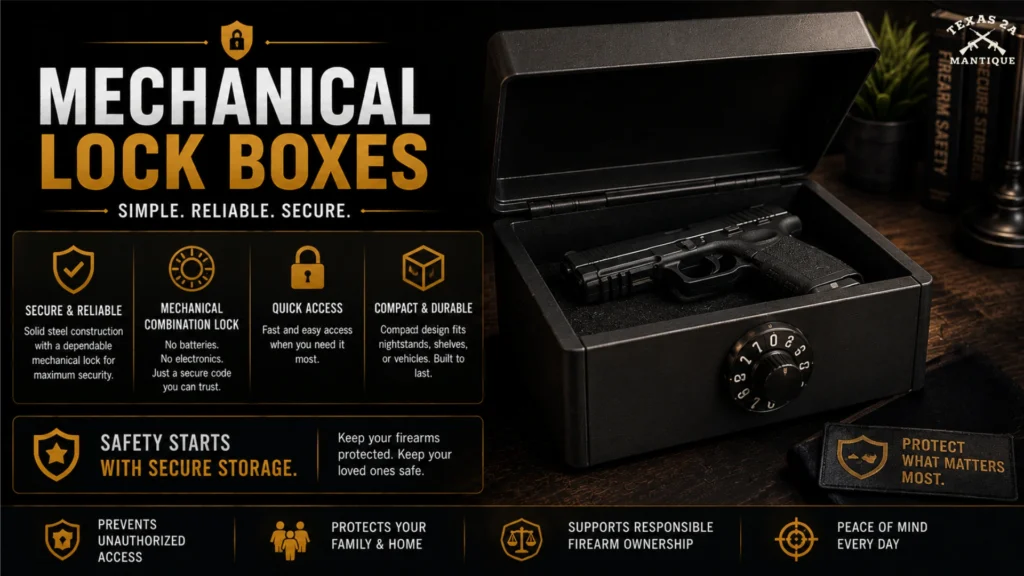
Mechanical lock boxes use a physical locking mechanism rather than an electronic keypad or biometric system.
They can be a straightforward choice for people who prefer a system that does not depend on batteries or electronic components.
When evaluating a mechanical lock box, pay attention to its construction and locking mechanism. Also consider where it will be placed and whether additional physical security is appropriate for the location.
Typical price range: Approximately $25–$350, depending on construction, size, locking mechanism, and security features.
Electronic Lock Boxes
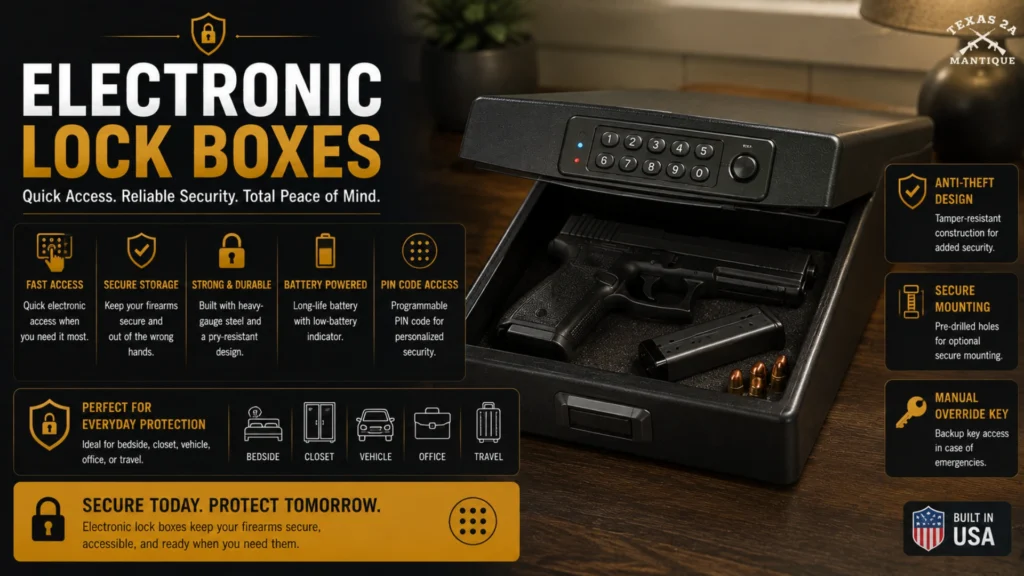
Electronic lock boxes use an electronic keypad or similar access system.
One advantage is that the owner does not necessarily need to carry a physical key. Depending on the design, electronic access can also make the storage process convenient for regular users.
However, electronic storage requires additional considerations. Owners should understand how the system behaves if the battery loses power and should know the manufacturer’s recommended backup-access procedure.
Regularly checking the electronic lock can help ensure that the storage system remains functional when needed.
Typical price range: Approximately $50–$350 or more.
Full-Size Gun Safes
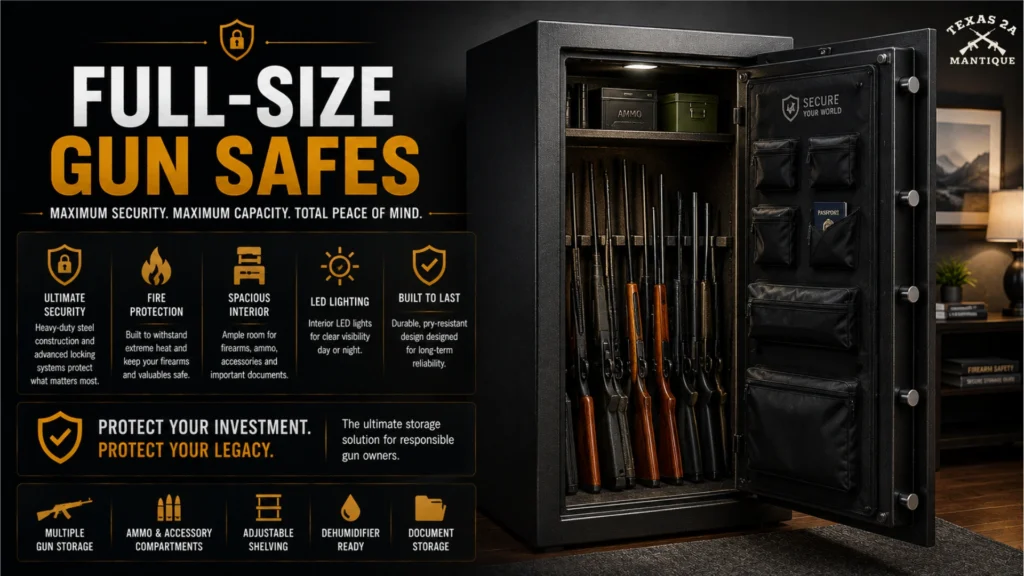
Full-size gun safes are designed for owners who want a larger, more permanent storage solution.
They can be useful when storing multiple firearms and may provide additional space for related equipment.
Typical price range: Approximately $150–$2,500 or more, depending on size, construction, locking system, capacity, and additional features.
Important considerations include:
- Overall construction
- Locking mechanism
- Internal capacity
- Placement
- Installation requirements
- Protection from unauthorized access
- Environmental conditions
- Future storage needs
A safe should be positioned in an appropriate location and installed according to the manufacturer’s instructions. Depending on the safe and the location, securing it properly may also help reduce the risk of unauthorized removal.
Biometric Gun Safes
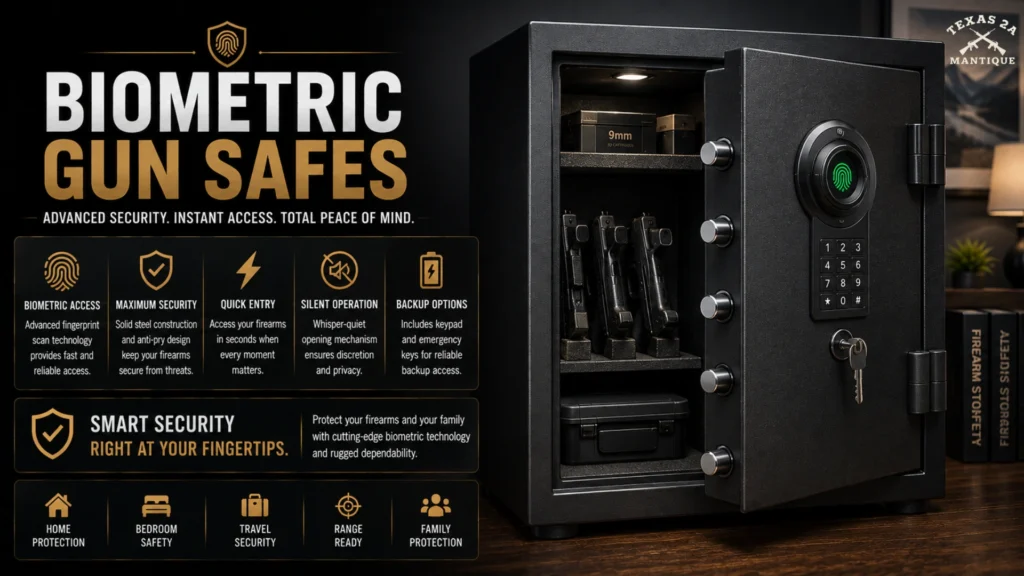
Biometric gun safes use a fingerprint or other biometric system as part of the access process.
They can provide convenience because the authorized user does not have to rely solely on a traditional key or combination.
However, biometric storage systems still require maintenance. Fingerprint recognition can be affected by the condition of the sensor, power supply, or other factors.
If you choose a biometric firearm storage solution, understand its backup access method and test the system periodically. Convenience should never come at the expense of reliable security.
Typical price range: Approximately $100–$1,500 or more, depending on size, construction, biometric technology, locking system, and additional features.
Secure Firearm Storage at Home
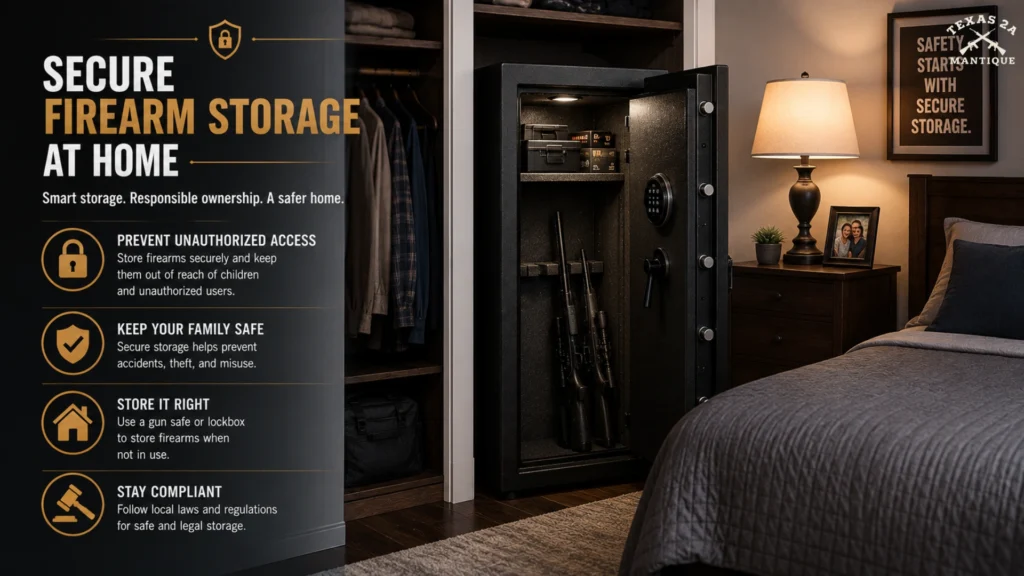
Home is where many firearms are stored for long periods, making a properly planned storage area important.
A firearm should not simply be placed in a drawer, closet, bedside table, or other location because it is out of sight. Someone who should not have access may still be able to find it.
Instead, choose a storage solution that creates a deliberate barrier between the firearm and unauthorized users.
Consider the people who may enter your home, including:
- Children
- Relatives
- Friends
- Guests
- Housekeepers
- Contractors
- Roommates
- Other visitors
Keys, combinations, and access codes should also be controlled carefully.
The location of the storage container matters as well. Choose a location that supports secure storage and follow the manufacturer’s recommendations for installation and use.
If your household circumstances change—for example, children begin visiting regularly or you move to a new home—review your firearm storage arrangement again.
Safe Firearm Storage in Vehicles
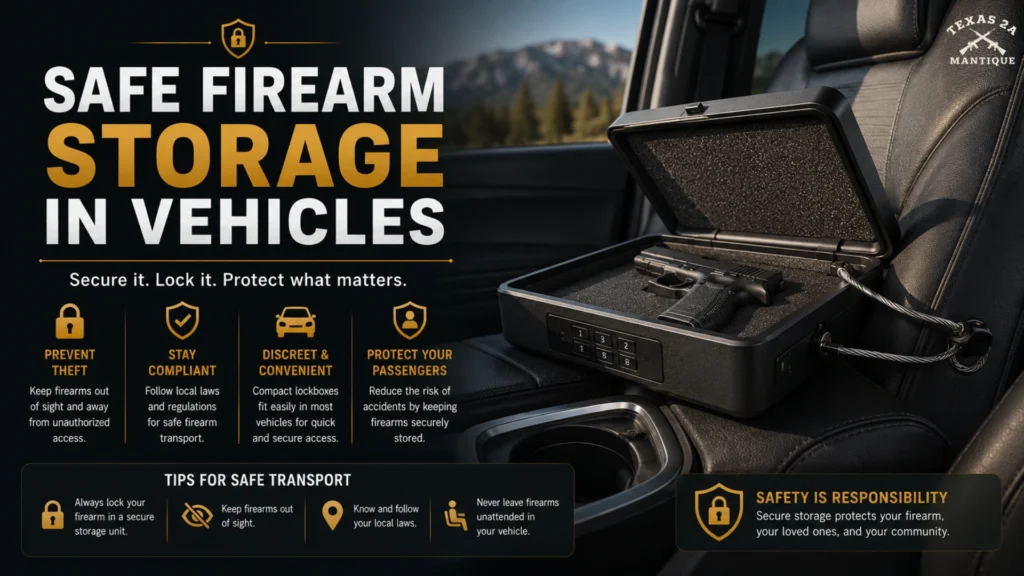
Storing a firearm in a vehicle requires additional consideration because vehicles can be targeted for theft.
A firearm should not simply be left visible on a seat or inside an unsecured compartment. Even when a vehicle has a locking glove compartment or center console, those areas may not provide the level of security required for the situation.
If a firearm must remain in a vehicle, use an appropriate lockable storage solution and keep it out of unnecessary view. Follow all applicable laws governing firearm transportation and vehicle storage.
Whenever practical, avoid leaving a firearm unattended in a vehicle for longer than necessary.
Vehicle storage should be treated as a temporary situation rather than a replacement for secure home storage.
Console Storage
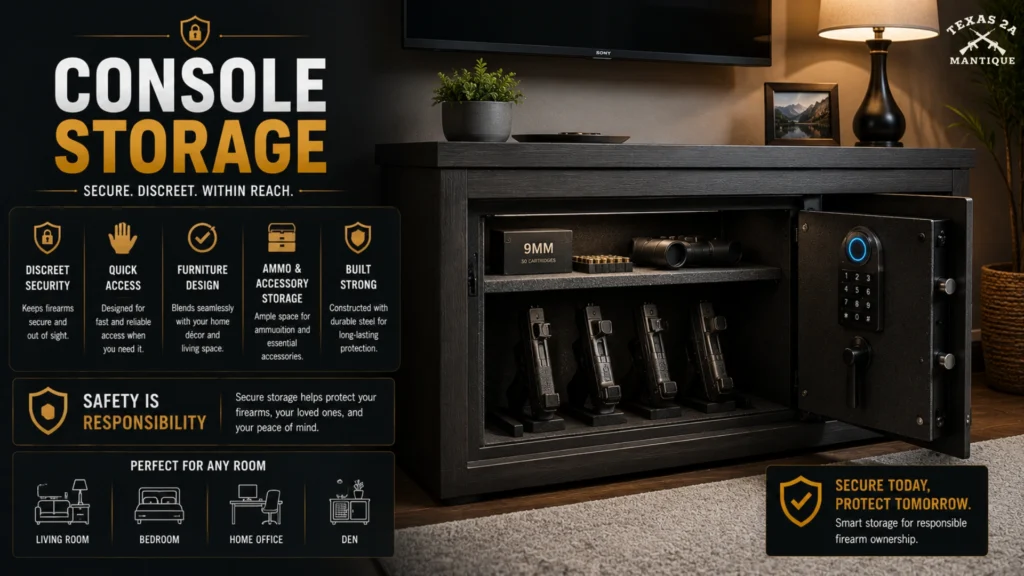
Vehicle console storage can appear convenient, but a standard center console is not automatically a dedicated firearm storage container.
Its locking mechanism and construction may provide limited protection against theft. If you use a purpose-built console storage product, review its security features and make sure it is suitable for the firearm and vehicle involved.
Cargo Area Storage
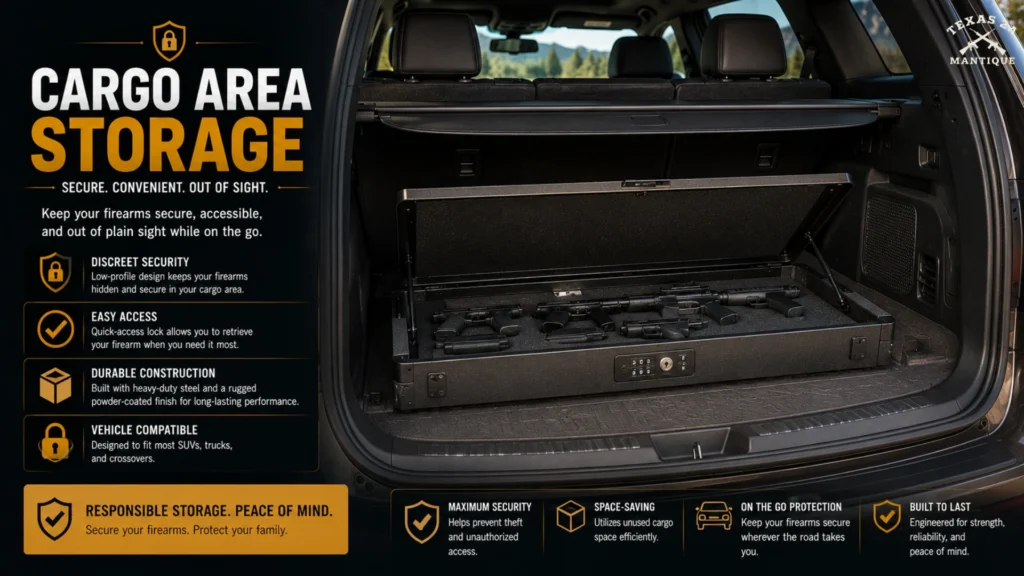
A cargo area or trunk can provide more concealed space than an open passenger compartment, but simply placing a firearm inside the cargo area does not make it secure.
A suitable lockable case or storage container can provide an additional layer of protection.
Consider how the container is secured, whether it can be easily removed, and whether the firearm remains protected from unauthorized access.
Most importantly, check the laws that apply to transporting and storing firearms in your vehicle.
Firearm Storage Safety Around Children
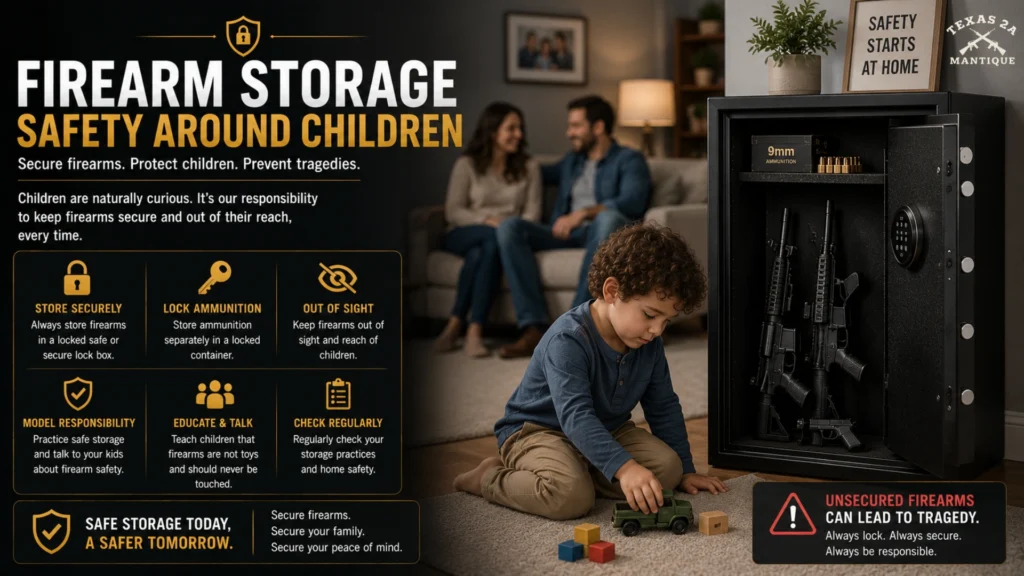
Children and firearms require particular attention.
A child may not understand the consequences of finding a firearm, which is why firearms should never be left where a child could reach or discover them.
Hiding a firearm is not a reliable storage method.
Use a suitable locking system or secure storage container and make sure children cannot access the keys, combinations, codes, or other access methods.
Education is also valuable. Children should be taught age-appropriate firearm safety principles, including that they should never touch a firearm they discover and should immediately tell a responsible adult.
However, education should never be considered a substitute for secure storage.
Adults remain responsible for ensuring that firearms are properly secured.
How to Choose the Best Firearm Storage Solution
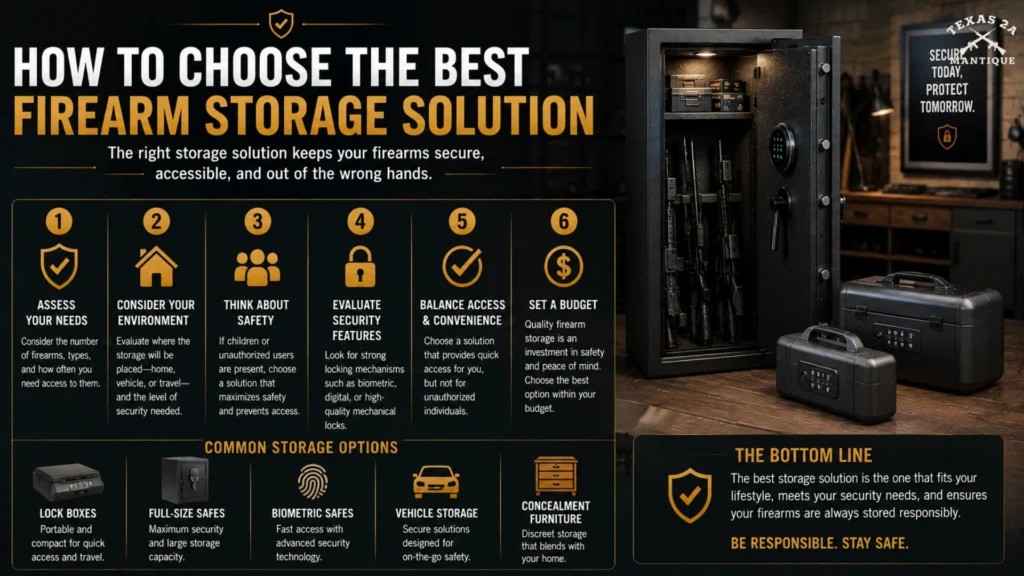
The best firearm storage solution is the one that appropriately matches your actual circumstances.
Start by identifying the main storage requirements.
- For one firearm: A suitable locking device or compact lockable container may meet your needs depending on the situation.
- For transportation: A lockable case designed for the intended firearm and transportation conditions may be more appropriate.
- For several firearms: A larger safe may provide better organization and centralized access control.
- For households with children: Strong access restrictions become especially important.
- For higher theft concerns: Consider a more substantial storage solution and appropriate installation.
- For frequent access: Choose a system that remains secure while fitting your lawful and responsible storage routine.
Before purchasing, compare the product’s construction, locking method, capacity, placement requirements, and maintenance needs.
Do not select a storage product solely because it is inexpensive or convenient. Consider the actual risks present in your environment.
Make Sure Your Firearms Are Secure
Effective firearm storage is about creating a consistent system that prevents unauthorized access.
A firearm should not be considered secure simply because it is hidden. Secure storage involves the appropriate combination of a suitable storage product, controlled access, responsible handling, and regular checks.
Keep your keys and access information protected. Make sure storage equipment remains functional. Pay attention to children and visitors. Consider both firearm and ammunition storage. For vehicles, use additional precautions because theft is a particular concern.
Most importantly, make secure storage part of your normal routine.
Responsible firearm ownership does not end when a firearm is purchased. It includes how that firearm is handled, transported, maintained, and stored when it is not in use.
Final Thoughts on Safe Firearm Storage
Choosing the right firearm storage solution is an important part of responsible firearm ownership. There is no single storage option that works for every person or household. Cable locks, trigger locks, lockable cases, mechanical lock boxes, electronic lock boxes, full-size safes, and biometric safes can each serve different storage needs.
The key is to choose a solution that fits your circumstances and helps prevent unauthorized access. Consider who may enter your home, whether children are present, how frequently the firearm is accessed, whether transportation is involved, how ammunition will be stored, and what level of physical security is appropriate.
At Texas 2A Mantique, we believe responsible firearm ownership includes more than choosing the right firearm. It also means understanding safe handling, responsible storage, and the importance of keeping firearms away from unauthorized users.

Leave a Reply