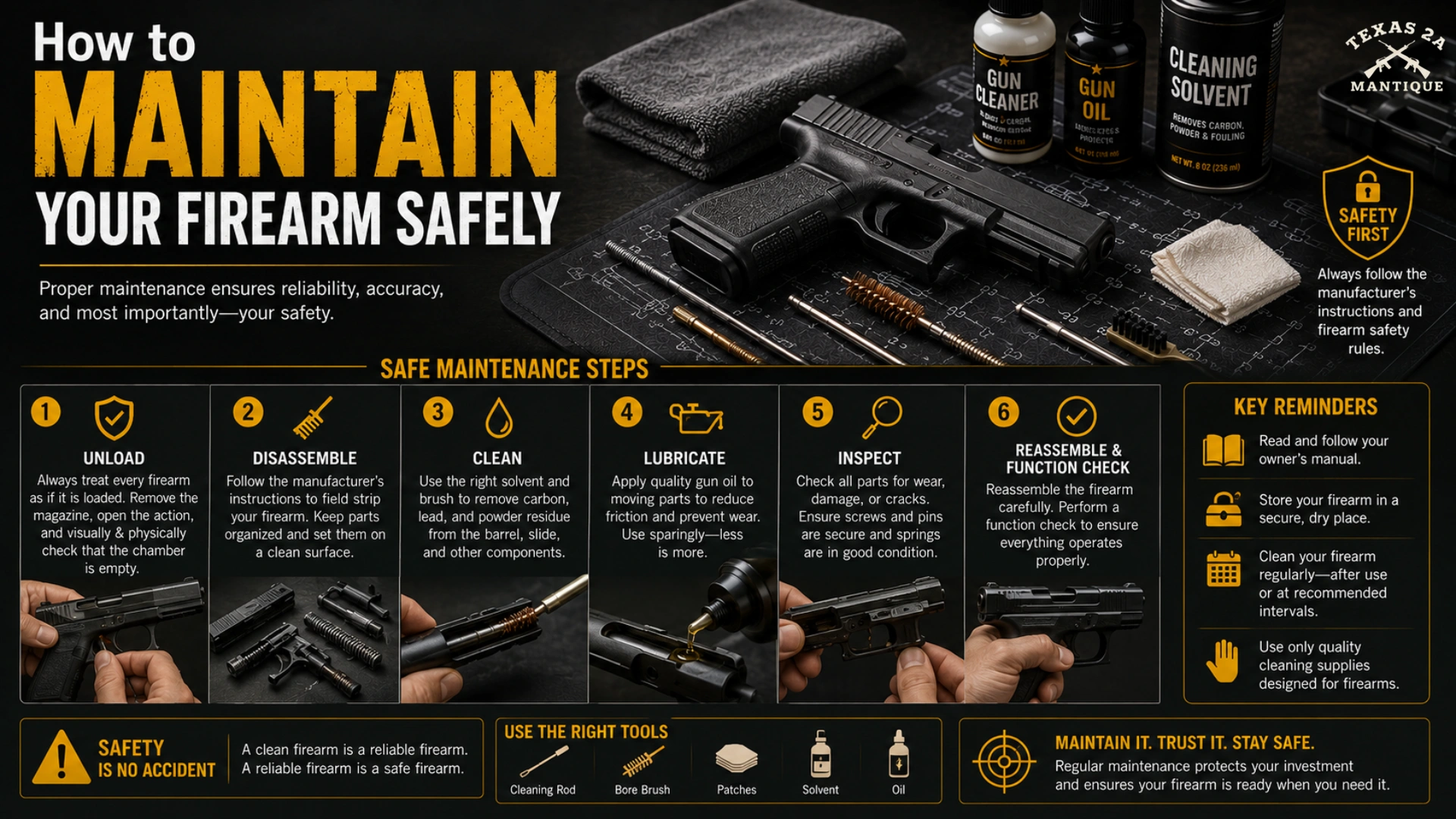
Proper firearm maintenance is an important part of responsible firearm ownership. Regular care can help keep a firearm clean, protect it from corrosion, and allow potential problems to be identified before they become more serious.
However, firearm maintenance should always be approached with safety first. Before cleaning, inspecting, or handling a firearm, follow the manufacturer’s instructions and applicable local laws. Always treat the firearm as if it is loaded and verify that it is unloaded before beginning maintenance.
This guide explains the basics of firearm maintenance in simple terms, including cleaning, lubrication, inspection, storage, and when professional service may be appropriate.
Why Is Firearm Maintenance Important?
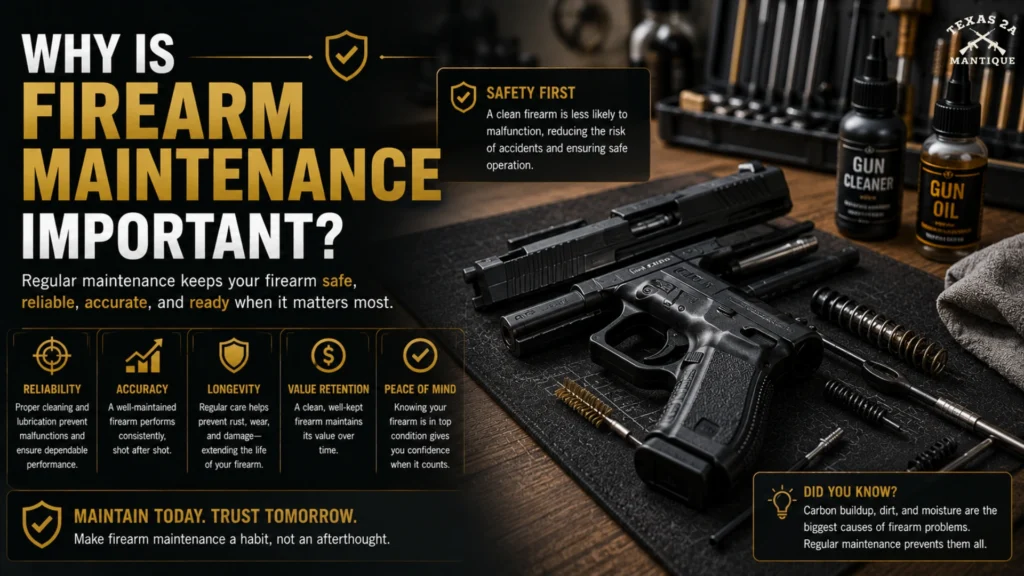
A firearm is a mechanical device made up of multiple components that must work correctly together. Regular maintenance helps protect these components from dirt, residue, moisture, and corrosion.
Some key benefits of regular maintenance include:
- Helps prevent corrosion: Moisture and residue can cause metal surfaces to corrode over time.
- Supports reliable operation: Keeping the firearm clean and properly maintained can help reduce problems caused by accumulated residue or dirt.
- Makes problems easier to identify: Regular inspection can reveal visible damage, excessive wear, rust, or other concerns.
- Protects the firearm: Proper care can help preserve the condition and value of the firearm.
- Encourages responsible ownership: Regular maintenance creates an opportunity to check the firearm’s condition and storage practices.
Maintenance does not replace safe handling. A properly maintained firearm still needs to be handled and stored responsibly.
How Often Should You Maintain Your Firearm?
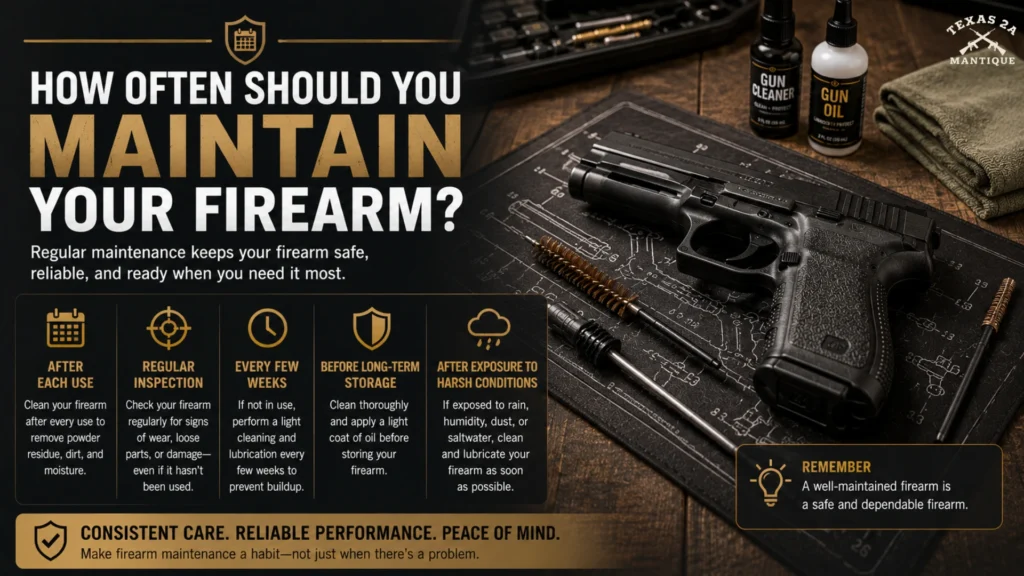
There is no single maintenance schedule that applies to every firearm. The appropriate frequency depends on the firearm, how often it is used, the environment, and the manufacturer’s recommendations.
As a general approach:
After use:
Clean and inspect the firearm according to the manufacturer’s instructions, particularly after range use, hunting, or exposure to dirt, moisture, or other environmental conditions.
During regular storage:
Periodically check the firearm for signs of moisture, rust, or other visible problems.
After exposure to moisture:
Pay particular attention to drying and corrosion prevention. Do not put a wet firearm directly into long-term storage.
For heavily used firearms:
More frequent inspection and professional servicing may be appropriate.
Always give priority to the owner’s manual because different firearm designs can have different maintenance requirements. NSSF also recommends following the manufacturer’s guidance for periodic inspection, adjustment, and service.
What Do You Need for Firearm Maintenance?
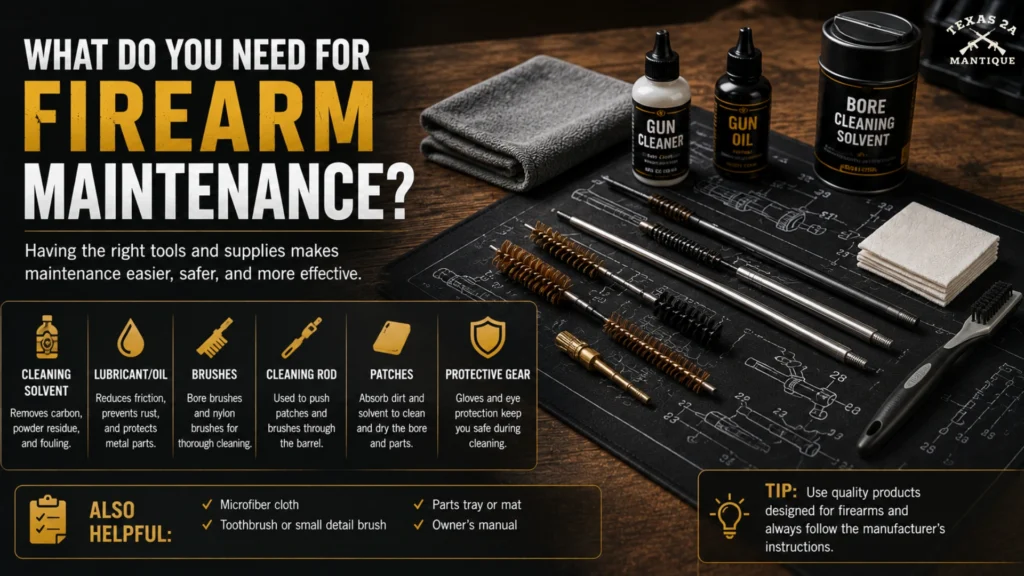
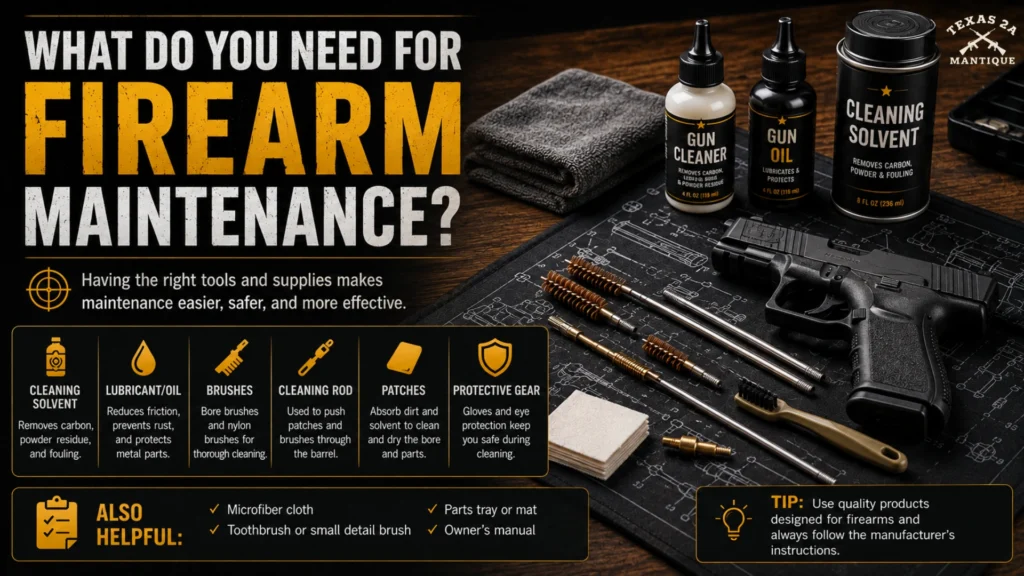
The exact supplies required depend on the firearm. Use products and tools recommended by the manufacturer rather than assuming that one maintenance method works for every model.
Common maintenance supplies may include:
- A suitable firearm cleaning kit
- Manufacturer-approved cleaning solvent
- Appropriate firearm lubricant
- Cleaning patches or cloths
- Suitable brushes
- A soft, clean cloth
- A well-ventilated and suitable work area
- The firearm’s owner’s manual
- Appropriate eye protection
Keep ammunition away from the cleaning area. Cleaning products and lubricants should also be kept away from ammunition.
If you are unsure which products or tools are suitable for your firearm, check the owner’s manual or contact the manufacturer.
How to Maintain Your Firearm Safely
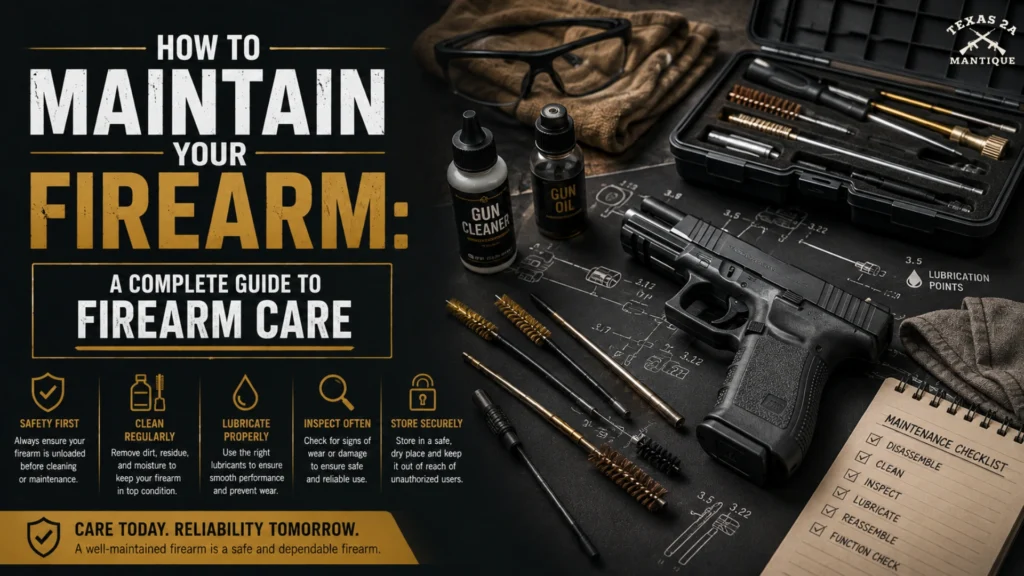
Safety should always come before cleaning or maintenance.
Before starting, make sure you are working in an appropriate location and that no ammunition is present in the immediate cleaning area.
Follow these basic safety principles:
1. Treat Every Firearm as Loaded
Even when you believe a firearm is unloaded, handle it as though it could fire. Never rely only on memory or someone else’s statement that it is unloaded.
2. Keep the Muzzle Pointed in a Safe Direction
Maintain control of the firearm and keep the muzzle pointed in a direction where an accidental discharge would be least likely to cause injury or damage.
3. Keep Your Finger Away From the Trigger
Keep your finger outside the trigger guard while handling, unloading, or cleaning the firearm.
4. Verify That It Is Unloaded
Remove the ammunition source, open the action as appropriate for the firearm, and visually and physically verify the chamber and relevant areas are clear. ATF specifically recommends visual and physical confirmation when clearing a firearm.
5. Follow the Owner’s Manual
Firearms differ in design and maintenance requirements. Do not disassemble components unless the manufacturer says they can be removed and you understand the correct procedure.
If you are uncertain about a maintenance step, stop and seek qualified assistance.
How to Clean Your Firearm
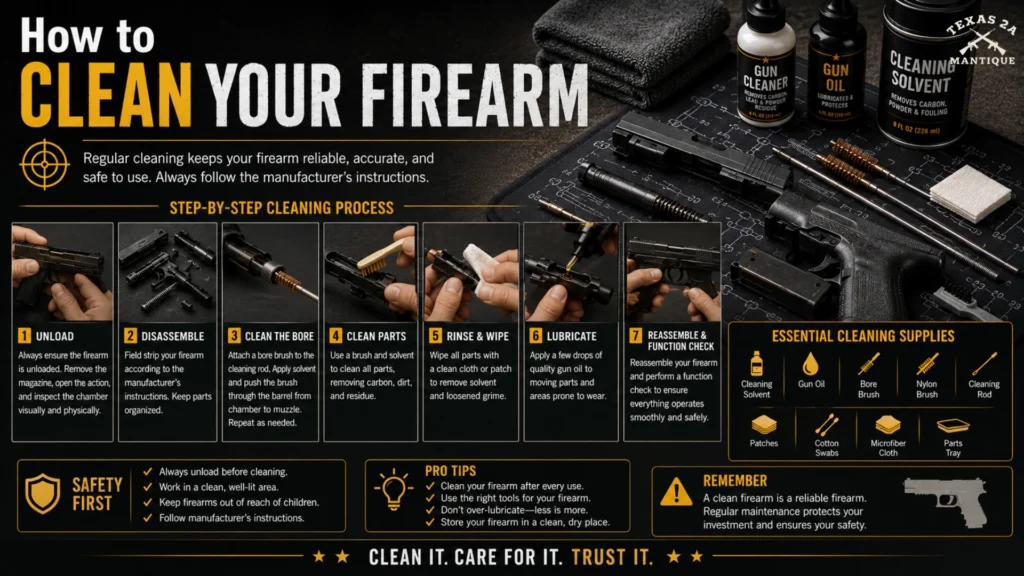
Cleaning should be performed according to the firearm manufacturer’s instructions. The exact procedure can vary significantly between firearm types and models.
A safe, general approach is:
Step 1: Prepare a Safe Work Area
Choose a clean, stable, well-ventilated area away from ammunition. Keep children and unauthorized people away from the work area.
Step 2: Confirm the Firearm Is Unloaded
Before cleaning, carefully verify that the firearm is unloaded. Do not assume it is empty because it was previously stored or because another person checked it.
Step 3: Follow the Manufacturer’s Disassembly Instructions
Only disassemble the firearm as far as the owner’s manual permits for routine maintenance. Avoid forcing parts apart or attempting unfamiliar repairs.
Step 4: Remove Dirt and Residue
Use the cleaning products and tools recommended for the firearm. Clean appropriate surfaces carefully and avoid using excessive force.
Step 5: Inspect During Cleaning
Cleaning provides a good opportunity to look for visible rust, unusual marks, damaged parts, or other conditions that may require professional attention.
Step 6: Wipe and Dry Appropriate Surfaces
Remove excess cleaning product and moisture according to the manufacturer’s recommendations.
Step 7: Reassemble Correctly
If the manufacturer’s instructions require reassembly after cleaning, follow them carefully. Do not improvise if a component does not fit or operate as expected.
If something seems damaged, unusual, or difficult to reassemble, stop and consult a qualified gunsmith or the manufacturer.
How to Lubricate Your Firearm Properly
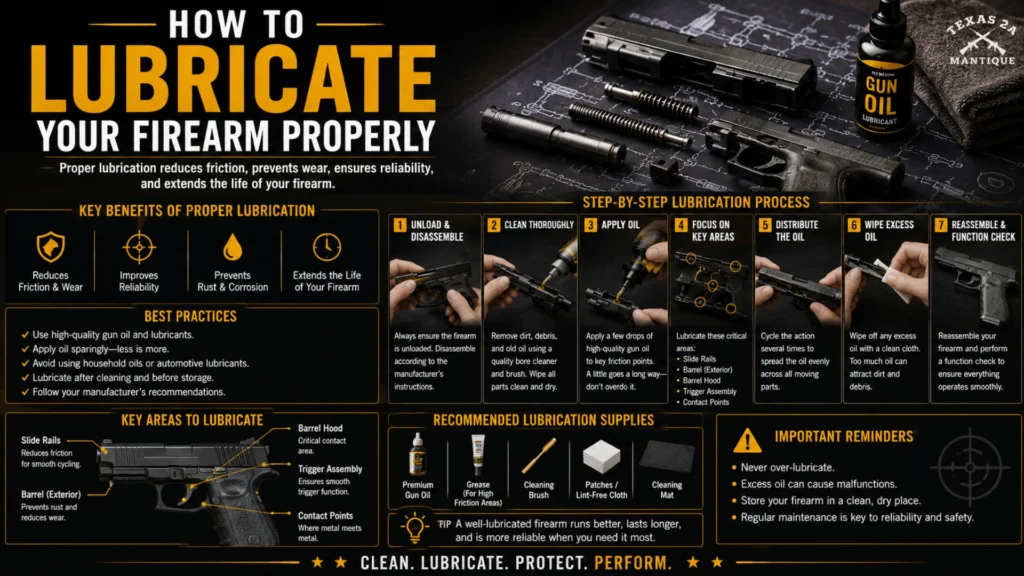
Lubrication helps protect appropriate moving and metal surfaces, but more lubricant is not necessarily better.
Use only a lubricant recommended or approved for the firearm.
Keep these principles in mind:
- Apply lubricant only where the manufacturer recommends it.
- Use a small amount rather than soaking components.
- Wipe away excess lubricant.
- Keep lubricant away from ammunition.
- Avoid allowing oil or solvent to accumulate in areas where it could interfere with reliable operation.
- Follow the owner’s manual for lubrication points and frequency.
NSSF warns against spraying oil or solvents on ammunition and notes that excessive lubrication can create firearm-performance and safety concerns.
When in doubt, follow the manufacturer’s specific lubrication instructions.
How to Inspect Your Firearm for Wear or Damage
Regular inspection can help identify problems before the firearm is used again.
Look for visible signs such as:
- Rust or corrosion
- Cracks or unusual damage
- Loose or damaged components
- Excessive wear
- Damaged sights or other accessories
- Unusual marks or deformation
- Parts that do not appear to operate normally
- Any condition that is different from the firearm’s normal appearance
Do not attempt to repair or modify a firearm if you are not qualified to do so.
Firearms are complex mechanical devices, and unqualified modifications or repairs can create serious safety risks. NSSF recommends regular inspection and professional service when appropriate.
If you discover a serious problem, stop using the firearm and consult the manufacturer or a qualified gunsmith.
How to Store Your Firearm Properly
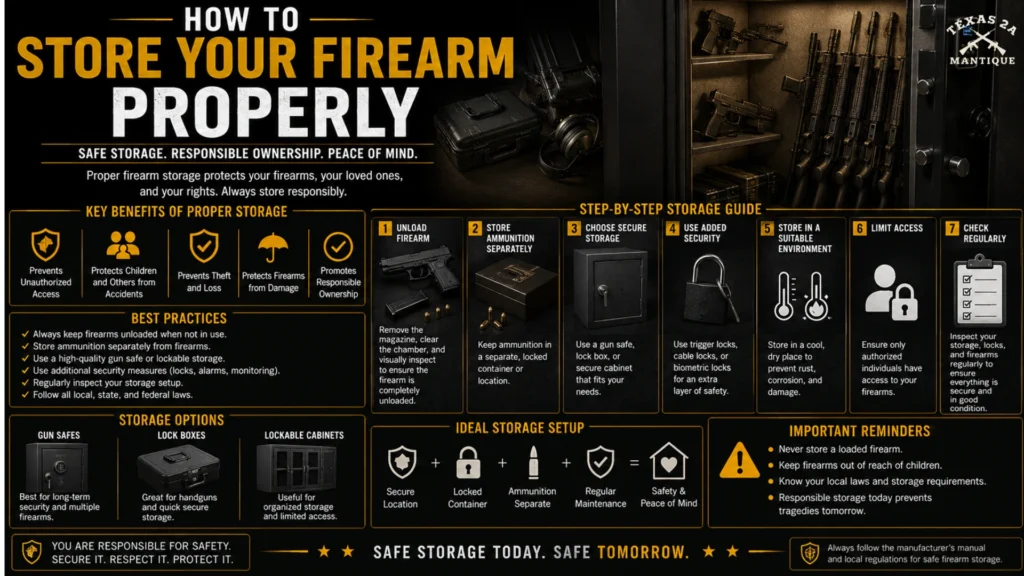
Proper storage is an important part of firearm care and safety.
When a firearm is not being used, it should be stored securely and in accordance with applicable laws and manufacturer recommendations.
Important storage practices include:
- Store the firearm in a secure location.
- Use an appropriate locking device, safe, vault, or locked storage container.
- Prevent access by children and unauthorized people.
- Store ammunition securely and separately where appropriate.
- Keep the firearm clean and dry before long-term storage.
- Check stored firearms periodically for signs of moisture or corrosion.
- Keep keys, combinations, or access information secure.
ATF recommends keeping firearms secured from unauthorized access and keeping ammunition locked separately from firearms.
NSSF similarly recommends storing unloaded firearms in a locked cabinet, safe, vault, or suitable storage case and keeping ammunition locked separately.
Storage laws vary by location, so always check the laws that apply where you live.
Common Firearm Maintenance Mistakes to Avoid
Even simple maintenance can become unsafe when basic precautions are ignored.
Here are some common mistakes to avoid:
- Cleaning Without Confirming the Firearm Is Unloaded: Never begin maintenance based on an assumption. Always verify that the firearm is unloaded.
- Using the Wrong Cleaning Products: Not every solvent, brush, or lubricant is suitable for every firearm. Use products recommended by the manufacturer.
- Using Too Much Lubricant: Excess oil can collect dirt and may create problems. Follow the manufacturer’s recommendations instead of applying large amounts.
- Ignoring Signs of Damage: Rust, cracks, unusual wear, or other visible problems should not be ignored.
- Over-Disassembling the Firearm: Routine cleaning does not necessarily require complete disassembly. Follow the owner’s manual and avoid removing components that you are not qualified to service.
- Attempting Unqualified Repairs: Do not modify or repair critical firearm components unless you are properly qualified. NSSF advises against unqualified modifications and recommends professional service when needed.
- Storing the Firearm While Wet or Dirty: Moisture and residue can contribute to corrosion. Clean and dry the firearm according to the manufacturer’s instructions before storage.
- Forgetting About the Storage Environment: A clean firearm can still develop corrosion if it is stored in a damp environment. Consider the humidity and conditions of the storage area.
When Should You Get Professional Firearm Maintenance?
Some maintenance tasks are better handled by a qualified gunsmith or authorized service professional.
Consider professional service if:
- You find cracks, significant corrosion, or damaged components.
- The firearm does not operate as expected.
- A component appears loose or broken.
- You are unsure how to disassemble or reassemble the firearm.
- You believe an internal component needs repair or replacement.
- The firearm has been involved in an accident or has suffered significant impact.
- You are considering a modification that could affect its operation or safety.
- The manufacturer recommends periodic professional servicing.
Do not try to solve an unfamiliar mechanical problem through trial and error. When safety is uncertain, stop using the firearm and contact the manufacturer or a qualified professional.
Final Thoughts on How to Maintain Your Firearm
Proper firearm maintenance is an important part of responsible firearm ownership. It is not only about keeping your firearm clean and in good condition, but also about regular inspection, safe handling, proper storage, and following the manufacturer’s recommendations.
At Texas 2A Mantique, responsible firearm care starts with putting safety first. Always make sure the firearm is unloaded before performing maintenance, use the appropriate cleaning and maintenance products, check for signs of wear or damage, and store your firearm securely when it is not in use.
Every firearm is different, so always refer to the owner’s manual for model-specific maintenance instructions. If you are unsure about cleaning , disassembly, repairs, or any other maintenance procedure, it is best to stop and consult the manufacturer or a qualified professional.
Regular maintenance, combined with safe handling and secure storage, can help keep your firearm in proper condition while supporting responsible firearm ownership. For more information and firearm-related products, visit Texas 2A Mantique at https://texas2amantique.com/.


Leave a Reply