
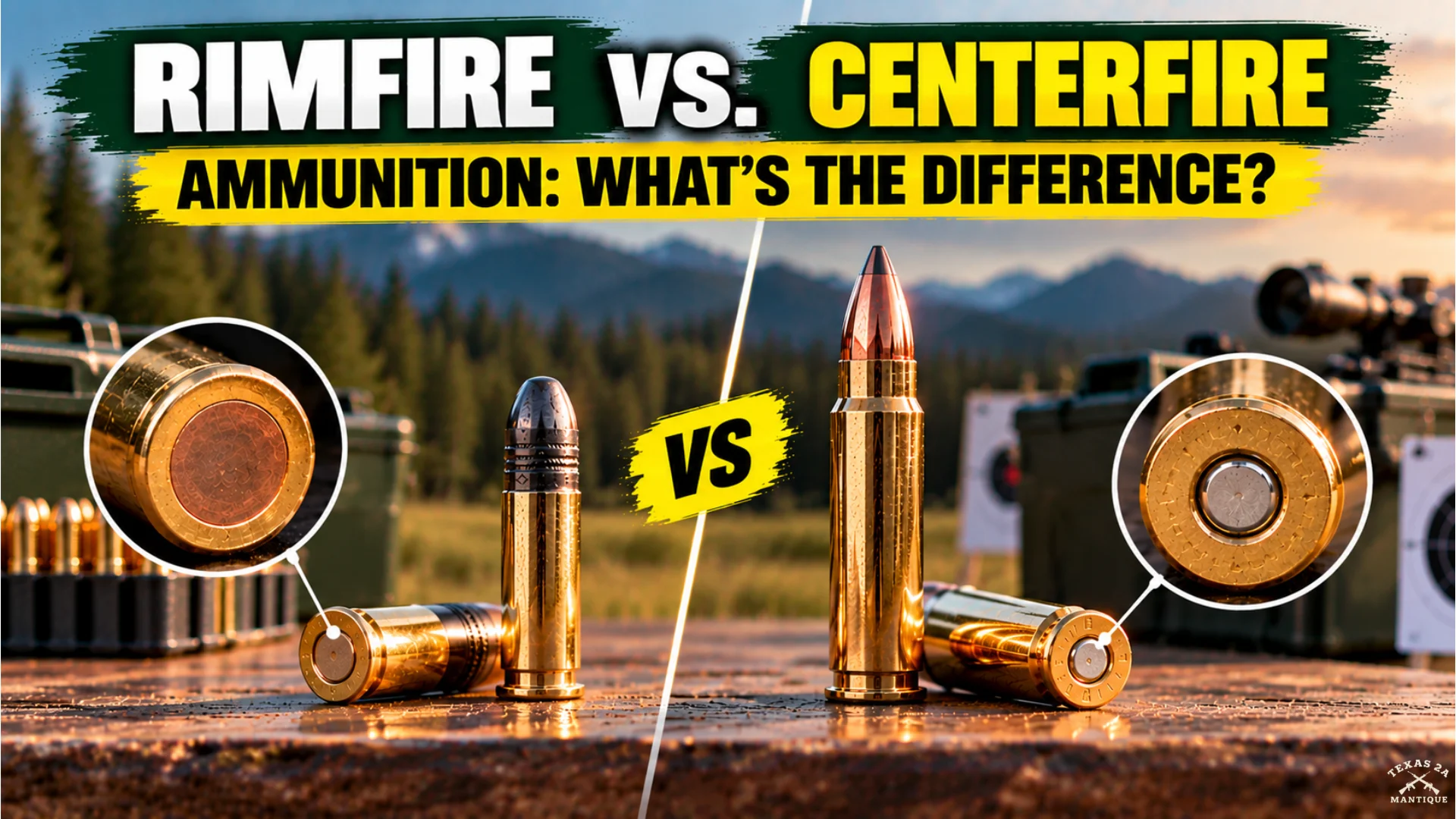
If you are new to firearms or ammunition, you may have come across two common terms: rimfire and centerfire.
Both types of ammunition are designed to fire a bullet, but they use different primer designs. This small difference affects how the ammunition is made, how much pressure it can handle, its cost, recoil, reliability, and common uses.
The good news is that the basic difference is easy to understand.
Rimfire ammunition has the priming compound inside the rim of the cartridge. It is generally inexpensive, produces relatively low recoil, and is commonly used for training, target shooting, plinking, and some small-game applications.
Centerfire ammunition has a separate primer located in the center of the cartridge case. It can handle higher pressures and is available in a wide range of calibers for applications such as hunting, competition, and defensive use.
The biggest difference is simple:
Rimfire = primer in the rim.
Centerfire = primer in the center.
Rimfire vs. Centerfire: At a Glance
| Feature | Rimfire | Centerfire |
|---|---|---|
| Primer location | Inside the rim | In the center of the case |
| Case design | Relatively thin | Stronger and thicker |
| Typical pressure | Lower | Moderate to very high |
| Cost | Generally lower | Generally higher |
| Recoil | Usually mild | Can range from mild to heavy |
| Reliability | Generally lower | Generally higher |
| Reloadable | Not practically | Yes, in many cases |
| Common examples | .22 LR, .22 WMR, .17 HMR | 9mm, .45 ACP, .223, .308 |
| Common uses | Training, targets, plinking, small game | Defense, hunting, competition, longer-range shooting |
What Is Rimfire Ammunition?
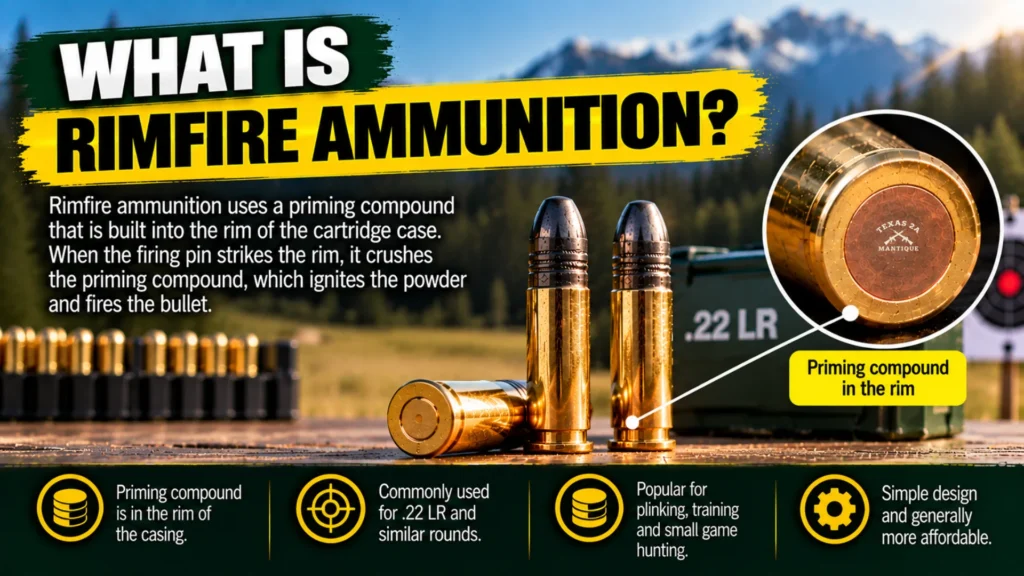
Rimfire ammunition gets its name from the way its primer is positioned.
Instead of having a separate primer in the center of the cartridge case, the priming compound is located inside the rim at the base of the case.
When the firearm’s firing pin strikes the rim, the impact ignites the priming compound. This starts the process that ignites the powder and propels the bullet from the barrel.
Because the rim must be able to respond to the firing pin’s impact, rimfire cases are generally made with thinner walls than centerfire cases. This limits the amount of pressure they can safely handle.
Common Rimfire Calibers
Some well-known rimfire cartridges include:
- .22 LR: A widely used rimfire cartridge known for low cost and mild recoil.
- .22 WMR: Also called .22 Magnum, it provides more velocity and power than .22 LR.
- .17 HMR: Known for its relatively flat trajectory and use at longer distances than many traditional rimfire cartridges.
- .17 HM2: A smaller rimfire cartridge used in some firearms designed for compatible ammunition.
Why Do People Choose Rimfire?
Rimfire ammunition is popular for several reasons:
- Lower cost: It is generally less expensive than many centerfire cartridges.
- Mild recoil: The lower recoil can make shooting more comfortable.
- Easy practice: The lower cost makes frequent practice more accessible.
- Target shooting: Rimfire cartridges are commonly used for recreational and target shooting.
- Small-game applications: Certain rimfire cartridges can be suitable for small game where permitted by local regulations.
Limitations of Rimfire Ammunition
Rimfire ammunition also has some limitations:
- It generally operates at lower pressures than centerfire ammunition.
- Some lower-cost rimfire ammunition can have a higher chance of misfires.
- Fired rimfire cases are not practically reloadable.
- Rimfire cartridges are generally not suitable for larger-game applications.
What Is Centerfire Ammunition?
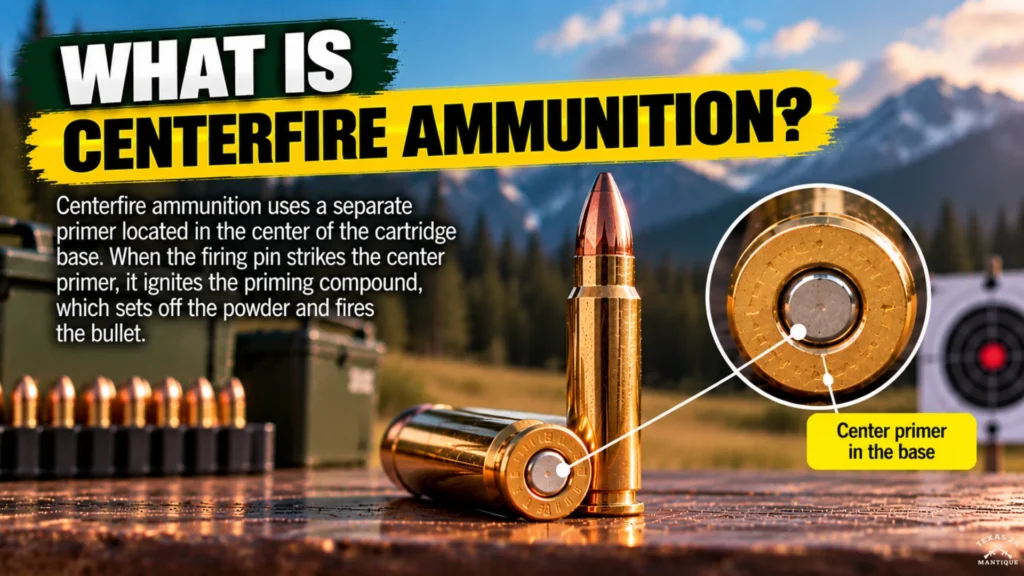
Centerfire ammunition uses a different primer design.
A centerfire cartridge has a separate primer located in the center of the case base. When the firing pin strikes this primer, it ignites the powder inside the cartridge.
Because the primer is a separate component, the cartridge case can be designed with stronger walls. This allows centerfire ammunition to handle substantially higher pressures than typical rimfire ammunition.
That greater pressure capability allows manufacturers to produce cartridges with a wide range of performance characteristics.
Common Centerfire Calibers
Centerfire ammunition is available in many handgun and rifle calibers.
Handgun examples
- 9mm
- .380 ACP
- .38 Special
- .357 Magnum
- .45 ACP
Rifle examples
- .223 Remington
- 5.56 NATO
- .30-30
- .308 Winchester
- .30-06
Why Do People Choose Centerfire?
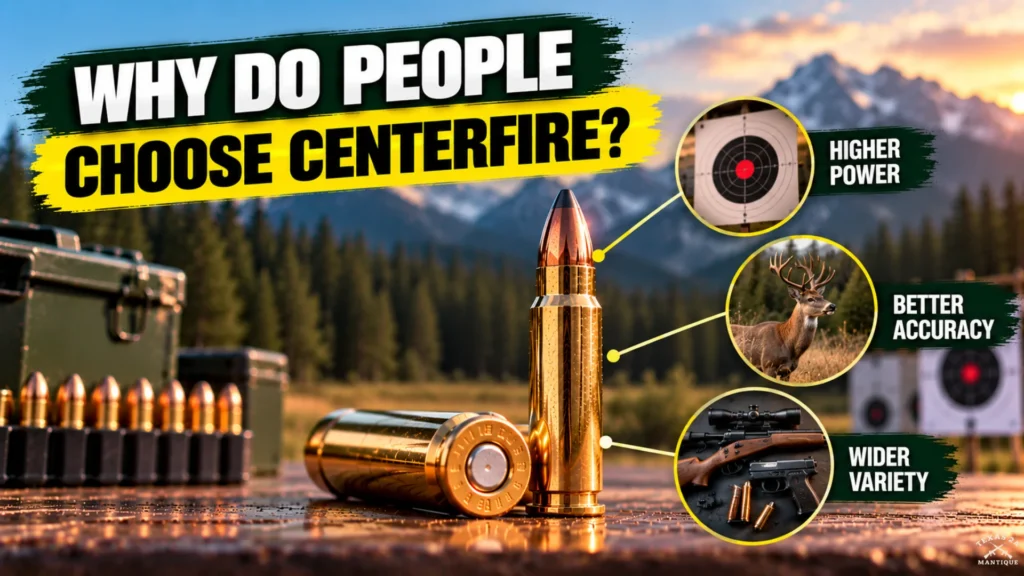
Centerfire ammunition is widely used because of its versatility.
Some advantages include:
- Higher pressure capability
- Greater range of cartridge options
- Consistent ignition
- Wide selection of bullet designs
- Reloadable cases in many applications
- Suitability for many hunting, competition, and defensive applications
Limitations of Centerfire Ammunition
Centerfire ammunition also has some trade-offs:
- It generally costs more per round.
- Recoil can be greater depending on the cartridge and firearm.
- Larger cartridges can be heavier to carry in quantity.
- Some centerfire cartridges produce considerably more noise than typical rimfire cartridges.
Six Key Differences Between Rimfire and Centerfire
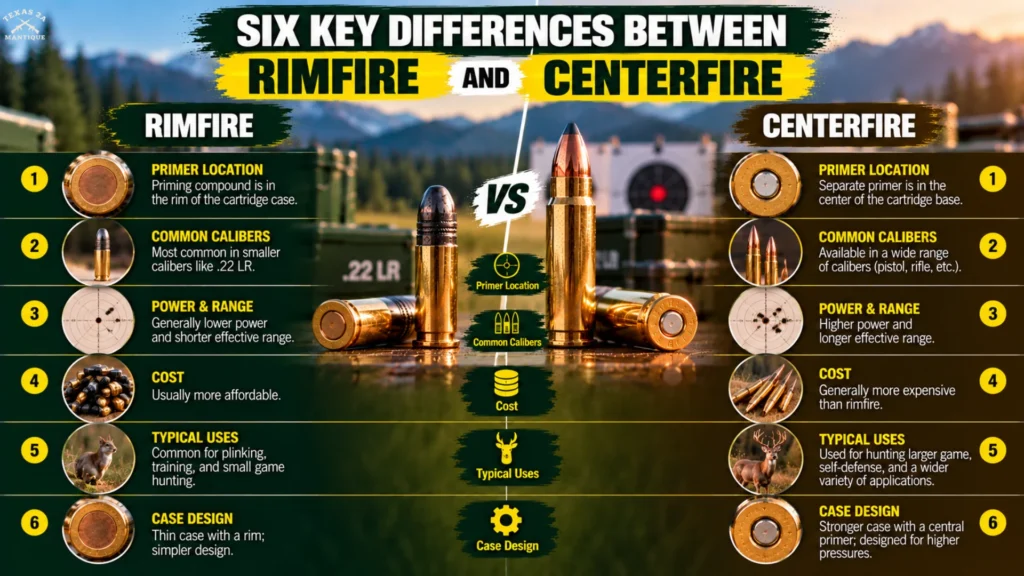
Understanding six basic differences makes the comparison much easier.
1. Primer Design
This is the fundamental difference.
With rimfire ammunition, the priming compound is contained within the rim of the cartridge.
With centerfire ammunition, a separate primer is positioned in the center of the cartridge case.
So, if you remember only one thing:
Rimfire uses the rim. Centerfire uses the center.
2. Pressure and Power
Centerfire cases are generally stronger and can handle substantially higher pressures.
This allows centerfire cartridges to provide a much wider range of performance, including cartridges designed for applications requiring greater energy and longer effective range.
Rimfire ammunition generally operates at lower pressures, making it well suited to applications where high power is not required.
3. Cost
One of the biggest practical differences is ammunition cost.
Rimfire ammunition, particularly .22 LR, is generally among the least expensive commonly available ammunition.
That makes it attractive for people who want to spend more time practicing or shooting targets without the higher ammunition cost associated with many centerfire cartridges.
Centerfire ammunition generally costs more, although prices vary considerably depending on caliber, manufacturer, availability, and ammunition type.
4. Recoil and Noise
Rimfire ammunition generally produces relatively mild recoil.
This can make it more comfortable for practice and recreational shooting.
Centerfire ammunition covers a much wider performance range. Some centerfire cartridges produce relatively mild recoil, while others can produce substantially more recoil and noise.
The actual experience depends on the cartridge, firearm, bullet weight, and other factors.
5. Reliability
Centerfire ammunition is generally considered more reliable in terms of ignition.
With rimfire ammunition, the priming compound is distributed around the inside of the rim. Inconsistent distribution can contribute to occasional failures to fire.
Manufacturing quality also matters. Higher-quality ammunition can provide more consistent performance than poorly manufactured or poorly stored ammunition.
If a cartridge fails to fire, follow the firearm manufacturer’s safety procedures rather than immediately attempting to fire it again.
6. Reloading
Another major difference is reloadability.
Rimfire cartridge cases are designed around a rim containing the priming compound. Once fired, the case is not practically reloadable.
Centerfire cases use a separate primer. In appropriate circumstances, centerfire cases can be reloaded using specialized equipment and components.
Reloading should only be performed with proper equipment, verified load data, and appropriate training.
Which Type Is Right for Different Uses?
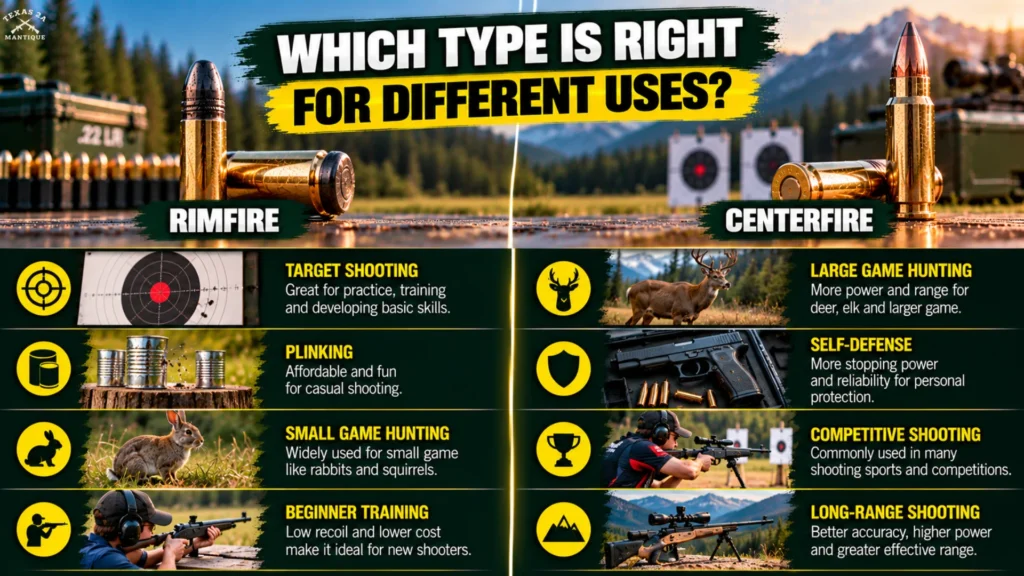
There is no single cartridge type that is suitable for every situation. The appropriate choice depends on the firearm, intended use, applicable laws, and the user’s experience.
Rimfire May Be Suitable For:
- Basic shooting practice
- Target shooting
- Recreational shooting
- Learning fundamental shooting skills
- Small-game applications where legal and appropriate
- Training with relatively low-recoil ammunition
For many new shooters, rimfire ammunition can provide a comfortable way to become familiar with basic firearm handling and shooting fundamentals.
Centerfire May Be Suitable For:
- Defensive applications
- Hunting medium or large game where legal
- Competition
- Longer-range shooting
- Firearms requiring centerfire ammunition
- Applications where higher-pressure cartridges are appropriate
Centerfire ammunition offers a much wider range of cartridge designs and performance levels.
Rimfire vs. Centerfire for Beginners
For someone learning about firearms, rimfire ammunition can be easier to manage because many rimfire cartridges offer relatively low recoil and lower ammunition costs.
However, choosing ammunition should never be based on cost or recoil alone.
Always make sure the ammunition is specifically compatible with the firearm and caliber.
A qualified firearms instructor can also help a new shooter understand safe firearm handling, ammunition selection, and basic shooting fundamentals.
Rimfire vs. Centerfire for Hunting
Rimfire and centerfire ammunition can both have hunting applications, but they are generally suited to different types of game.
Rimfire cartridges are commonly associated with small-game and pest-control applications where permitted.
Centerfire cartridges are available in a much wider range of power levels and are commonly used for hunting larger game.
Hunting regulations vary by location and may specify which cartridges or firearms can legally be used for particular species.
Always check the current hunting regulations in your area before choosing ammunition for hunting.
Final Takeaway
The difference between rimfire and centerfire ammunition comes down to one basic design feature: where the primer is located.
Rimfire ammunition has the primer contained within the cartridge rim. It is generally affordable, produces relatively mild recoil, and is commonly used for practice, target shooting, recreational shooting, and some small-game applications.
Centerfire ammunition has a separate primer located in the center of the cartridge case. It can handle higher pressures and is available in a wide range of cartridges for hunting, competition, defensive applications, and other uses.
Neither design is automatically suitable for every situation. The appropriate choice depends on the firearm, intended use, applicable laws, and the manufacturer’s specifications.
At Texas 2A Mantique, we believe responsible firearm ownership starts with understanding your equipment and making informed decisions. Whether you’re learning about ammunition types or exploring firearm-related products, safety, knowledge, and compliance should always come first.
Most importantly, always use the correct ammunition for your firearm and follow established firearm-safety practices and the manufacturer’s instructions.


Leave a Reply