Buying your first firearm is an important decision that requires careful consideration. Whether you’re purchasing a firearm for home defense, target shooting, hunting, or learning the fundamentals of responsible gun ownership, choosing the right firearm can greatly influence your experience and confidence.
With so many firearm types, calibers, and features available, first-time buyers can easily feel overwhelmed. Many people assume the most powerful or popular firearm is the best choice, but that’s not always true. A beginner-friendly firearm should be reliable, easy to operate, comfortable to handle, and suited to your intended purpose.
The right firearm should help you build confidence, improve your shooting skills, and encourage safe handling through regular practice. By understanding your needs and learning what to look for before buying, you can make a more informed decision.
What Makes a Firearm Good for Beginners?
Not every firearm is ideal for first-time owners. The best beginner firearms are easy to use, reliable, comfortable to handle, and help new shooters learn safely and confidently. Before buying your first firearm, consider these important features.
1. Reliability
Reliability should be your top priority. A dependable firearm works consistently when properly maintained and used with quality ammunition. It should feed, fire, and eject smoothly with minimal malfunctions, allowing you to focus on learning rather than fixing problems.
2. Easy to Operate
A beginner firearm should have simple controls and be easy to use. Look for features such as:
- Easy-to-use safety
- Simple loading and unloading
- Accessible controls
- Easy magazine changes
- Straightforward cleaning and maintenance
3. Comfortable Fit
A firearm should feel comfortable in your hands. A good fit improves control, accuracy, and confidence.
When choosing a firearm, check:
- Grip size
- Trigger reach
- Weight and balance
- Comfortable control placement
4. Manageable Recoil
Too much recoil can make shooting uncomfortable and cause beginners to develop bad habits like flinching or jerking the trigger.
A firearm with manageable recoil helps you:
- Stay comfortable
- Improve accuracy
- Build confidence
- Practice longer
5. Good Accuracy
Accuracy helps beginners gain confidence. A firearm with comfortable ergonomics, stable handling, and a smooth trigger makes it easier to hit your target and improve your shooting skills.
Remember, the best firearm for a beginner isn’t the most powerful or expensive – it’s the one that is reliable, comfortable, easy to control, and encourages regular practice.
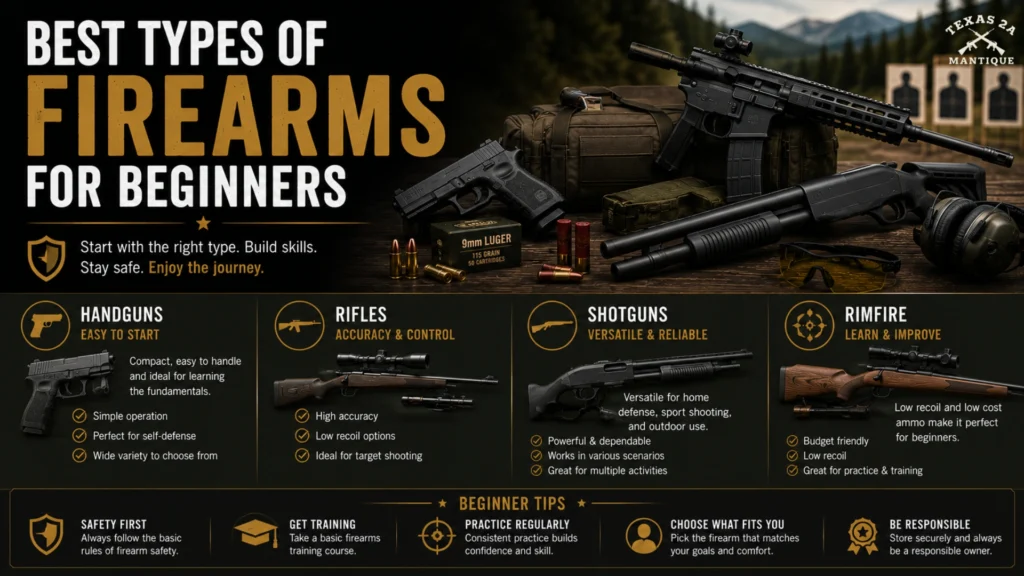
Understanding the Three Main Types of Firearms
Most first-time buyers will choose from one of these three firearm categories:
Each platform is designed for different situations, and none is universally better than the others. The right choice depends on how you plan to use it.
Handguns: A Popular Choice for First-Time Owners
Handguns are among the most commonly purchased firearms because they are compact, versatile, and suitable for a wide variety of applications. They are often chosen for home defense, personal protection (where legally permitted), and recreational shooting.
Unlike long guns, handguns are operated using only your hands. Because they lack the additional support provided by a shoulder stock, they require greater attention to grip, trigger control, and sight alignment.
Although they can be more challenging to master than rifles, they remain an excellent option for beginners who are committed to regular training.
Rifles: Often the Easiest Firearm for Beginners
Many professional instructors recommend rifles as one of the best firearms for first-time shooters. Their design naturally provides greater stability because they are supported by both hands and the shoulder.
This additional point of contact makes it easier for beginners to maintain proper sight alignment, control recoil, and shoot accurately.
For someone learning firearm fundamentals, a rifle often provides the quickest path to building confidence.
Shotguns: Powerful and Versatile
Shotguns have earned a reputation as some of the most versatile firearms available. They are widely used for hunting, clay target sports, home defense, and recreational shooting.
However, versatility does not always mean they are the easiest option for beginners.
Shotguns typically generate more recoil than many handguns and rifles, particularly when using heavier loads.
Which Firearm Type Is Best for Your Purpose?
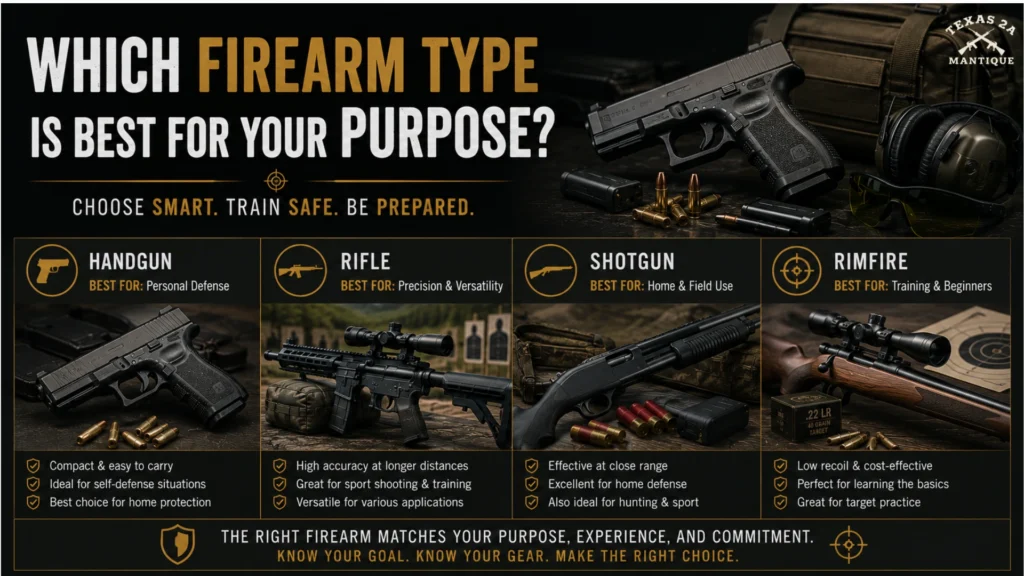
The best firearm depends entirely on how you intend to use it. Understanding your primary purpose will help narrow your options and prevent unnecessary purchases.
Home Defense
Many first-time buyers purchase a firearm primarily to protect their home.
Important considerations include:
- Reliability
- Ease of operation
- Comfortable handling
- Manageable recoil
- Safe storage
- Consistent performance under stress
Recreational Target Shooting
If your goal is spending weekends at the shooting range, prioritize a firearm that encourages frequent practice.
Look for:
- Comfortable ergonomics
- Affordable ammunition
- Good accuracy
- Low maintenance
- Manageable recoil
Hunting
Hunters should choose a firearm based on:
- The type of game being hunted
- Expected shooting distances
- Local hunting regulations
- Terrain and environmental conditions
Learning and Skill Development
Some new firearm owners simply want to learn the fundamentals of shooting and become responsible firearm owners.
In this case, the best firearm is one that:
- Is easy to operate
- Has manageable recoil
- Fits comfortably
- Encourages consistent practice
- Helps develop proper shooting techniques
Choosing the Right Handgun for Beginners
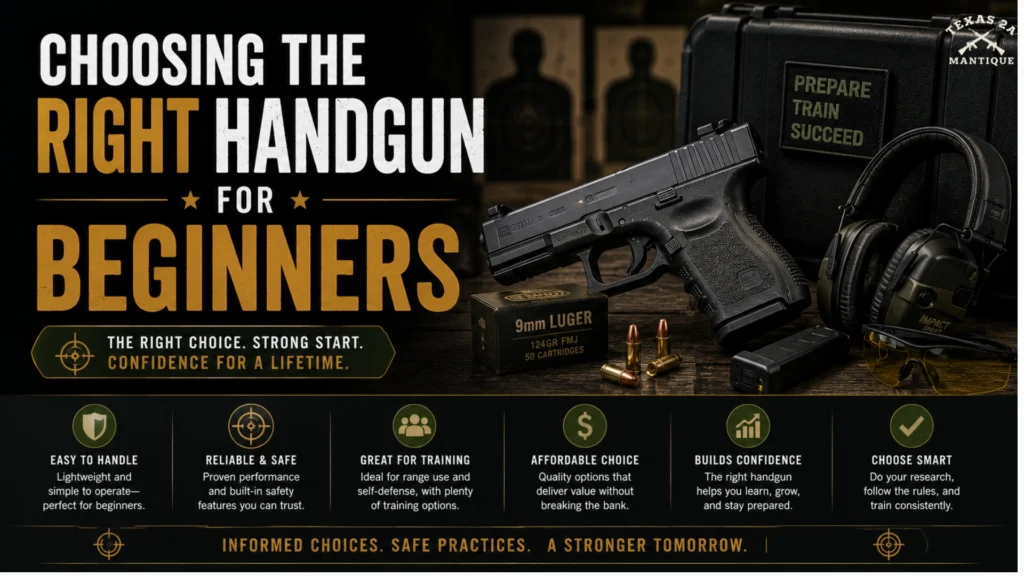
Handguns are one of the most common choices for first-time firearm owners because they are versatile, compact, and suitable for many shooting activities. However, not all handguns offer the same shooting experience.
Before selecting your first handgun, consider its size, weight, ergonomics, and overall handling characteristics rather than simply choosing the smallest or most powerful option.
Full-Size Handguns
Full-size handguns are often considered one of the best learning platforms for beginners.
Their larger frame provides a comfortable grip, allowing shooters to establish proper hand placement and maintain better control during firing. The additional weight also helps absorb recoil, making shooting sessions more comfortable and improving overall accuracy.
Advantages
- Longer sight radius for improved accuracy
- Better recoil management
- Comfortable grip for most hand sizes
- Higher magazine capacity
- Easier to learn proper shooting techniques
Compact Handguns
Compact handguns strike a balance between shootability and portability.
They are slightly smaller than full-size firearms while still offering enough grip surface and barrel length to remain comfortable during practice sessions.
Many first-time buyers appreciate compact handguns because they can serve multiple purposes, including recreational shooting, home defense, and concealed carry in jurisdictions where it is legal.
Advantages
- Good balance between size and control
- Comfortable for a wide range of shooters
- Easier to store and transport
- Suitable for multiple shooting applications
Compact handguns are often considered one of the most practical choices for new firearm owners who want versatility without sacrificing comfort.
Subcompact Handguns
Subcompact handguns are designed primarily for maximum concealability.
Although their smaller size makes them easier to carry, they are not always the best learning platform for beginners.
The shorter grip provides less surface area for the hands, while the reduced weight often results in noticeably sharper felt recoil.
Challenges
New shooters may find subcompact handguns more difficult because they typically offer:
- Shorter sight radius
- Increased muzzle movement
- Sharper recoil
- Less comfortable grip
- Greater sensitivity to trigger movement
For these reasons, many firearm instructors recommend that beginners learn with a larger handgun before transitioning to a subcompact platform.
Choosing the Right Rifle for Beginners
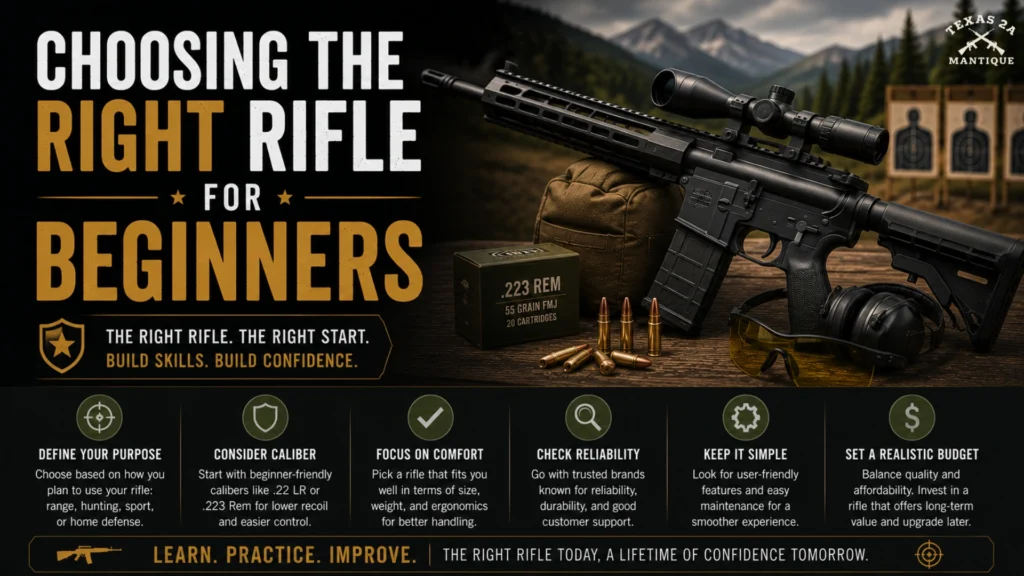
Rifles remain one of the easiest firearm platforms for first-time shooters because they naturally provide greater stability and improved control.
With support from both hands and the shoulder, beginners often find it easier to maintain proper sight alignment and develop consistent shooting fundamentals.
Semi-Automatic Rifles
Semi-automatic rifles are widely used for recreational shooting, firearm education, and various sporting applications.
After each shot, the firearm automatically chambers the next round without requiring manual cycling, allowing shooters to focus on sight alignment, breathing, and trigger control.
Advantages
- Fast follow-up shots
- Comfortable shooting experience
- Easy to learn with proper instruction
- Suitable for recreational shooting and skill development
For beginners interested in modern sporting rifles, this platform provides an excellent opportunity to develop confidence while learning safe firearm handling.
Bolt-Action Rifles
Bolt-action rifles require the shooter to manually cycle the bolt after every shot.
Although slower than semi-automatic platforms, this deliberate process encourages careful shooting and reinforces marksmanship fundamentals.
Benefits
- Simple mechanical operation
- Excellent accuracy
- Encourages deliberate shooting
- Easier for beginners to understand firearm operation
Many experienced hunters learned to shoot using bolt-action rifles because they promote patience, precision, and proper shooting discipline.
Lever-Action Rifles
Lever-action rifles have been part of American firearm history for generations.
They combine traditional craftsmanship with dependable operation and remain popular among recreational shooters and hunters.
Advantages
- Smooth cycling
- Reliable operation
- Comfortable handling
- Classic design
Although less common than semi-automatic or bolt-action rifles for beginners, they remain an enjoyable option for those interested in traditional shooting sports.
Choosing the Right Shotgun for Beginners
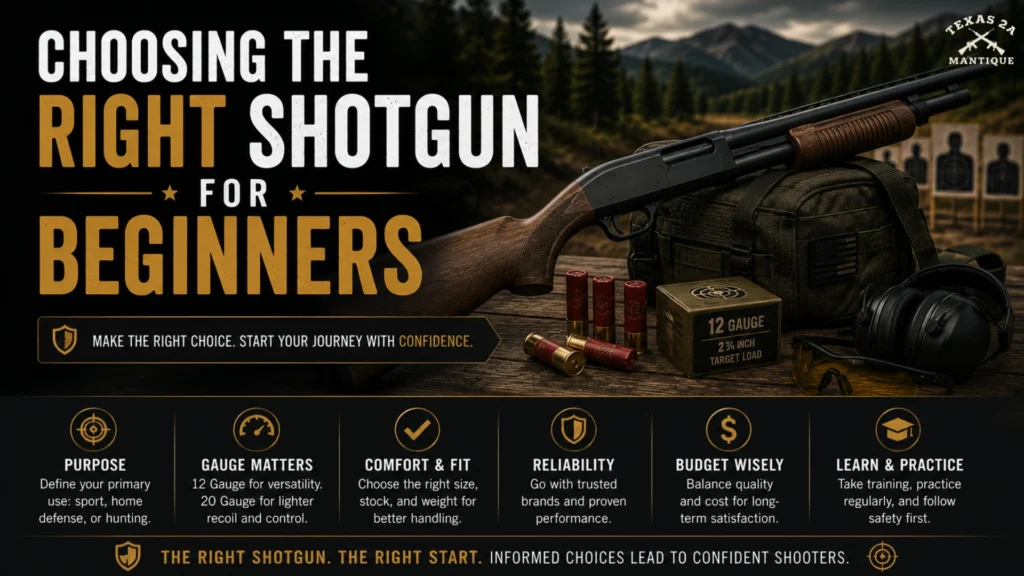
Shotguns are among the most versatile firearms available.
Their ability to perform well in hunting, clay target sports, and certain defensive situations makes them a valuable addition to many collections.
However, first-time buyers should understand the differences between the primary shotgun operating systems.
Pump-Action Shotguns
Pump-action shotguns require the shooter to manually cycle the action after each shot by moving the fore-end backward and forward.
This straightforward operating system has earned a reputation for durability and dependable performance.
Advantages
- Reliable mechanical design
- Easy to understand
- Suitable for hunting and sporting use
- Available in many configurations
Pump-action shotguns remain one of the most popular choices for beginners who are willing to spend time mastering proper technique.
Semi-Automatic Shotguns
Semi-automatic shotguns automatically load the next shell after firing.
This reduces the amount of manual operation required during shooting.
Benefits
- Faster follow-up shots
- Reduced shooter workload
- Smoother shooting experience
Some semi-automatic designs also reduce felt recoil compared to pump-action shotguns, making extended range sessions more comfortable.
Break-Action Shotguns
Break-action shotguns are among the simplest firearms available.
Opening the action exposes the chamber, allowing easy loading and unloading while making it immediately obvious whether the firearm is loaded.
Advantages
- Extremely simple operation
- Easy to inspect
- Excellent for learning firearm safety
- Reliable mechanical design
Because of their simplicity, many new shooters find break-action shotguns to be unintimidating and easy to understand.
Understanding Caliber Selection
Choosing the right caliber is just as important as choosing the right firearm.
Many beginners mistakenly assume that larger calibers automatically provide better performance. In reality, selecting a caliber should involve balancing recoil, ammunition cost, intended purpose, and overall shooting comfort.
The goal is not to choose the most powerful caliber—it is to choose one that allows you to practice regularly while maintaining confidence and control.
Recoil
Higher-powered calibers generally produce greater recoil.
Excessive recoil may lead to:
- Flinching
- Poor trigger control
- Reduced accuracy
- Less enjoyable practice sessions
Choosing a manageable caliber helps beginners focus on developing proper shooting fundamentals.
Ammunition Availability
Regular practice requires consistent access to ammunition.
Before purchasing your first firearm, consider whether ammunition for your chosen caliber is widely available in your area.
Reliable availability helps ensure uninterrupted training and long-term enjoyment.
Ammunition Cost
Training is one of the most important investments a firearm owner can make.
More affordable ammunition often allows beginners to spend more time practicing, reinforcing safe handling habits and improving marksmanship.
Instead of selecting a caliber based solely on power, think about how often you plan to visit the range and whether ammunition costs fit your long-term budget.
Intended Purpose
Different calibers are designed for different applications.
Before making your decision, ask yourself:
- Will this firearm primarily be used for recreational target shooting?
- Is home defense my main priority?
- Am I planning to hunt?
- Do I want to compete in shooting sports?
Your intended purpose should guide your caliber selection rather than advertising claims or internet opinions.
Remember: Fit Matters More Than Brand
One of the most common questions new firearm buyers ask is:
“Which brand makes the best firearm?”
While many manufacturers produce reliable firearms, no brand can guarantee the perfect fit for every shooter.
A firearm that feels comfortable in your hands, points naturally, and allows you to maintain proper control will almost always outperform one chosen solely because of its reputation.
Whenever possible, visit a reputable firearm retailer or shooting range to handle different firearms before making your purchase. Feeling the grip, testing the controls, and evaluating the balance can help you find a firearm that suits your body and shooting style.
The best beginner firearm is not necessarily the most expensive or the most popular—it is the one that helps you build confidence, improve your skills, and enjoy a safe and rewarding shooting experience.
Essential Accessories Every Beginner Should Own
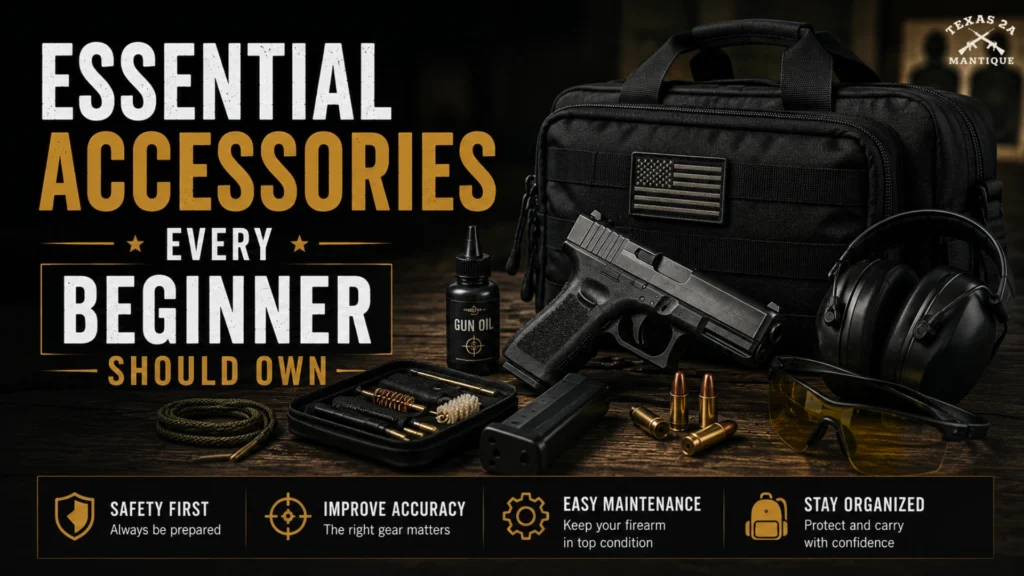
Purchasing a firearm is only the beginning. To shoot safely, maintain your firearm properly, and improve your skills over time, you’ll need several essential accessories.
Eye Protection
Protecting your eyesight should always be a top priority whenever you’re at the shooting range.
Shooting glasses help shield your eyes from:
- Spent cartridge cases
- Powder residue
- Dirt and debris
- Ricochets or fragments
- Environmental hazards
Choose impact-resistant eye protection that meets recognized safety standards and provides a clear field of vision.
Hearing Protection
Firearms produce extremely loud noise levels that can cause permanent hearing damage after just a few shots without proper protection.
Common hearing protection options include:
- Foam earplugs
- Passive earmuffs
- Electronic hearing protection
Electronic hearing protection is especially popular because it reduces harmful gunfire noise while allowing you to hear conversations and range commands clearly.
Never shoot without hearing protection, even if you’re outdoors.
Cleaning Kit
Regular maintenance is essential for keeping your firearm reliable and extending its service life.
A basic firearm cleaning kit typically includes:
- Cleaning rod
- Bore brushes
- Cleaning patches
- Nylon utility brush
- Cleaning solvent
- Lubricating oil
- Cleaning cloth
After every range session, inspect and clean your firearm according to the manufacturer’s recommendations. Proper maintenance helps prevent corrosion, reduces wear, and ensures dependable performance.
Secure Firearm Storage
Safe storage is one of the most important responsibilities of firearm ownership.
Firearms should always be stored securely to prevent unauthorized access, especially if children or visitors are present in the home.
Common storage solutions include:
- Gun safes
- Lock boxes
- Trigger locks
- Cable locks
A quality storage solution not only protects your firearm but also promotes responsible ownership and peace of mind.
Range Bag
A dedicated range bag keeps all of your shooting gear organized and easy to transport.
A well-equipped range bag may include:
- Ammunition
- Spare magazines
- Eye protection
- Hearing protection
- Cleaning supplies
- Targets
- Notebook for tracking practice sessions
- First-aid kit
- Multi-tool
Being organized allows you to focus on learning and enjoying your time at the range.
Common Mistakes First-Time Firearm Buyers Should Avoid
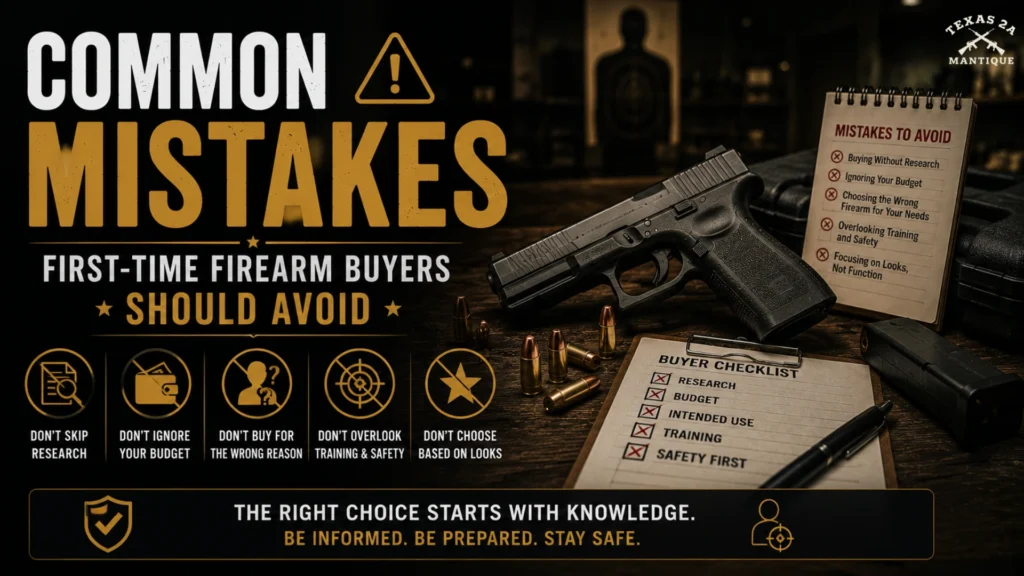
Many new firearm owners make similar mistakes during their first purchase. Understanding these common pitfalls can help you make a smarter decision and enjoy a better shooting experience.
Buying Based on Appearance
A firearm may look impressive, but appearance should never be the deciding factor.
Instead, prioritize:
- Comfort
- Reliability
- Ease of operation
- Proper fit
- Intended purpose
The best firearm is the one that performs well for you – not the one that simply looks appealing.
Choosing More Power Than You Need
Many beginners believe that bigger calibers automatically provide better performance.
In reality, excessive recoil often leads to:
- Poor accuracy
- Flinching
- Less enjoyable practice
- Reduced confidence
Learning with a firearm that has manageable recoil allows you to develop proper shooting fundamentals before moving to more powerful options if needed.
Ignoring Firearm Fit
No matter how highly rated a firearm is, it won’t perform well if it doesn’t fit your hands comfortably.
Before making a purchase:
- Hold different firearms.
- Check your grip.
- Test trigger reach.
- Evaluate overall balance.
- Ensure you can comfortably operate all controls.
A properly fitted firearm improves control, accuracy, and confidence.
Skipping Professional Training
Owning a firearm does not automatically make someone a skilled shooter.
Professional firearms instruction teaches valuable skills such as:
- Safe firearm handling
- Proper grip and stance
- Trigger control
- Sight alignment
- Reloading techniques
- Malfunction management
- Firearm maintenance
Even experienced shooters continue taking advanced training courses to improve their skills.
Not Practicing Regularly
Skill development requires consistent practice.
Even the best firearm cannot compensate for a lack of training.
Regular range sessions help improve:
- Accuracy
- Confidence
- Muscle memory
- Firearm familiarity
- Safe handling habits
Short, consistent practice sessions are often more effective than shooting only a few times each year.
Neglecting Maintenance
Every firearm requires routine inspection and cleaning.
Ignoring maintenance can lead to:
- Corrosion
- Reliability issues
- Excessive wear
- Reduced performance
Final Thoughts
Choosing your first firearm is a significant decision that deserves careful consideration. Rather than focusing on trends, brand names, or the most powerful caliber, prioritize a firearm that fits your hands comfortably, operates reliably, and aligns with your intended purpose.
Whether you choose a handgun, rifle, or shotgun, the most important factor is selecting a firearm that allows you to learn safely and confidently. A beginner-friendly firearm should encourage regular practice, support proper shooting fundamentals, and help you build the skills needed for responsible ownership.
Remember that purchasing a firearm is only the first step. Safe storage, routine maintenance, professional instruction, and ongoing training are all essential parts of becoming a knowledgeable firearm owner. As your experience grows, your understanding of different firearm platforms, calibers, and shooting disciplines will continue to evolve.
At Texas 2A Mantique, we believe education is the foundation of responsible firearm ownership. By taking the time to research your options, handle different firearms, and seek professional guidance, you can confidently choose a firearm that meets your needs today while supporting your growth as a shooter for years to come.
Your first firearm should be more than just a purchase – it should be the beginning of a lifelong commitment to safety, responsibility, and continuous learning. With the right firearm, proper training, and a dedication to safe practices, you’ll be well prepared to enjoy shooting sports and firearm ownership with confidence.

Leave a Reply