
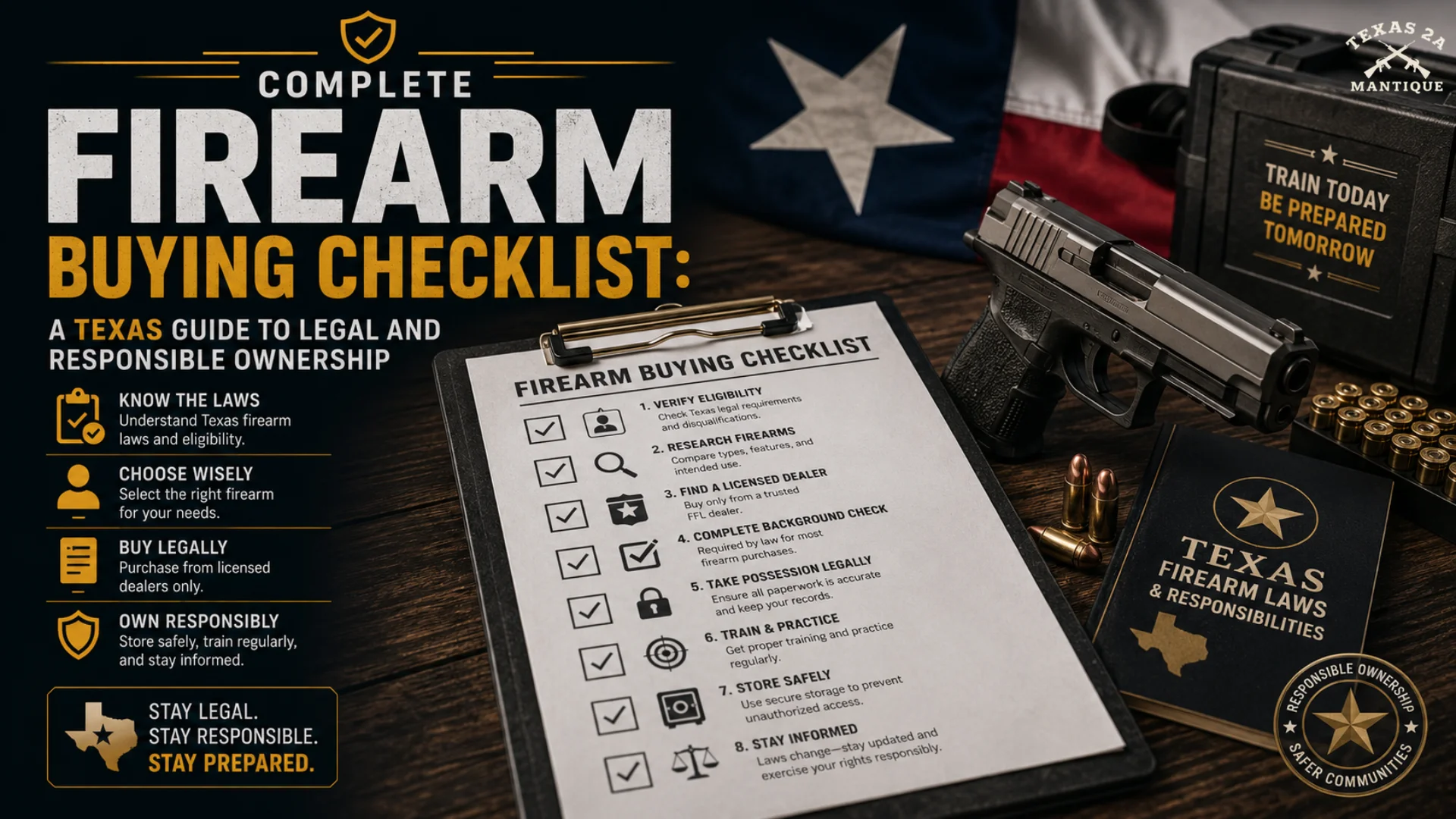
Buying a firearm is a serious decision. For a first-time buyer, the process can raise many questions: Am I legally eligible? What laws apply in Texas? What documentation may be required? Do I need a background check? How should a firearm be stored? Where can it legally be carried or possessed?
This Complete Firearm Buying Checklist is designed to answer those questions in simple language.
At Texas 2A Mantiqe, we believe responsible firearm ownership begins with knowledge. Understanding the law, prioritizing safety, and knowing your responsibilities are essential parts of firearm ownership.
Because firearm laws can change and may depend on the specific circumstances, always verify current requirements through official Texas and federal sources before making a decision.
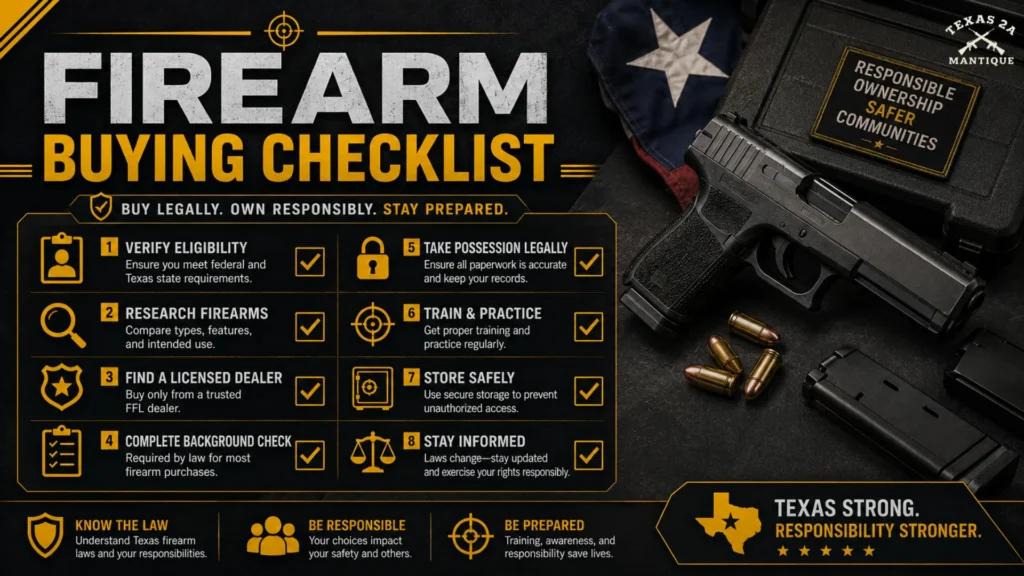
Firearm Buying Checklist
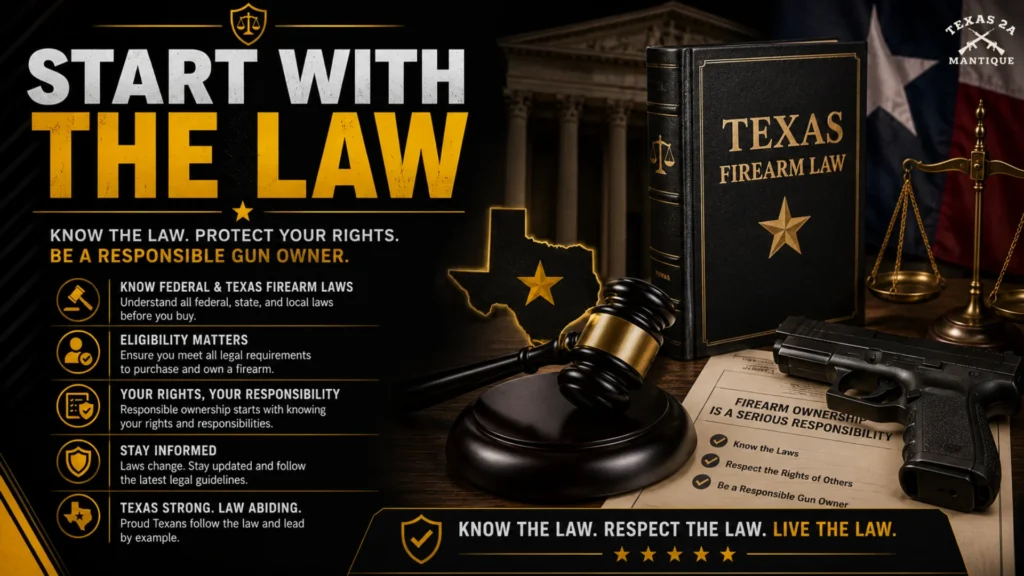
1. Start With the Law
The first thing to understand is that firearm ownership is governed by laws and regulations.
If you live in Texas, you should understand both Texas law and applicable federal law.
Do not assume that because something is permitted in another state, it is automatically permitted in Texas. Likewise, Texas law may not address every issue that applies to firearm ownership.
Before making any decision, check:
- Texas firearm laws
- Applicable federal firearm laws
- Current age requirements
- Eligibility restrictions
- Transfer requirements
- Carry and possession restrictions
- Transportation requirements
- Location-specific restrictions
2. Make Sure You Are Legally Eligible
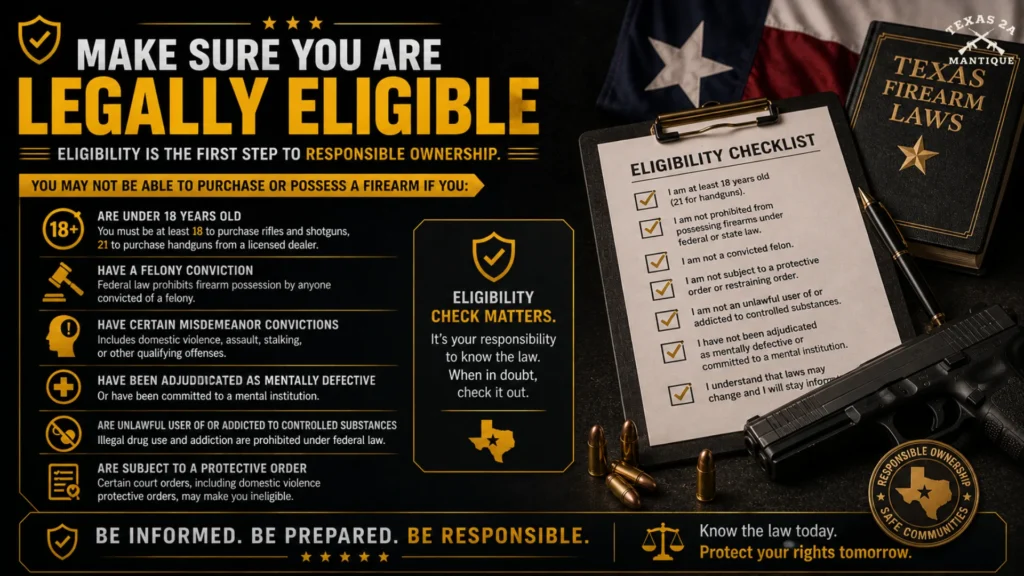
One of the most important questions is whether you are legally permitted to possess a firearm.
Eligibility can depend on factors such as:
- Age
- Criminal history
- Certain court orders
- Certain legal restrictions
- Federal restrictions
- State-specific requirements
- The type of transaction involved
Do not assume that passing one requirement automatically means you satisfy every requirement.
If you have questions about your individual legal eligibility, obtain advice from an appropriate government authority or qualified attorney.
3. Understand the Difference Between Buying, Possessing, and Carrying
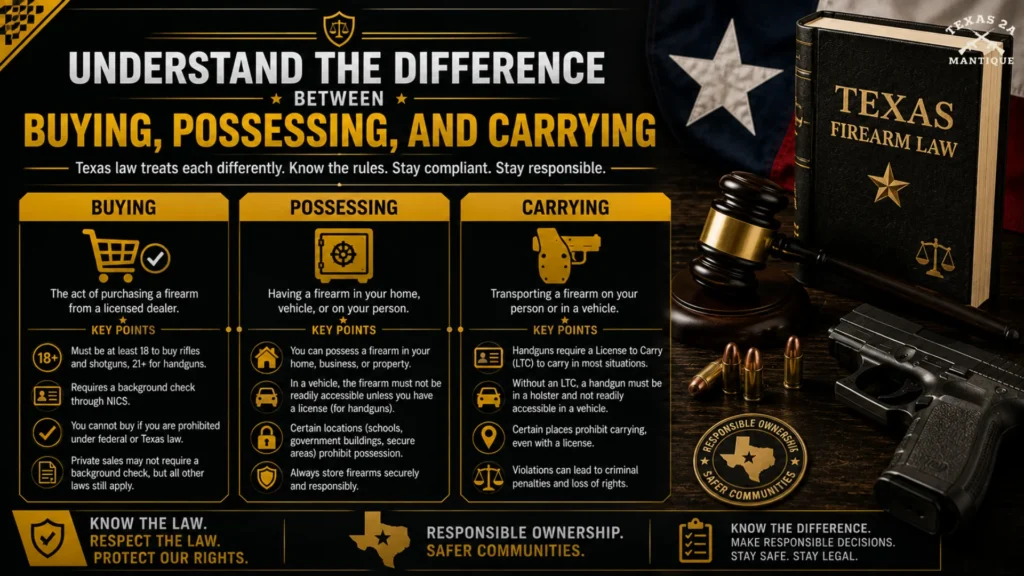
These terms are sometimes used interchangeably, but they are not necessarily the same legal issue.
Buying
This refers to acquiring a firearm through a lawful transaction.
Possessing
This concerns your legal ability to have or control a firearm.
Carrying
This concerns having a firearm on or about your person, subject to the laws that apply to the particular circumstances. Understanding this distinction is especially important for people researching Texas firearm laws. A person should not assume that rules concerning one activity automatically apply to another.
4. Understand the Seller and Transaction
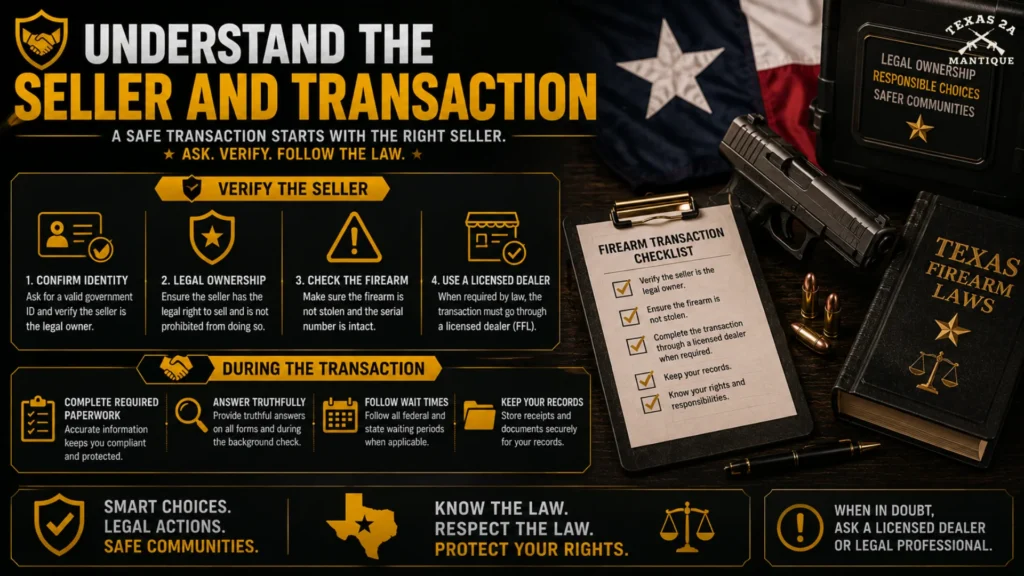
The legal requirements can differ depending on how a firearm is transferred.
For example, a transaction involving a federally licensed firearms dealer can involve federal requirements that differ from a private transaction.
Before completing any transaction, understand:
- Who is legally transferring the firearm
- Whether the seller is a federally licensed dealer
- What paperwork applies
- Whether a background check is required
- Whether additional state requirements apply
- Whether the transfer is otherwise lawful
For private transactions, additional federal and state restrictions can still apply. Never assume that a private transaction is automatically exempt from firearm laws.
5. Understand Background Checks
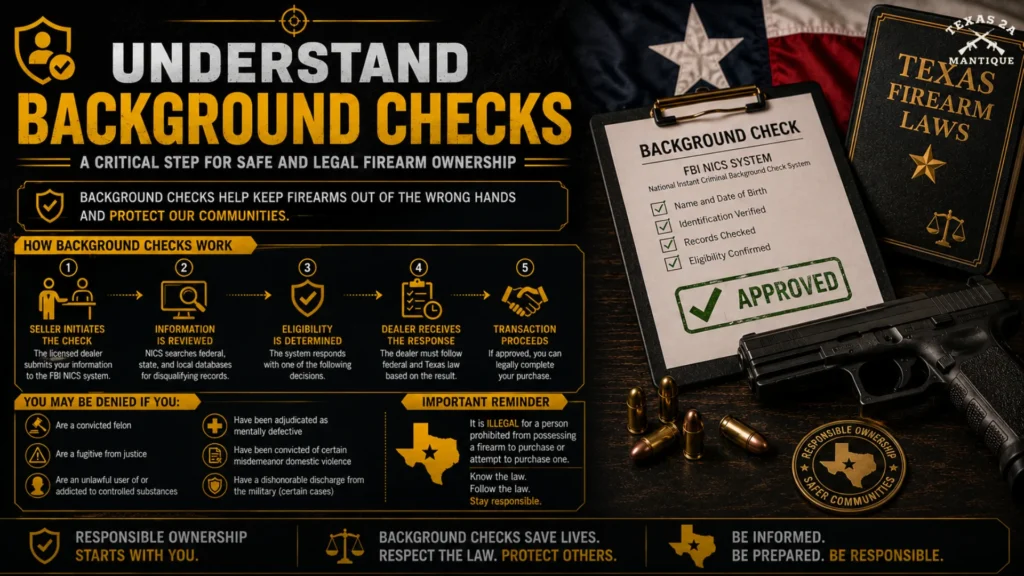
Background checks are an important part of many firearm transactions.
When applicable, the buyer may need to provide information and complete required federal paperwork.
The most important rule is simple:
Always provide complete and accurate information on required forms.
Never attempt to avoid a legally required background check or provide false information.
If you do not understand a form or requirement, ask the appropriate dealer or authority for clarification before completing it.
6. Prepare Your Required Identification
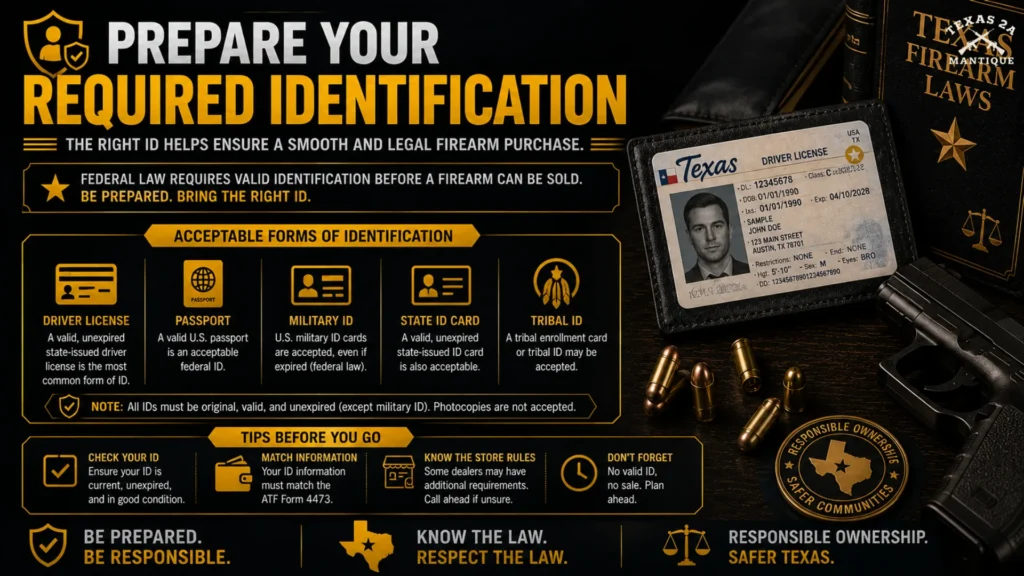
Documentation requirements can depend on the transaction and applicable law.
Depending on the circumstances, identification or other documentation may be required.
Before going to a dealer or completing a transaction, determine what documentation applies to you.
Possible requirements can include:
- Government-issued identification
- Proof of residency
- Required permits or licenses
- Additional documentation required by applicable law
Keep all information accurate and current.
7. Understand Texas Firearm Restrictions
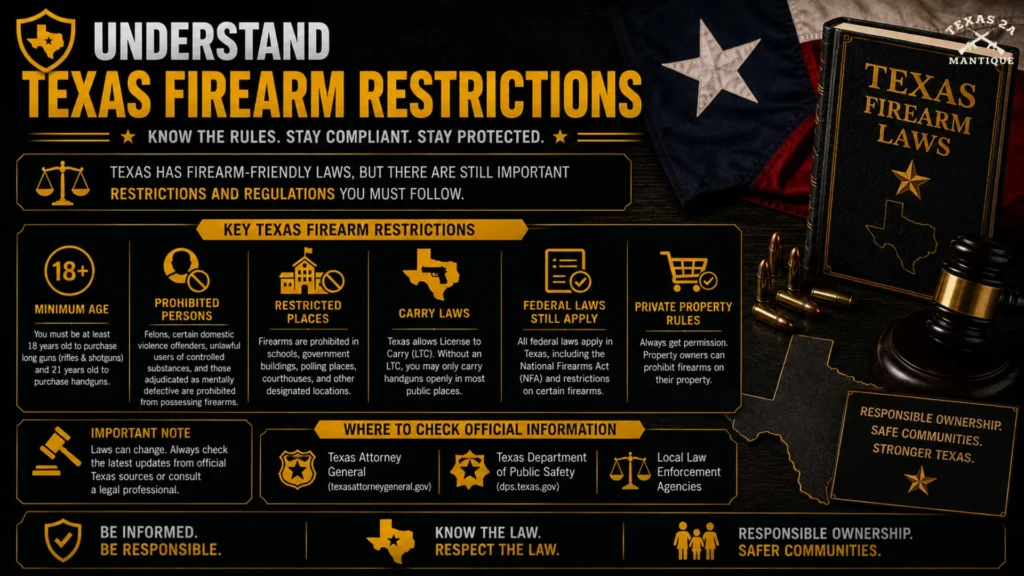
Texas has its own firearm laws, but federal law also applies.
It is important to understand that Texas firearm law is not simply one rule covering every situation.
Different rules can apply depending on:
- Where you are
- What you are doing
- Whether you are buying, possessing, or carrying
- The type of firearm involved
- Whether the transaction is private or through a dealer
- Whether you are traveling
- Whether the location has additional restrictions
This is why a responsible firearm owner should verify the current law instead of relying on assumptions.
8. Know Where Firearms May Be Restricted
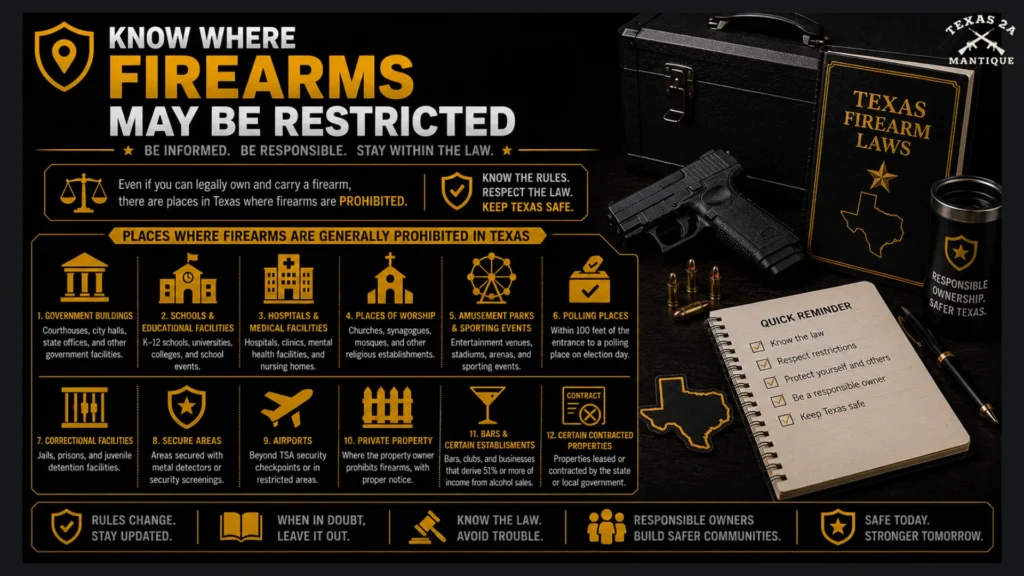
Even when firearm possession or carrying is generally lawful, certain locations may have additional restrictions.
Depending on the circumstances, restrictions can apply to places such as:
- Schools
- Certain government buildings
- Certain secured areas
- Certain businesses or private property
- Other locations specifically regulated by law
Before entering a location with a firearm, understand the current rules that apply to that location.
When in doubt, verify the law before entering.
9. Plan Secure Storage Before Ownership
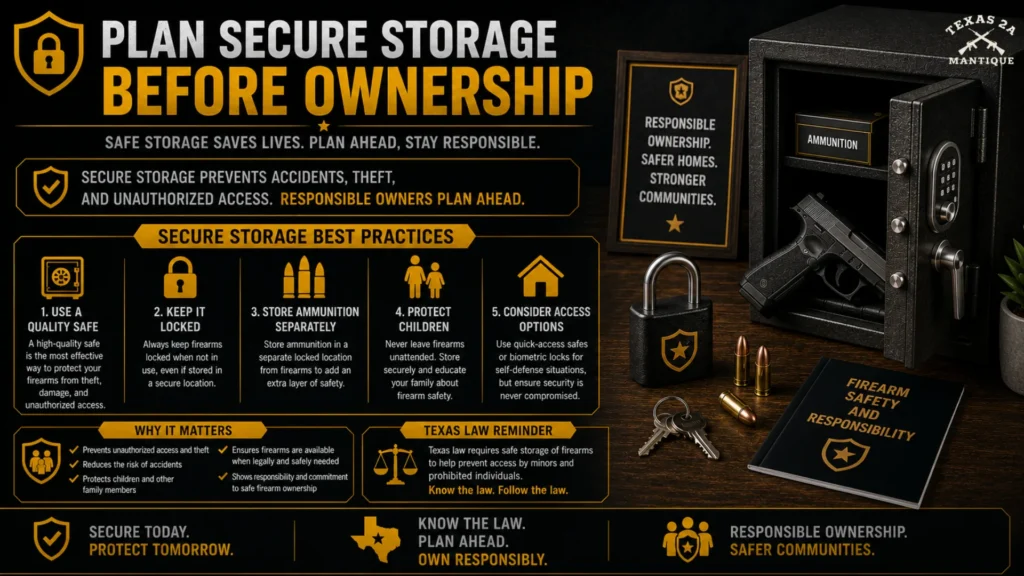
Safe storage should be considered before bringing a firearm into your home.
A responsible owner should have a plan for preventing unauthorized access.
Your storage checklist should include:
- A secure storage location
- Protection against unauthorized access
- Protection against access by children
- Compliance with applicable storage laws
- A plan for transportation when necessary
- A plan for situations where other people have access to your home
The objective is simple:
Only authorized people should have access to the firearm.
10. Learn Firearm Safety
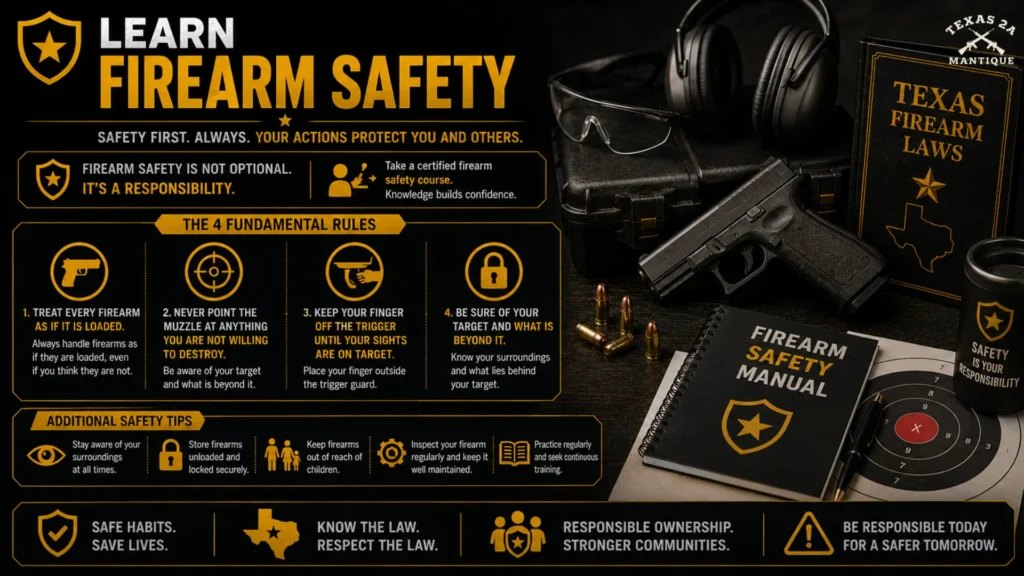
Owning a firearm comes with a responsibility to understand safe handling.
If you are unfamiliar with firearms, consider obtaining instruction from a qualified firearms-safety professional.
Important areas of safety education include:
- Safe handling
- Safe storage
- Range safety
- Understanding manufacturer instructions
- Recognizing unsafe conditions
- Preventing unauthorized access
- Understanding applicable laws
Do not rely solely on online videos or articles as a substitute for appropriate hands-on safety instruction.
11. Understand Transportation Rules
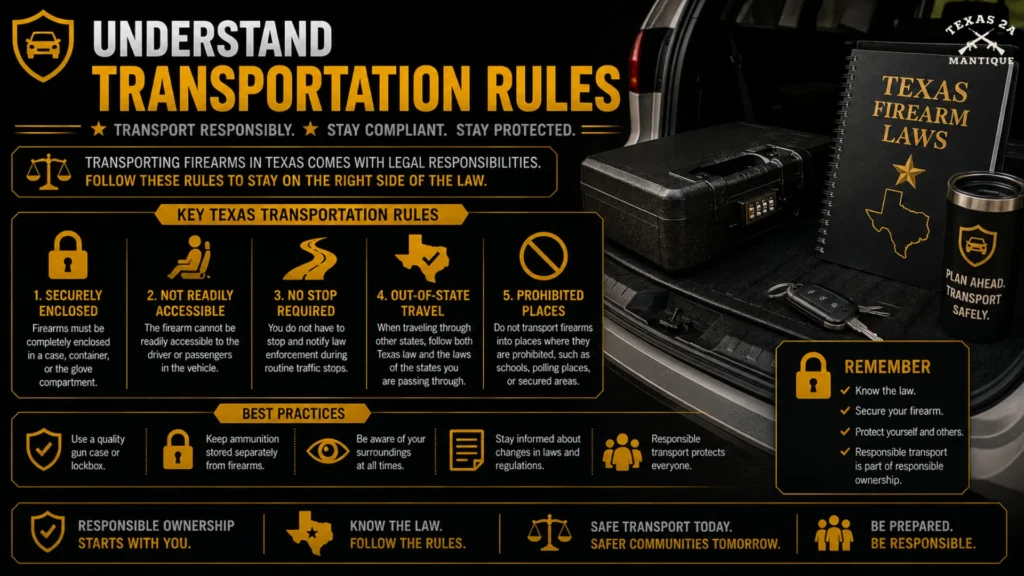
Transportation is another area where people can make incorrect assumptions.
The rules governing transportation can depend on:
- Your location
- Destination
- Method of transportation
- Applicable Texas law
- Federal law
- Laws of another state if traveling
Before traveling with a firearm, research the laws that apply to the complete journey.
This is especially important when crossing state lines.
Texas law does not automatically determine the law in another state.
12. Understand the Responsibilities of Ownership
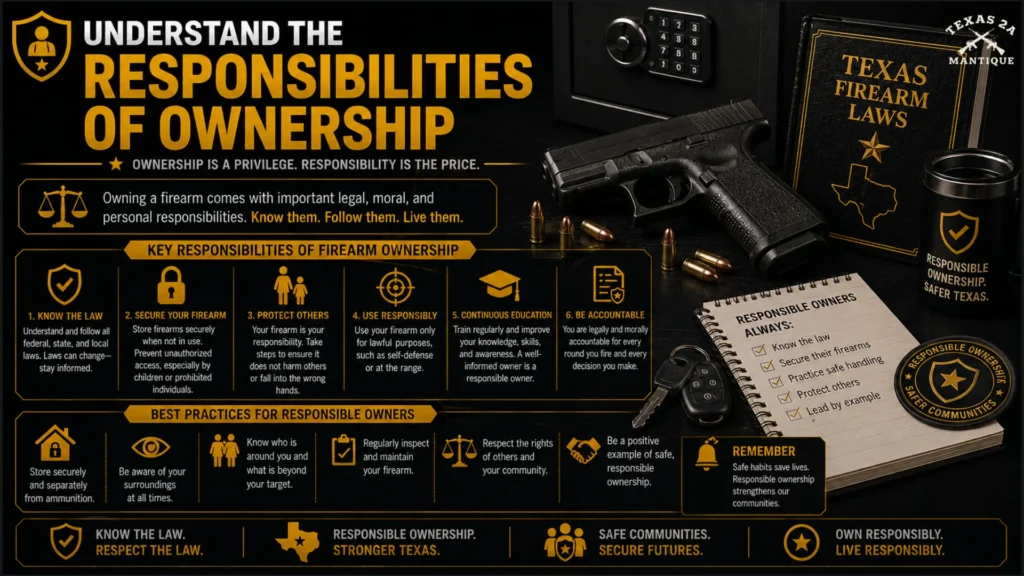
Buying a firearm is not the end of the process.
Responsible ownership means continuing to follow applicable laws and maintaining safe practices.
Your ongoing responsibility checklist includes:
- Keep the firearm securely stored.
- Prevent unauthorized access.
- Follow applicable possession laws.
- Follow applicable carry laws.
- Follow transportation requirements.
- Understand restricted locations.
- Keep up with changes to applicable laws.
- Know the appropriate procedure if a firearm is lost or stolen.
- Follow applicable requirements when transferring or disposing of a firearm.
13. First-Time Firearm Owner Checklist
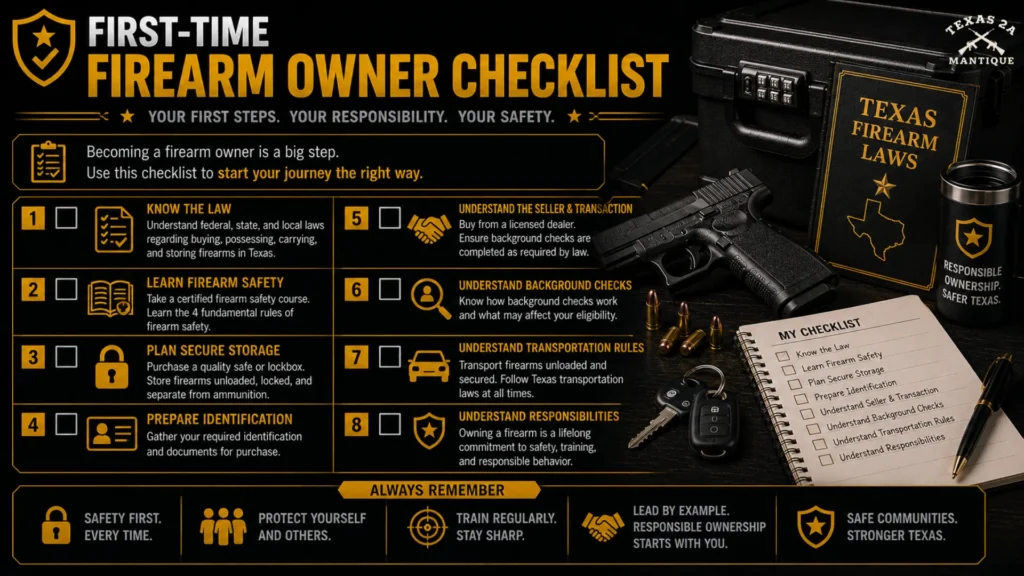
If this is your first experience with firearm ownership, focus on understanding rather than rushing through the process.
Before ownership
- Learn the applicable Texas and federal laws.
- Confirm your legal eligibility.
- Understand applicable age requirements.
- Understand documentation requirements.
- Learn about applicable background-check requirements.
- Understand transfer rules.
Before bringing a firearm home
- Arrange secure storage.
- Learn fundamental firearm safety.
- Consider professional safety training.
- Understand transportation requirements.
- Understand where restrictions may apply.
After ownership
- Continue following applicable laws.
- Maintain secure storage.
- Prevent unauthorized access.
- Keep informed about legal changes.
- Understand your responsibilities if the firearm is lost, stolen, transferred, or disposed of.
14. Common Mistakes New Owners Should Avoid
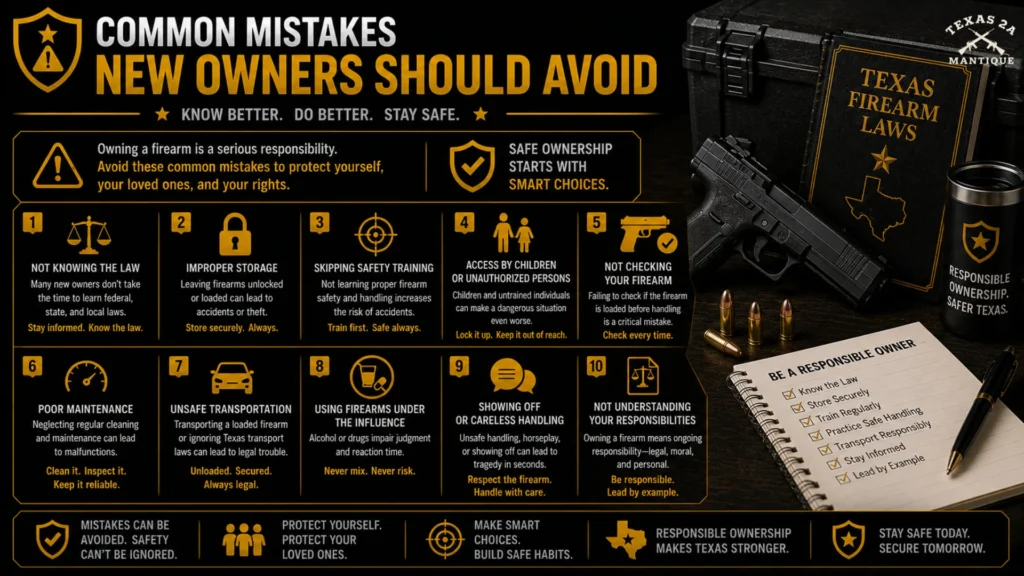
Many problems come from assumptions rather than intentional violations.
Avoid these mistakes:
- Assuming every state has the same laws
- Firearm laws can vary significantly between states.
- Assuming ownership means you can carry everywhere
- Possession, carrying, and location restrictions are separate legal considerations.
- Relying on old information
- Firearm laws can change. Always check current information.
- Ignoring federal law
- Texas law does not replace applicable federal requirements.
- Leaving a firearm unsecured
- Secure storage is a fundamental part of responsible ownership.
- Skipping safety education
- Understanding how to handle and store a firearm safely is essential.
- Guessing about transportation laws
- Always verify the rules before traveling.
- Assuming private transactions have no legal requirements
- Private transfers can still be subject to federal and state restrictions.
15. Questions to Ask Before Making a Decision
Before proceeding, you should be able to answer these basic questions.
Legal Questions
- Am I legally eligible to possess a firearm?
- What Texas laws apply to my situation?
- What federal laws apply?
- What identification or documentation is required?
- Is a background check required?
- Are there restrictions that apply to me or the transaction?
Safety Questions
- Do I have secure storage?
- Can anyone else access the firearm?
- Do I understand basic firearm safety?
- Should I receive professional safety instruction?
Transportation Questions
- What rules apply to transportation in Texas?
- What rules apply if I travel to another state?
- Are there restrictions at my destination?
Final Responsible Ownership Checklist
Before making any firearm-related decision, review this checklist:
- I understand the applicable Texas laws.
- I understand the applicable federal laws.
- I have confirmed my legal eligibility.
- I understand the applicable age requirements.
- I know what documentation may be required.
- I understand applicable background-check requirements.
- I understand the relevant transfer rules.
- I understand transportation requirements.
- I know about location-specific restrictions.
- I have a secure-storage plan.
- I understand basic firearm safety.
- I understand my continuing responsibilities.
- I have verified current information before relying on it.
Final Thoughts From Texas 2A Mantiqe
Responsible firearm ownership starts with knowledge, safety, and respect for the law.
A good firearm buying checklist should not simply tell you what to purchase. It should help you understand the responsibilities that come with firearm ownership and encourage you to make informed, lawful decisions.
At Texas 2A Mantiqe, our goal is to provide clear and useful information for the Texas firearm community while keeping safety and responsible ownership at the center of the conversation.
Know the law. Understand your responsibilities. Prioritize safety.
Legal Disclaimer: This article is for general informational purposes only and does not constitute legal advice. Firearm laws and regulations may change, and requirements can vary depending on individual circumstances. Always verify the latest Texas and federal requirements through official sources. If you have questions about your specific situation, please contact our support team for general guidance or consult a qualified attorney for legal advice.


Leave a Reply