
Choosing a firearm is a decision that deserves careful thought. With many firearm types, configurations, calibers, and features available, it can be easy to focus on a particular model before considering whether it is actually the right fit for your needs.
A better approach is to step back and look at the complete picture.
A responsible firearm decision involves understanding your intended purpose, evaluating your experience, considering comfort and fit, understanding ammunition requirements, setting a realistic budget, knowing the applicable laws, and preparing for safe storage, maintenance, and training.
Throughout our Ultimate Guide to Buying Firearms in Texas, we have explored each of these areas in detail. This final article brings those key considerations together to help you approach your decision with greater confidence and responsibility.
Start With Your Intended Purpose
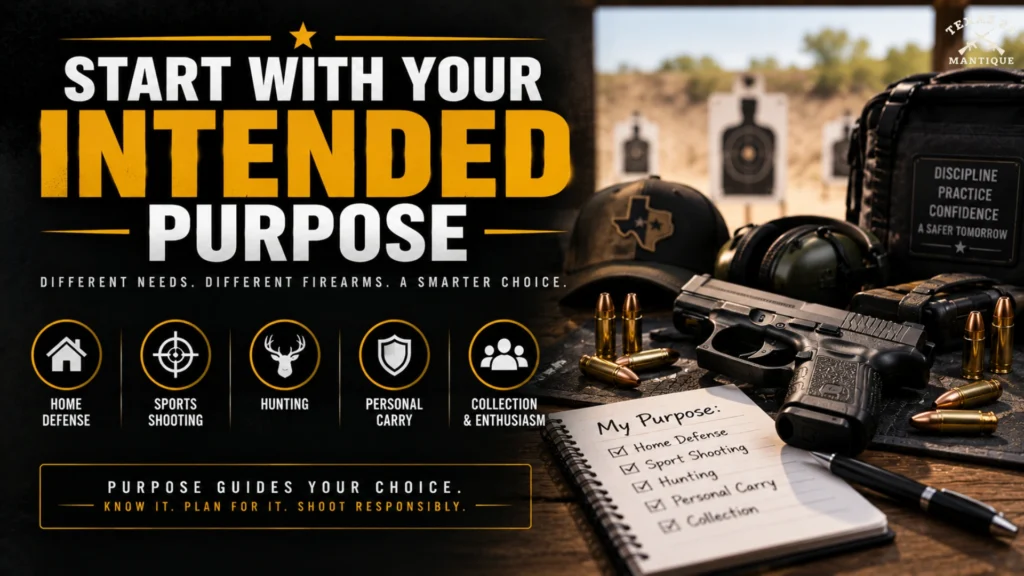
The first question should not be “Which firearm should I buy?”
It should be:
“What do I need a firearm for?”
Your intended purpose can influence the type of firearm, configuration, and features that may be appropriate for you.
For example, the considerations involved in selecting a firearm for hunting may differ from those involved in recreational or competitive shooting. Your frequency of use, experience level, and environment can also influence your decision.
Before comparing individual firearms, clearly define your intended use. This gives you a practical starting point and helps you avoid being influenced by unnecessary features or trends.
Understand the Firearm Categories
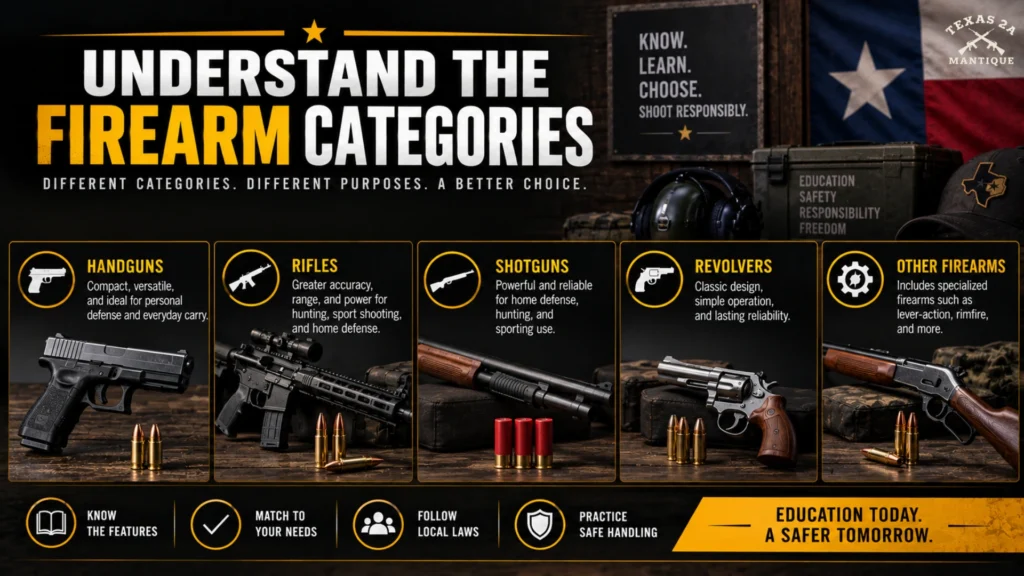
Once you know your purpose, the next step is understanding the different firearm categories.
Handguns, rifles, and shotguns have different designs, operating systems, characteristics, and typical applications. Even within the same category, firearms can vary significantly in size, weight, configuration, and controls.
You do not need to become an expert on every firearm available. However, having a basic understanding of the differences allows you to compare your options more effectively.
If you are still learning the fundamentals, revisit our guide on Understanding Firearms: The Basics Every Buyer Should Know and our overview of Different Types of Firearms Available in Texas.
Consider Your Experience Level
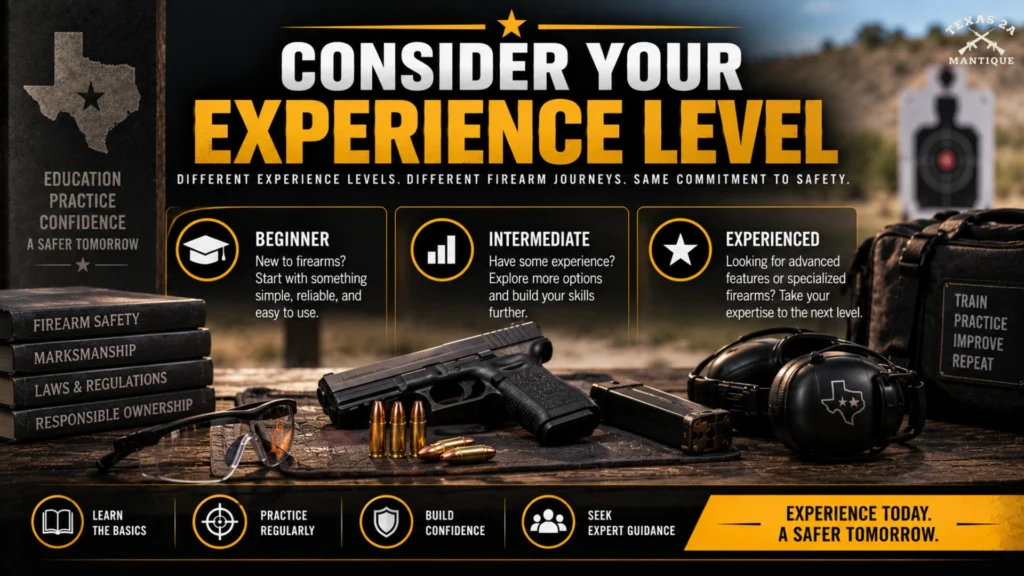
Your experience should play an important role in your decision.
First-time buyers may need to place greater emphasis on understanding basic operation, safe handling, training, and overall ease of use. Buyers with more experience may have a clearer understanding of the features and configurations that suit their needs.
Regardless of experience, responsible ownership requires a commitment to safe handling and continued learning.
If you are new to firearms, consider receiving instruction from a qualified firearms safety professional before using your firearm.
Confidence should come from knowledge and training – not simply from owning a firearm.
Evaluate Comfort, Size, and Fit
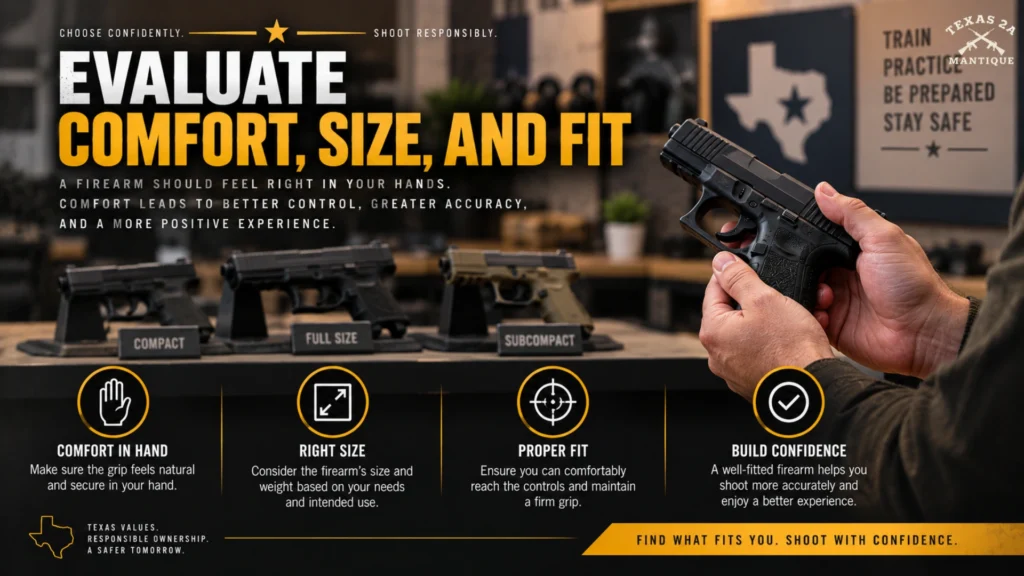
A firearm should be manageable for the person using it.
Size, weight, grip, controls, and overall ergonomics can affect how comfortably and safely a person can handle a firearm. These considerations can be particularly important for new firearm owners.
Whenever legally and appropriately permitted, ask a knowledgeable dealer about the differences between suitable options and focus on how those differences relate to your intended use.
The goal is not to find the firearm that looks best or receives the most attention online. The goal is to identify an option that you can understand, handle responsibly, and maintain properly.
Understand Caliber and Ammunition
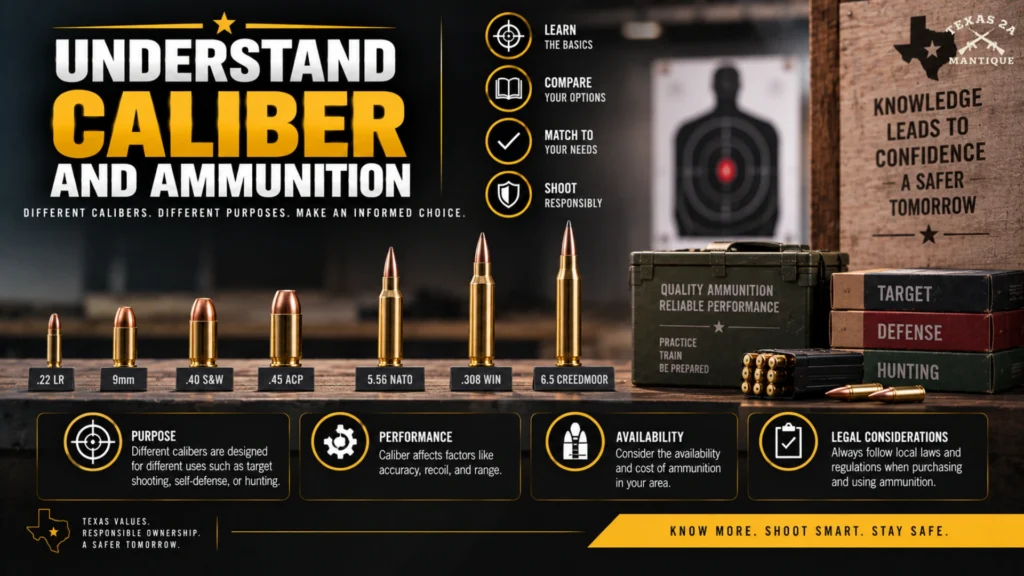
Ammunition compatibility is another essential consideration.
Firearms are designed for specific ammunition, and the correct ammunition should always be determined by the firearm’s markings and manufacturer’s specifications.
Understanding caliber terminology can help you compare firearms and ammunition more confidently, but it is important not to make assumptions about compatibility.
Always follow the manufacturer’s specifications and verify ammunition before use.
If you are uncertain, consult the firearm’s owner’s manual, manufacturer information, or a qualified professional.
Look Beyond the Purchase Price
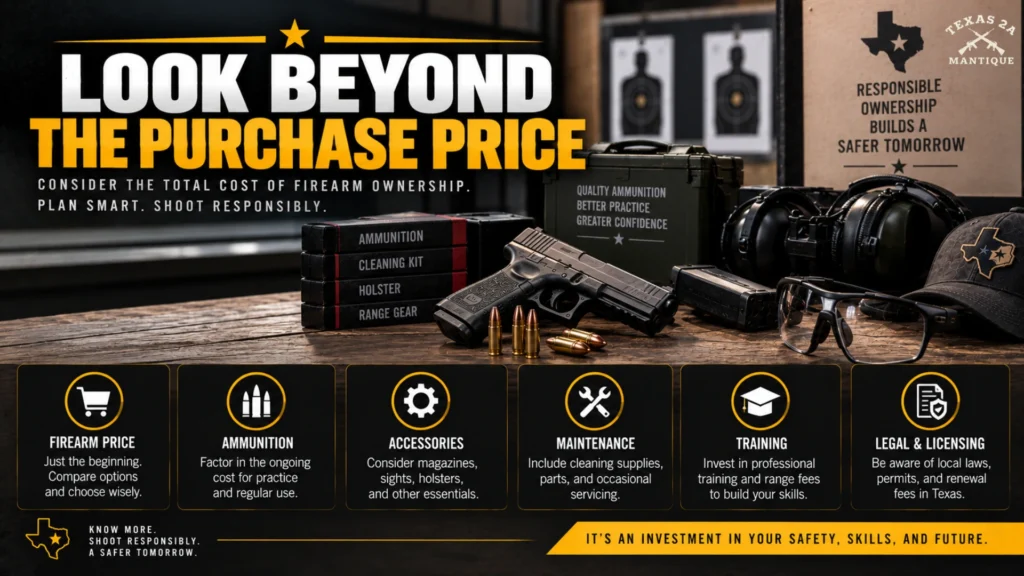
A firearm’s price is only one part of the overall cost of ownership.
Depending on your circumstances and intended use, you may also need to account for:
- Secure storage
- Ammunition
- Safety equipment
- Professional training
- Cleaning and maintenance supplies
- Range or membership costs
- Transportation considerations
Creating a realistic budget before purchasing helps you evaluate the complete cost rather than focusing only on the initial price.
A responsible buyer should also avoid compromising on secure storage or appropriate training simply to reduce expenses.
Know the Applicable Laws
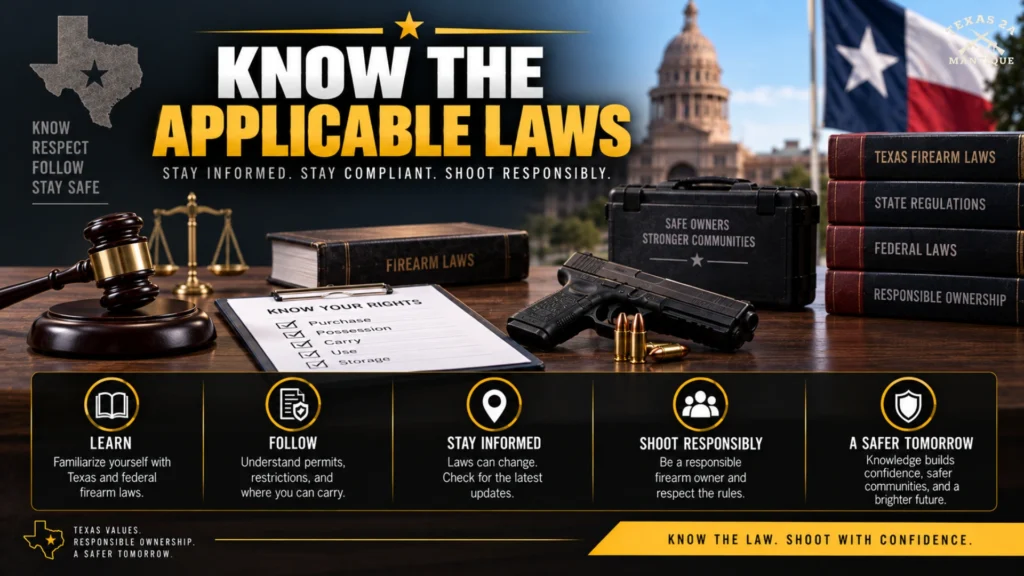
Understanding the law should be part of your decision before you purchase a firearm.
Federal and Texas firearm laws can change, and requirements may vary depending on the individual, firearm, transaction, and circumstances involved.
Before making a purchase, verify the current requirements that apply to you through reliable official sources. If you have questions about a specific legal situation, consider consulting a qualified attorney.
A responsible buyer does not rely on outdated information, social media discussions, or assumptions when making decisions about firearm laws.
Plan for Safe Storage
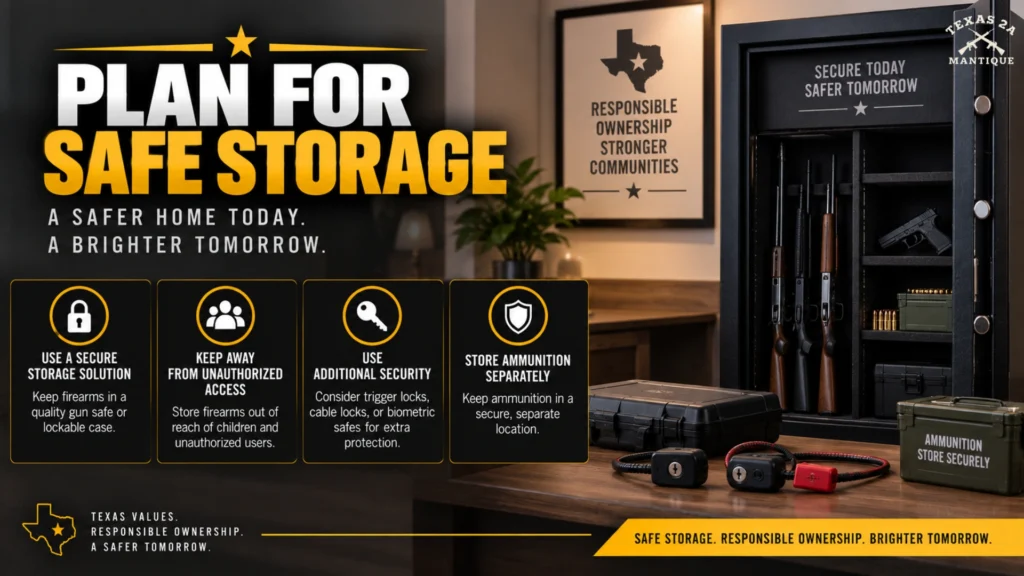
Safe storage should be considered before bringing a firearm home.
A responsible owner should have a plan that prevents unauthorized access while allowing the firearm to be stored securely when it is not in use.
Your storage approach should take into account your household, children or visitors who may have access to your home, and any applicable legal requirements.
Secure storage is not simply an accessory to firearm ownership. It is an important part of responsible ownership.
Make Training Part of the Process
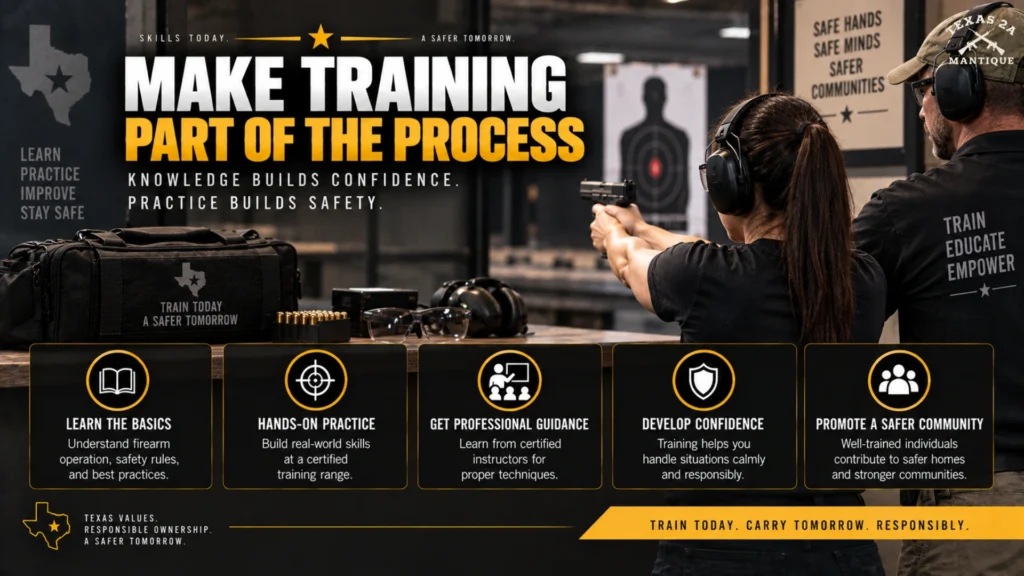
Purchasing a firearm and learning to use it responsibly are separate steps.
Appropriate safety training can help new owners understand safe handling, basic operation, storage, transportation, and other important responsibilities.
Training can also help establish good habits from the beginning. Even experienced owners can benefit from refresher courses and continued education.
The more familiar you are with safe firearm practices, the better prepared you are to approach ownership responsibly.
Do Not Let Trends Make the Decision
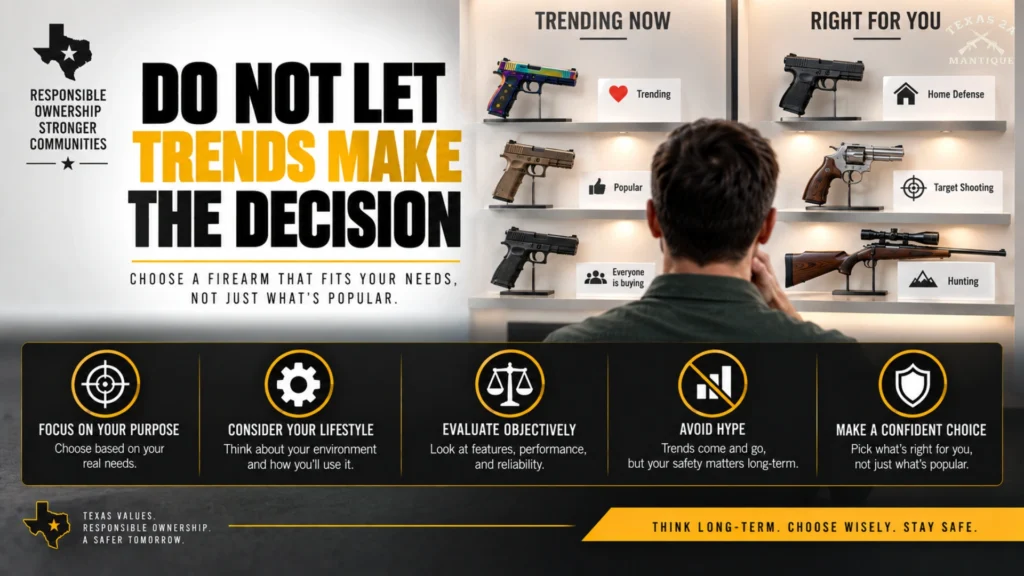
Online reviews, social media, advertisements, and recommendations can introduce buyers to many firearm options. However, popularity should not be confused with suitability.
A firearm that works well for one person may not be the right choice for another.
Instead of asking which firearm is currently the most popular, consider whether an option meets your requirements.
Look at:
- Intended purpose
- Experience level
- Comfort and fit
- Firearm type
- Ammunition requirements
- Overall cost
- Storage needs
- Training requirements
- Applicable laws
This approach helps keep the decision focused on practical considerations rather than impulse.
Ask the Right Questions
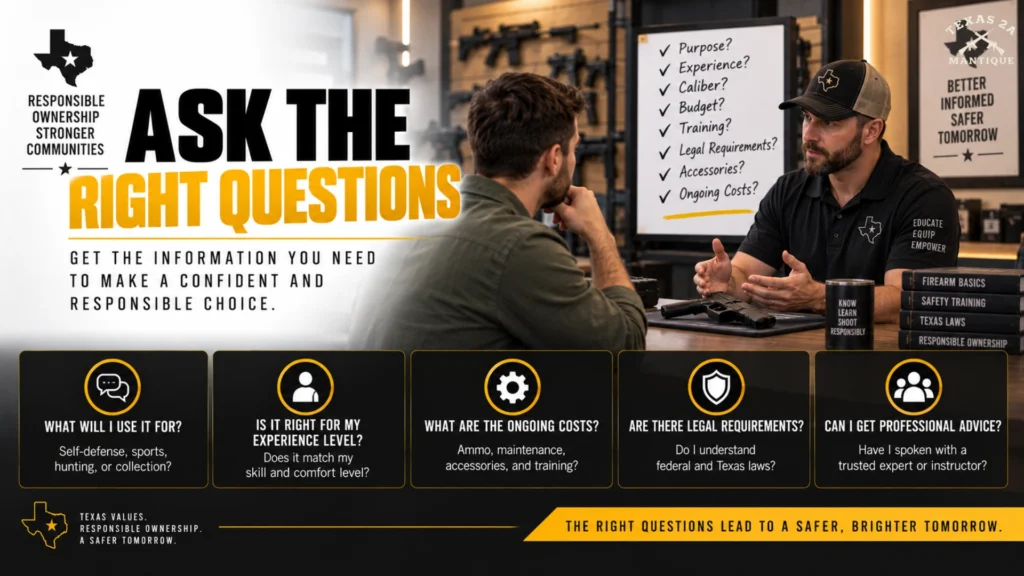
A reputable firearms retailer can help you understand product specifications and differences between suitable options.
Before making a purchase, consider asking:
- What is this firearm designed for?
- What features are most relevant to my intended use?
- What ammunition does the manufacturer specify?
- What maintenance does it require?
- What safety considerations should I understand?
- What storage solution should I consider?
- What training would be appropriate?
- What legal requirements should I verify?
Taking the time to ask questions can make the buying process more informative and help you avoid unnecessary mistakes.
Review Your Decision Before Purchasing

Before completing your purchase, take a final step back and review everything you have considered.
Your Final Decision Checklist
- Purpose: Do I have a clear and legitimate reason for purchasing this firearm?
- Experience: Do I understand its basic operation and the training I may need?
- Fit: Is the firearm appropriate for my physical comfort and ability to handle it safely?
- Ammunition: Do I understand and have I verified the manufacturer’s ammunition specifications?
- Budget: Have I considered the complete cost of responsible ownership?
- Legal Requirements: Have I verified the current federal and Texas requirements that apply to me?
- Storage: Do I have a secure storage plan before bringing the firearm home?
- Maintenance: Am I prepared to follow the manufacturer’s maintenance recommendations?
- Safety: Do I understand the fundamental rules of firearm safety?
If the answer to these questions is yes, you are approaching the decision from a much stronger position than simply choosing a firearm based on appearance, price, or popularity.
Responsible Ownership Starts With an Informed Decision
There is no single firearm that is right for every buyer.
The right decision depends on your circumstances, intended purpose, experience, comfort, budget, training, and ability to meet the responsibilities associated with firearm ownership.
That is why responsible firearm buying is about more than selecting a product.
It is about understanding what you are purchasing, why you are purchasing it, and whether you are prepared to own and handle it safely.
The best decision is an informed decision.
Making the Right Choice With Confidence
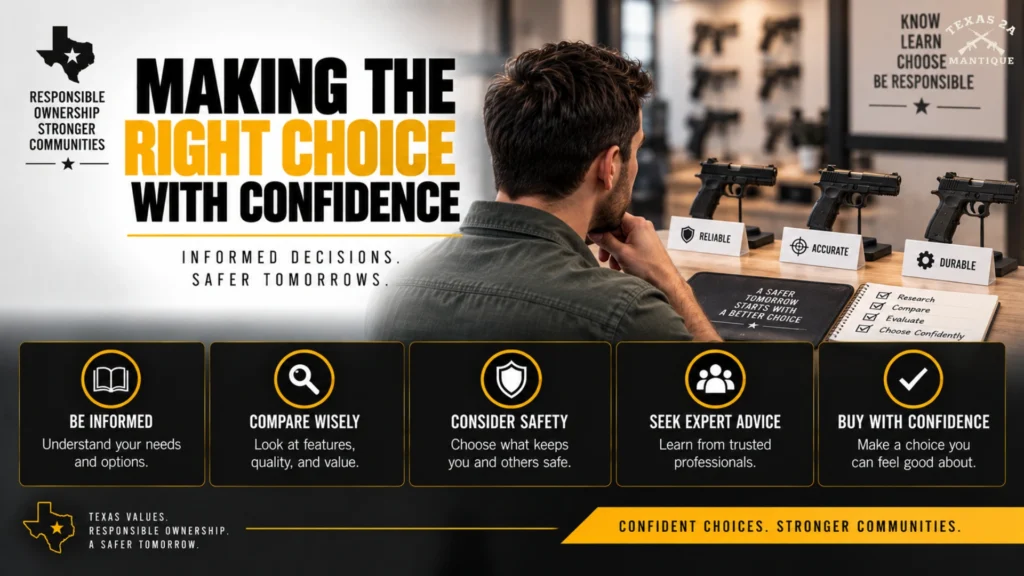
By now, you have explored the key areas involved in making a responsible firearm purchase—from understanding firearm basics and different types to learning about calibers, Texas purchasing considerations, safety, storage, maintenance, and common buying mistakes.
Use that knowledge when evaluating your options.
Take your time. Ask questions. Verify information. Understand the applicable laws. Consider training and secure storage before purchasing. Most importantly, never let pressure or impulse replace careful decision-making.
Conclusion: The Complete Firearm Buying Journey
Buying a firearm is an important decision that should be approached with knowledge, preparation, and responsibility. From understanding firearm types and intended use to considering ammunition, budget, applicable laws, safe storage, maintenance, and training, every factor can play a role in responsible ownership.
At Texas 2A Mantique, we believe informed buyers are better prepared to understand their options and responsibilities. Our goal is to provide useful information that helps Texas firearm buyers approach their purchasing decisions with greater confidence and awareness.
Take the time to understand your needs, verify current legal requirements, ask questions, and prioritize proper training and secure storage. A responsible firearm purchase is not about choosing based on popularity or impulse—it is about making a decision you understand and are prepared to take responsibility for.

Leave a Reply