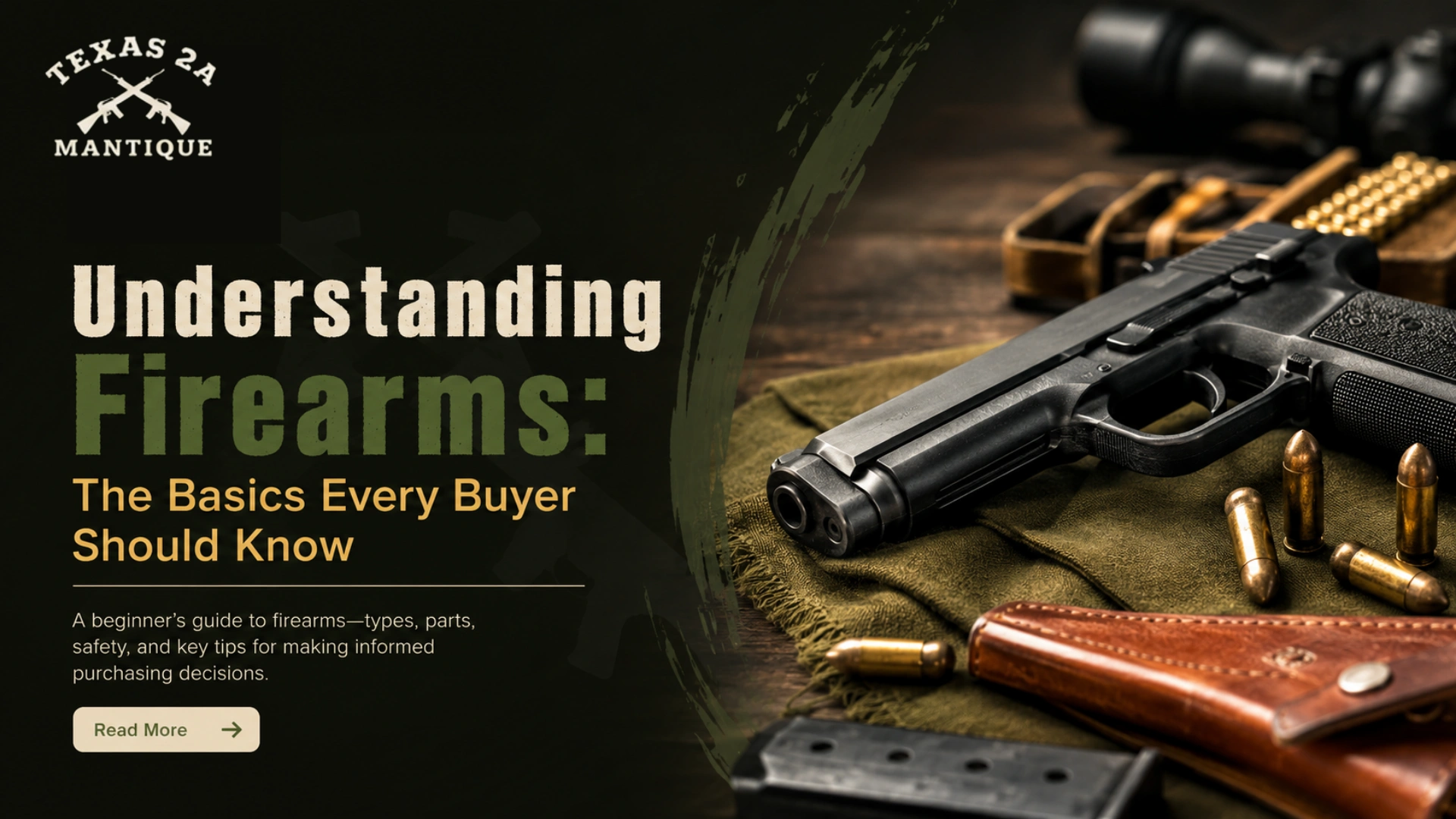
Buying a firearm is more than simply choosing a product from a store – it’s a decision that comes with responsibility. Whether you’re considering a firearm for personal protection, home defense, hunting, recreational shooting, or sport shooting, understanding the basics is the first step toward making an informed choice.
For many first-time buyers, the number of options available can feel overwhelming. Handguns, rifles, shotguns, calibers, actions, and accessories all play a role in finding the right firearm. Without a clear understanding of these fundamentals, it’s easy to choose a firearm that doesn’t match your needs or experience level.
That’s why education should always come before purchase.
At Texas 2A Mantique, we believe every firearm owner should have the knowledge needed to choose, handle, and maintain a firearm responsibly. This guide explains the fundamentals in simple terms, helping you understand how firearms work, the different types available, and what to consider before making your first purchase.
What Is a Firearm?
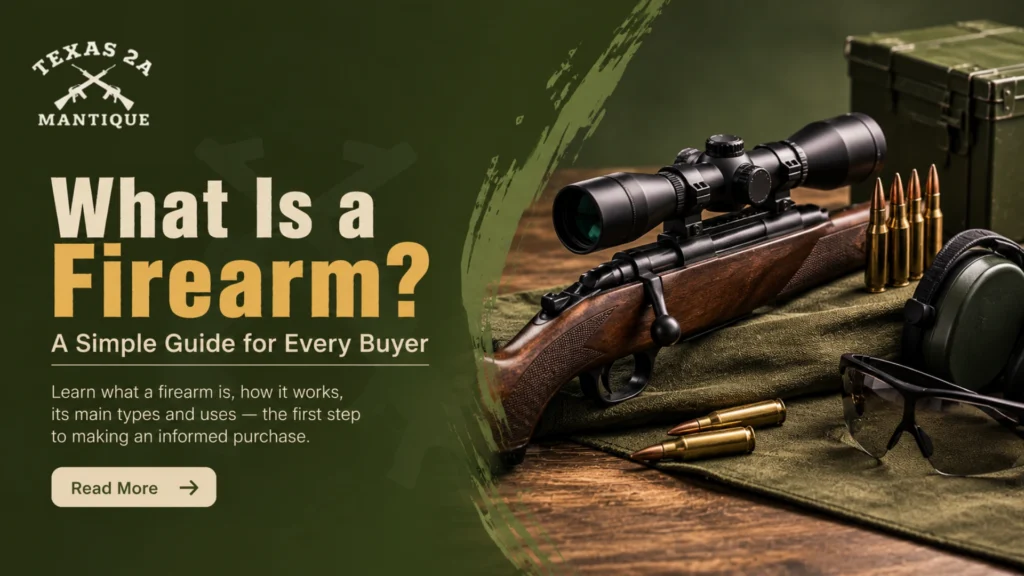
A firearm is a mechanical device designed to launch a projectile by using the energy created when a cartridge is fired. While modern firearms come in many shapes and sizes, they all operate on the same basic principle: converting the energy from ammunition into the force needed to propel a projectile through the barrel.
How Does a Firearm Work?
You don’t need to be an expert to understand how a firearm works, but knowing the basic process can help you become a more informed and confident owner.
Although different firearms have different operating systems, the firing process generally follows these steps:
Step 1: Loading the Firearm
The first step is loading the appropriate ammunition into the firearm. Depending on the firearm type, ammunition may be loaded into a magazine, cylinder, or directly into the chamber.
Step 2: Chambering a Round
When the firearm is prepared for use, one cartridge is positioned inside the chamber, ready to be fired.
Step 3: Firing
When the trigger is pressed, the firearm’s firing mechanism strikes the cartridge. This ignites the primer and powder inside the cartridge, creating expanding gases that push the projectile through the barrel.
Step 4: Cycling the Action
Depending on the firearm’s design, the spent cartridge is removed, and the next round may be automatically or manually prepared for firing.
The Main Parts of a Firearm
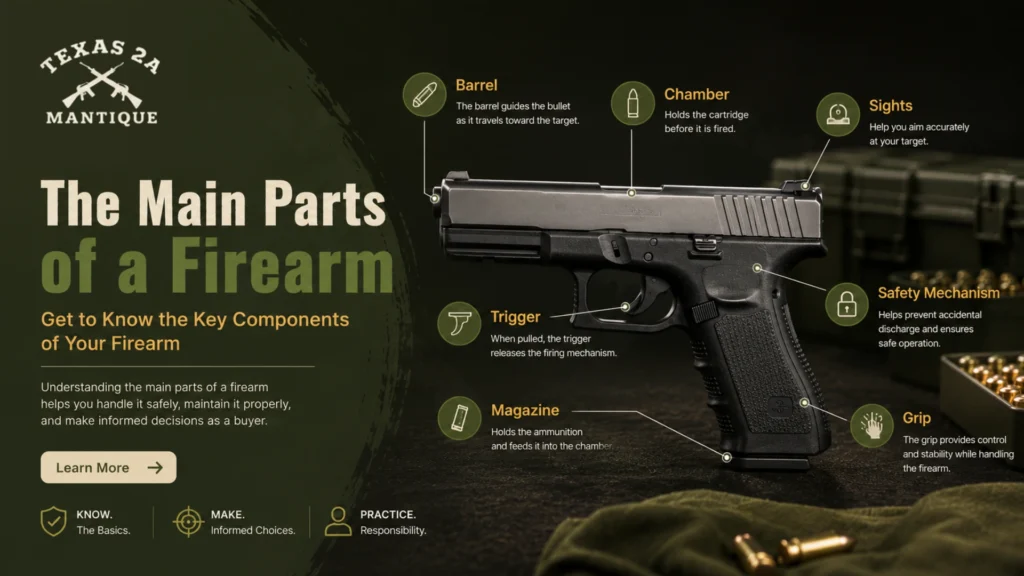
Understanding the main parts of a firearm is one of the first steps toward becoming a knowledgeable and responsible firearm owner. Every firearm, whether it’s a handgun, rifle, or shotgun, is made up of several essential components that work together to ensure proper operation.
Below are the key parts every firearm buyer should know.
1. Barrel
The barrel is the long metal tube through which the projectile travels after the firearm is fired. It is one of the most important components because it helps guide the projectile toward the intended target.
Barrels are available in different lengths and designs depending on the type and purpose of the firearm. For example, rifles typically have longer barrels for improved accuracy over greater distances, while handguns usually feature shorter barrels for easier handling and portability.
2. Chamber
The chamber is the section of the firearm where a cartridge is positioned before firing. When a round is loaded, it sits securely inside the chamber until the trigger is pulled.
Each firearm is designed to operate with specific ammunition, making it essential to use the correct caliber recommended by the manufacturer. Using the wrong ammunition can affect performance and may create serious safety risks.
A properly functioning chamber helps ensure:
- Reliable firearm operation
- Smooth cartridge loading
- Consistent performance
- Safe firing
3. Trigger
The trigger is the control that activates the firearm’s firing mechanism. When pressed correctly, it initiates the firing sequence that discharges the cartridge.
Although the trigger appears to be a simple component, proper trigger control is one of the most important skills every firearm owner should develop. Good trigger discipline improves accuracy while also helping prevent accidental discharges.
Safe firearm handling always means:
- Keeping your finger outside the trigger guard until you are ready to shoot.
- Never placing your finger on the trigger while loading, unloading, or carrying a firearm.
- Maintaining complete control of the firearm at all times.
4. Grip
The grip is the area of the firearm where the shooter holds and controls it during operation. A well-designed grip provides stability, comfort, and better overall handling.
Because every person’s hands are different, grip size and shape can greatly influence shooting comfort and confidence. Choosing a firearm with a grip that fits naturally in your hand allows for better control and a more comfortable shooting experience.
A properly fitted grip can improve:
- Shooting control
- Stability
- Accuracy
- Comfort during extended practice
- Overall confidence
5. Magazine
A magazine is a device that stores ammunition and feeds cartridges into the firearm. Most modern semi-automatic pistols and rifles use detachable or fixed magazines, depending on the firearm’s design.
Magazines are available in different capacities, allowing them to hold varying numbers of cartridges. The appropriate magazine depends on the specific firearm model and its intended use.
One of the most common misconceptions among new buyers is confusing a magazine with a clip.
A magazine stores and feeds ammunition into the firearm, while a clip is generally a device used to assist with loading ammunition into certain types of magazines. Although the terms are often used interchangeably, they are not the same.
Understanding this difference helps buyers communicate more accurately when discussing firearms.
6. Safety Mechanism
Many modern firearms include a safety mechanism designed to help reduce the risk of unintended firing. Depending on the firearm model, the safety may be operated using a lever, button, or switch.
While safety mechanisms provide an additional layer of protection, they should never replace responsible firearm handling.
Every firearm owner should remember that:
- Mechanical safeties can fail.
- Safe handling practices should always come first.
- Every firearm should be treated as if it is loaded.
7. Sights
The sights help the shooter align the firearm accurately with the intended target. Different sight systems are available depending on the firearm type and its intended use.
The most common sight types include:
Iron Sights:
Iron sights are the traditional aiming system found on many firearms. They are durable, simple to use, and require no batteries or electronics.
Red Dot Sights:
Red dot sights use an illuminated aiming point, making target acquisition faster and easier. They are commonly used for recreational shooting, competition, and home defense applications.
Optical Scopes:
Scopes provide magnification, allowing shooters to engage targets more accurately at longer distances. They are commonly found on hunting and precision rifles.
Reflex Sights:
Reflex sights offer a wide field of view and quick target alignment, making them popular for dynamic shooting environments.
The right sight system depends on how the firearm will be used, the shooting distance, and personal preference.
Understanding Firearm Categories
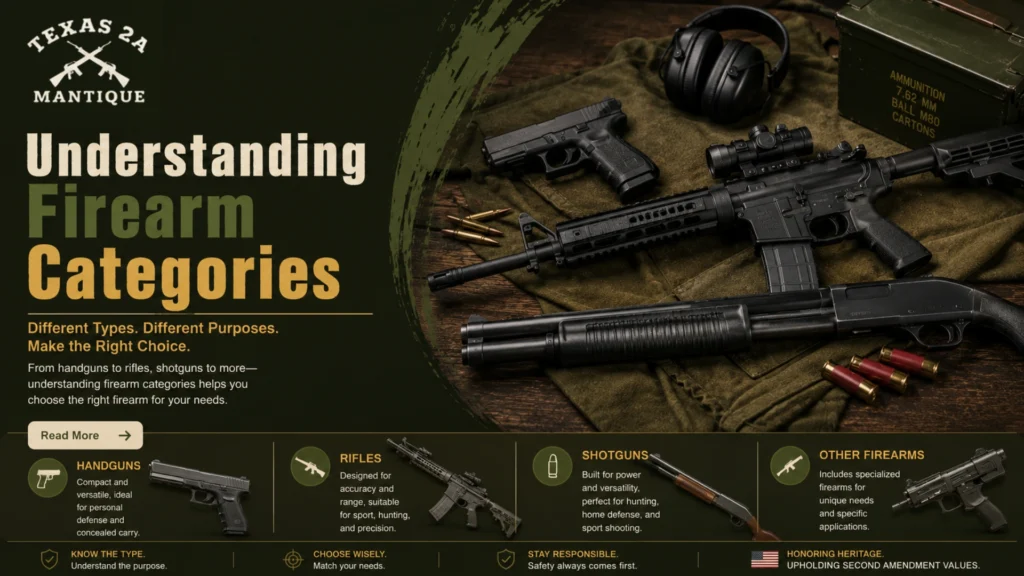
One of the most important steps before buying a firearm is understanding the different types of firearms available. Each firearm category is designed with specific features and intended uses, making it better suited for certain activities than others.
Whether you’re buying your first firearm for personal protection, home defense, hunting, recreational shooting, or competitive shooting, choosing the right category is essential. A firearm that works well for one purpose may not be the best option for another.
The three primary firearm categories are:
Understanding Firearm Actions
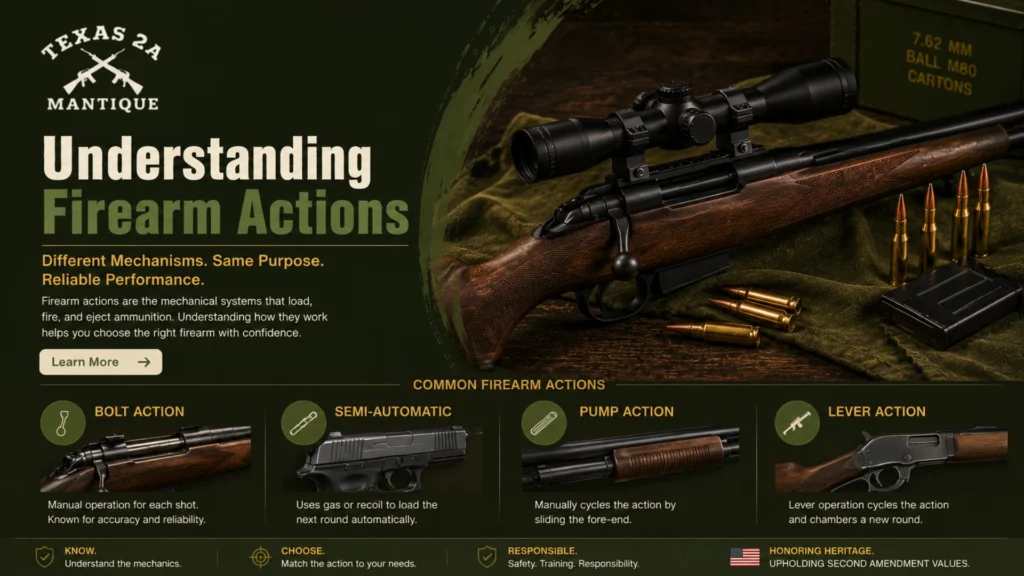
Every firearm operates using an action, which is the mechanism responsible for loading, firing, and ejecting ammunition. The type of action affects how the firearm functions, how quickly it can be fired, and the level of user involvement between shots.
Some of the most common firearm action types include semi-automatic, revolver, bolt-action, pump-action, lever-action, and break-action. Each is designed for different purposes, shooting styles, and experience levels.
While you don’t need to master every action type before purchasing a firearm, having a basic understanding of how they operate can help you make a more informed buying decision. If you’d like to explore each action type in detail, check out our guide on Different Types of Firearms Available in Texas.
Basic Firearm Safety Principles
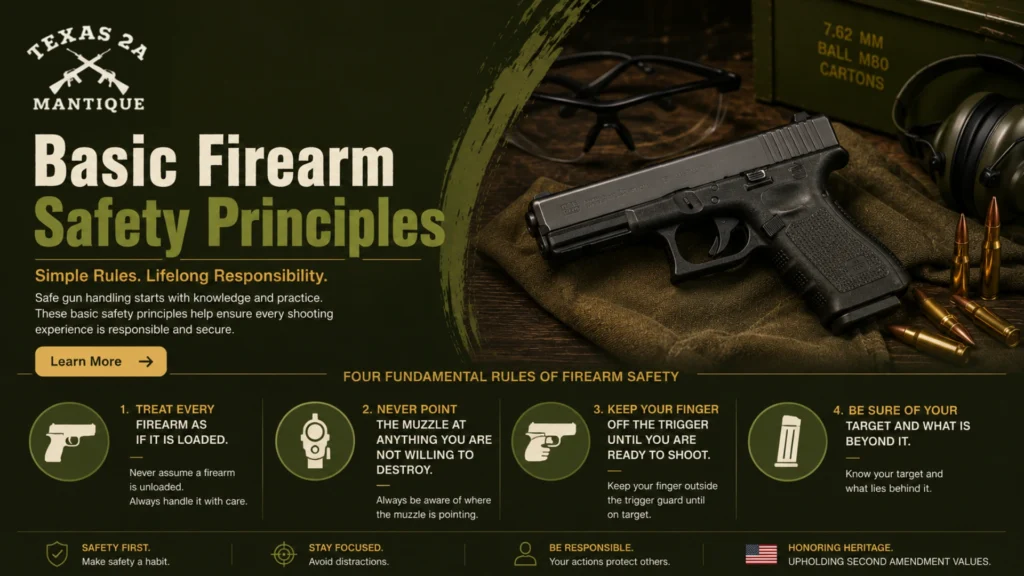
Understanding how a firearm works is only part of becoming a responsible firearm owner. Safe firearm handling should always be your highest priority, whether you’re purchasing your first firearm or have years of shooting experience.
Every firearm owner should follow these fundamental safety principles:
- Always treat every firearm as if it is loaded.
- Never point a firearm at anything you are not willing to destroy.
- Keep your finger off the trigger until you are ready to shoot.
- Know your target and what is beyond it before firing.
These simple rules help reduce the risk of accidents and encourage responsible firearm ownership. Developing safe habits from the very beginning builds confidence and ensures a safer experience whenever you handle a firearm.
For a more comprehensive overview of safe firearm handling, storage, and transportation, read our Firearm Safety Guide for New Owners.
Common Firearm Terms Every Buyer Should Know
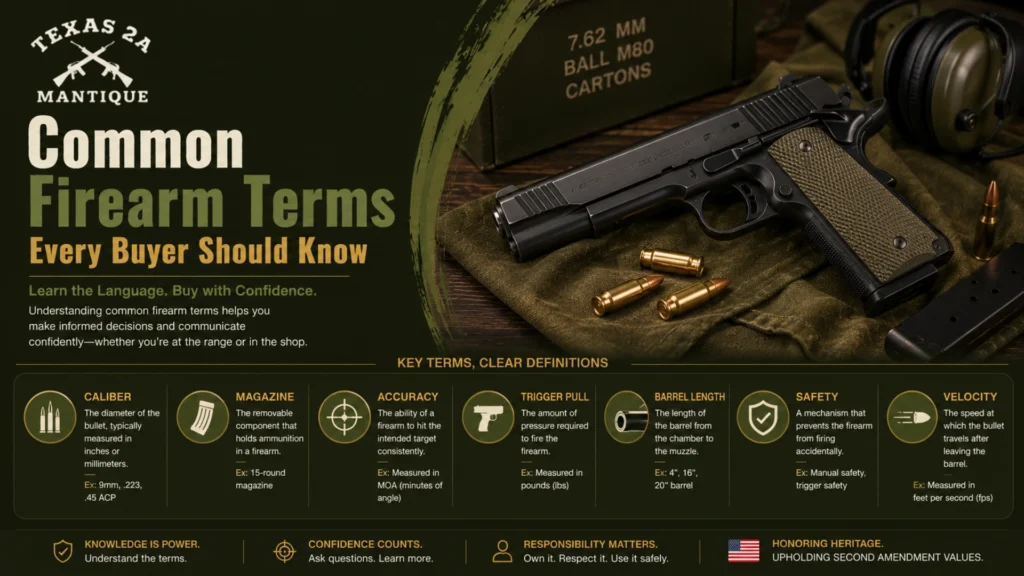
As you research firearms, you’ll come across technical terms that may seem unfamiliar at first. Learning a few basic terms can make it easier to understand product descriptions, communicate with firearm professionals, and choose the right firearm for your needs.
Here are a few common terms every buyer should know:
- Barrel – The metal tube through which the projectile travels when the firearm is fired.
- Chamber – The section of the firearm where a cartridge is loaded before firing.
- Trigger – The control that activates the firearm’s firing mechanism.
- Magazine – A device that stores and feeds ammunition into many modern firearms.
- Action – The mechanism that loads, fires, and ejects ammunition.
- Caliber – The size or diameter of the ammunition a firearm is designed to use.
What Every First-Time Buyer Should Remember
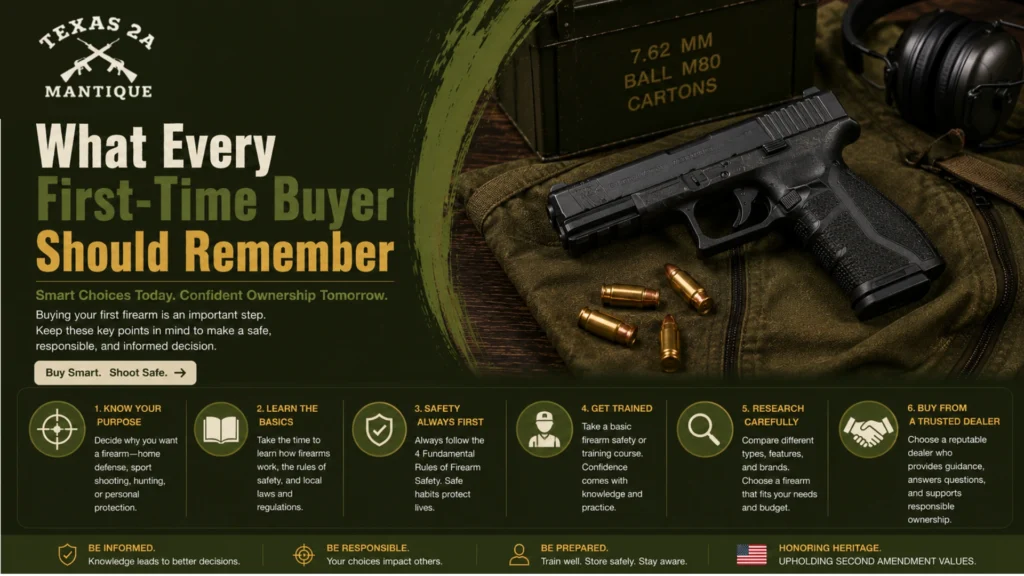
Buying your first firearm is an important decision that should be based on knowledge rather than impulse. Taking the time to understand firearm basics, learn proper safety practices, and become familiar with common terminology will help you choose a firearm that fits your needs and experience level.
Before making a purchase, consider your intended purpose, ask questions, and don’t hesitate to seek guidance from knowledgeable professionals. Handling different firearm models and learning how they operate can also help you feel more confident in your decision.
At Texas 2A Mantique, we’re committed to helping every customer make informed choices through expert guidance and responsible firearm education. Whether you’re exploring firearms for personal protection, hunting, or recreational shooting, understanding the fundamentals is the first step toward safe and confident firearm ownership.
Need Help?
If you have questions or need help understanding your options, the team at Texas 2A Mantique is here to assist. Visit our store or contact us for knowledgeable guidance and friendly customer support.
Contact us today to learn more or speak with our team.

Leave a Reply