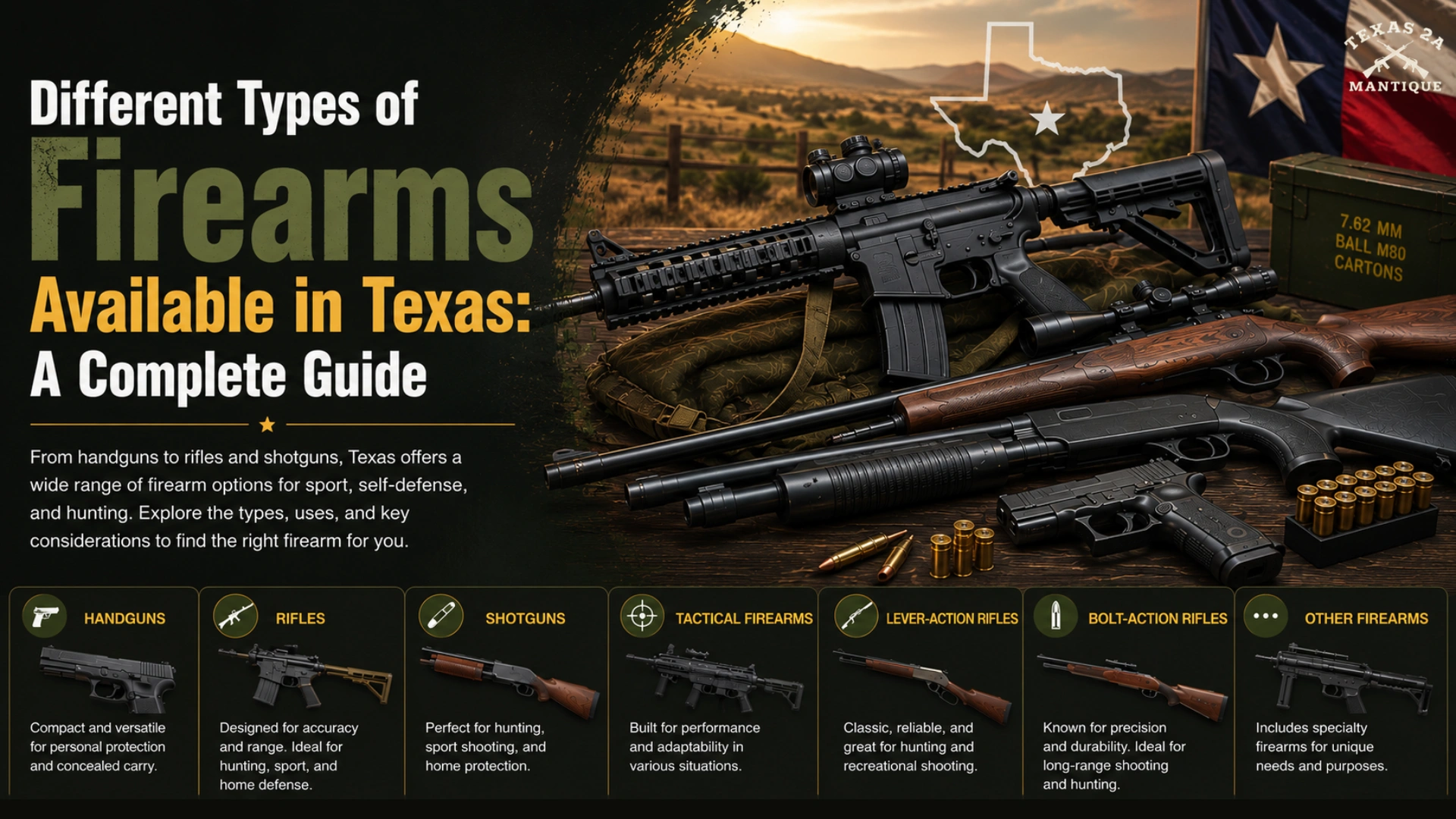
If you’re planning to buy your first firearm, one of the most important things to understand is that not all firearms are the same. Every firearm is designed with a specific purpose in mind, and choosing the right one starts with learning about the different types available.
Whether you’re interested in personal protection, home defense, hunting, target shooting, competitive shooting, or recreational use, selecting the right firearm category can make a significant difference in your overall experience. A firearm that performs well for hunting may not be the best option for home defense, just as a compact handgun may not be ideal for long-range target shooting.
At Texas 2A Mantique, we believe that responsible firearm ownership begins with education. Our goal is to help customers understand the differences between firearm types so they can make informed decisions based on their needs, experience level, and intended use.
Understanding the Three Main Firearm Categories
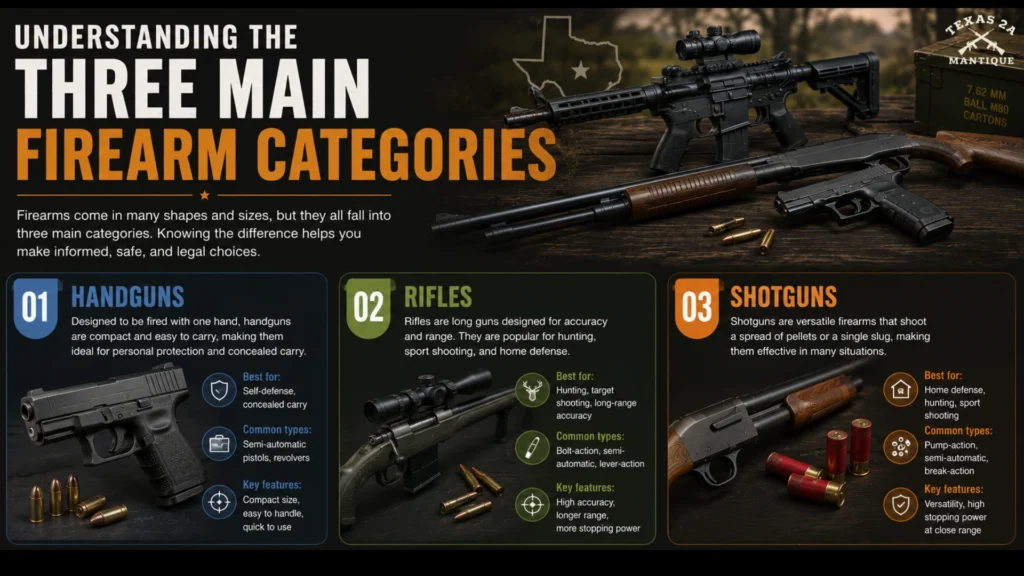
Although there are many firearm models and designs available today, nearly all firearms fall into three primary categories:
- Handguns
- Rifles
- Shotguns
Each category has its own design, handling characteristics, and intended applications. While they all perform the same basic function – firing a projectile – they differ in size, operation, accuracy, and overall purpose.
Understanding these categories will make it much easier to compare different firearm models and narrow your choices before visiting a firearm dealer.
Let’s take a closer look at each category.
Handguns
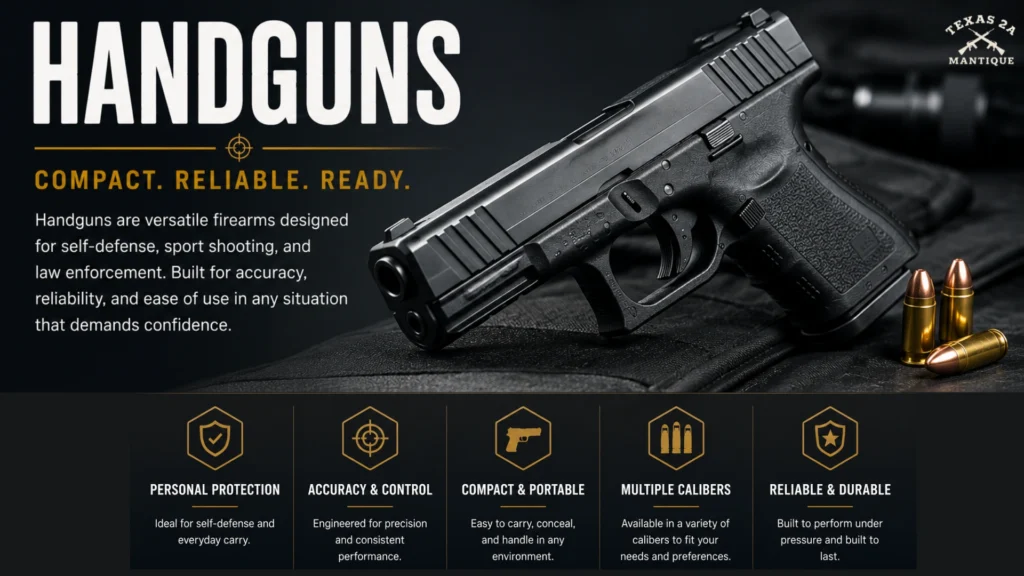
Handguns are among the most popular firearms in Texas because of their compact size, versatility, and ease of handling. Designed to be operated primarily with one hand, they are commonly used for a variety of shooting activities and are often the first firearm many people purchase.
Although handguns are smaller than rifles and shotguns, they come in a wide range of sizes, calibers, and styles. This variety allows buyers to choose a model that best matches their intended use and comfort level.
Many first-time firearm owners begin by exploring handguns because they are widely available and suitable for both beginners and experienced shooters.
What Is a Handgun?
A handgun is a compact firearm designed for portability and convenient handling. Unlike rifles and shotguns, handguns are smaller in size, making them easier to transport and store.
Despite their compact design, handguns are available in many different configurations, allowing buyers to select one that fits their experience level and shooting preferences.
Handguns are commonly used for:
- Personal protection
- Home defense
- Recreational shooting
- Target practice
- Firearm training
- Competitive shooting
Types of Handguns
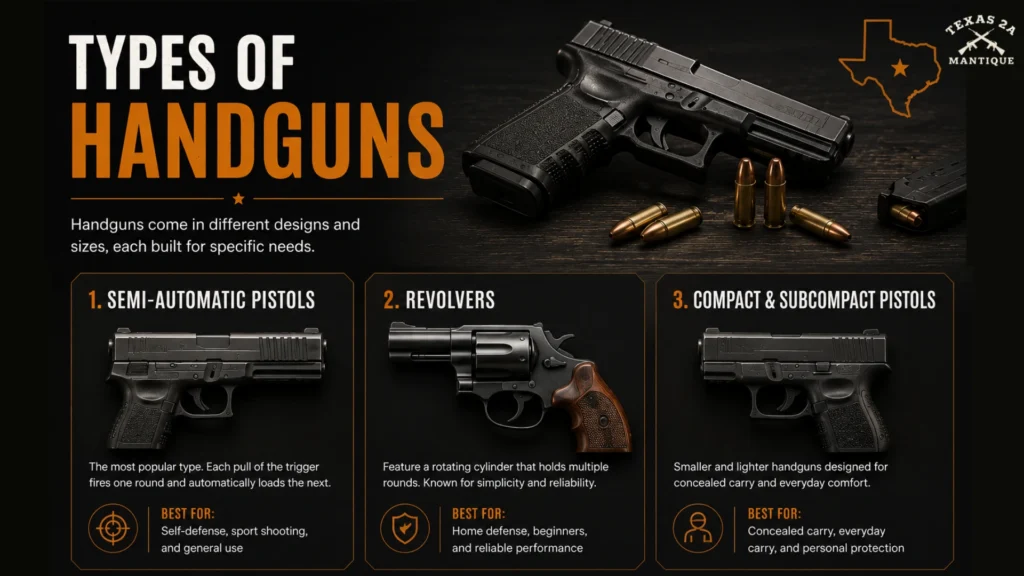
There are two primary types of handguns that every buyer should understand.
Semi-Automatic Pistols
Semi-automatic pistols are the most common type of handgun available today. After each shot is fired, the firearm automatically loads the next round into the chamber, allowing the shooter to continue firing with each pull of the trigger.
These handguns are popular because they are available in many different sizes, calibers, and configurations, making them suitable for a wide variety of shooting activities.
Semi-automatic pistols are commonly chosen for:
- Personal protection
- Home defense
- Recreational shooting
- Firearm training
- Competitive shooting
Revolvers
Revolvers use a rotating cylinder that holds multiple cartridges instead of a detachable magazine. Each pull of the trigger rotates the cylinder, positioning the next cartridge for firing.
Although revolvers have been around for many years, they remain a trusted choice because of their simple operation and dependable mechanical design.
Many new shooters appreciate revolvers because they are straightforward to understand and require fewer moving parts than many modern semi-automatic handguns.
Revolvers are commonly used for:
- Recreational shooting
- Target practice
- Firearm training
- Personal protection
Advantages of Handguns
Handguns offer several benefits that make them one of the most widely owned firearm categories.
Some of the key advantages include:
- Compact and lightweight design
- Easy to transport and store
- Comfortable for regular range practice
- Available in a wide variety of calibers
- Large selection of models and accessories
- Suitable for both beginners and experienced shooters
Because handguns are available in so many different sizes and styles, buyers can often find one that fits their hands comfortably while matching their intended purpose.
Things to Consider Before Buying a Handgun
Before choosing a handgun, it’s important to think beyond appearance or brand reputation.
Consider factors such as:
Intended Use
Ask yourself why you’re buying a handgun.
Is it for:
- Recreational shooting?
- Home defense?
- Firearm training?
- Competitive shooting?
Comfort
A handgun should feel secure and comfortable in your hands.
Pay attention to:
- Grip size
- Overall weight
- Trigger reach
- Balance
- Ease of operating the controls
Caliber
Different handguns are chambered for different calibers, each offering its own shooting characteristics. Some calibers provide lighter recoil for easier practice, while others are designed for different performance needs. Taking the time to understand caliber options can help you select a handgun that matches your experience level.
Training
Regardless of which handgun you choose, regular training and safe handling practices are essential.
Learning proper firearm operation, practicing at the range, and following firearm safety rules will help you become a more confident and responsible firearm owner.
Is a Handgun the Right Choice for You?
A handgun can be an excellent option if you’re looking for a firearm that is compact, versatile, and suitable for a variety of shooting activities.
Many first-time buyers choose a handgun because it is easy to store, comfortable to carry, and available in countless models to suit different needs and preferences.
However, the right choice ultimately depends on your intended use, comfort level, and willingness to practice. Taking the time to compare different handgun models and handle them before purchasing can help ensure you find the firearm that best fits your needs.
At Texas 2A Mantique, we encourage every customer to explore different handgun options, ask questions, and make an informed decision based on education rather than impulse. Our team is committed to helping you choose a firearm that supports safe, responsible, and enjoyable ownership.
Rifles
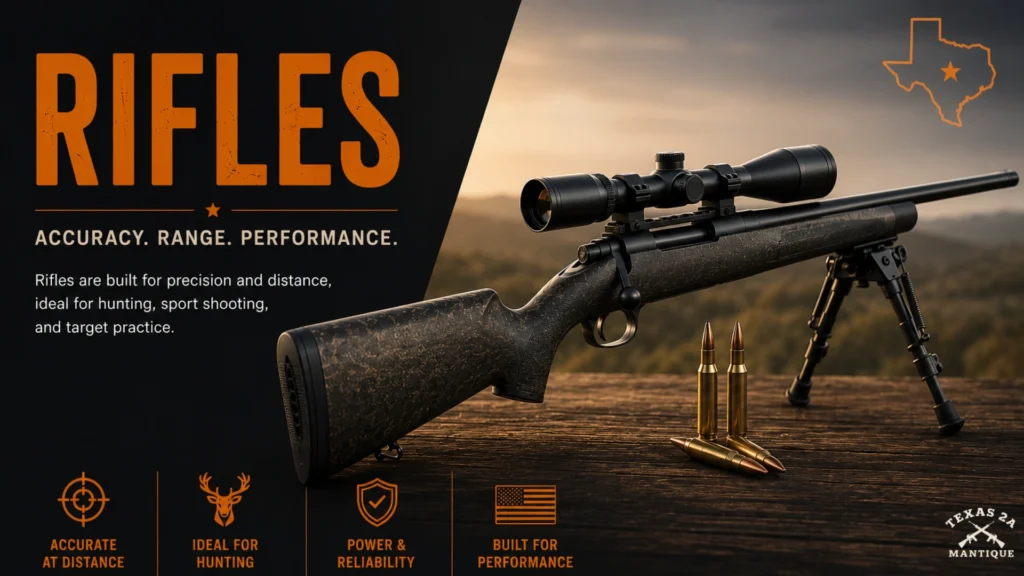
Rifles are one of the most versatile firearm categories available today. Known for their accuracy, stability, and long-range performance, they are a popular choice for hunting, target shooting, recreational shooting, and competitive events.
Unlike handguns, rifles are designed to be fired from the shoulder, providing greater stability and improved control. Their longer barrels also help increase accuracy, making them an excellent option for shooters who want precision at medium to long distances.
Whether you’re new to firearms or have years of shooting experience, understanding how rifles work and what they’re designed for can help you determine if they’re the right choice for your needs.
What Is a Rifle?
A rifle is a firearm with a long barrel and a shoulder stock, designed to provide better stability and improved accuracy than most handguns. The barrel contains spiral grooves, known as rifling, which spin the projectile as it travels down the barrel. This spinning motion helps improve stability and accuracy during flight.
Rifles are available in a wide variety of sizes, calibers, and action types, allowing shooters to choose a model based on their intended use.
Rifles are commonly used for:
- Hunting
- Target shooting
- Recreational shooting
- Competitive shooting
- Precision shooting
- Outdoor sporting activities
Because of their design, many beginners find rifles easier to control and aim, especially during their first range sessions.
Types of Rifles
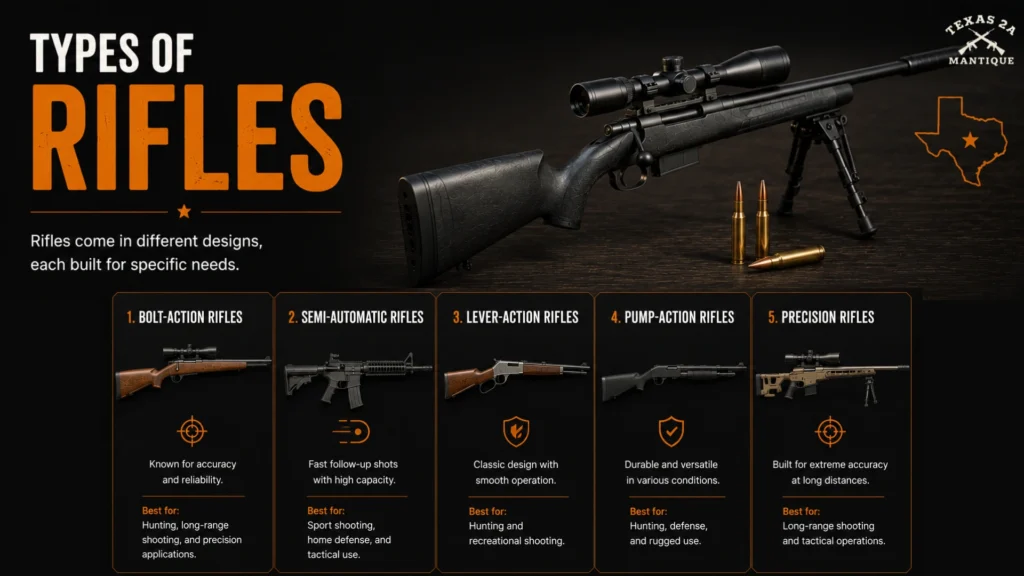
There are several different types of rifles, each designed for specific shooting styles and applications. Understanding these differences will help you choose a rifle that matches your goals.
Bolt-Action Rifles
Bolt-action rifles require the shooter to manually operate the bolt after each shot. This action ejects the spent cartridge and loads the next round into the chamber.
These rifles are widely respected for their accuracy, reliability, and simple mechanical design. Because they have fewer moving parts, bolt-action rifles are often preferred by hunters and precision shooters.
Common Uses
- Hunting
- Long-range target shooting
- Precision shooting
- Outdoor recreation
Advantages
- Outstanding accuracy
- Reliable performance
- Durable construction
- Simple operation
- Easy maintenance
If your primary goal is precision shooting or hunting, a bolt-action rifle is often an excellent choice.
Semi-Automatic Rifles
A semi-automatic rifle automatically chambers the next round after each shot while requiring a separate trigger pull for every round fired.
These rifles are among the most popular firearm platforms because they combine ease of use with versatility.
Common Uses
- Recreational shooting
- Target practice
- Competitive shooting
- Firearm training
Advantages
- Quick follow-up shots
- Comfortable shooting experience
- Wide range of models and calibers
- Large aftermarket support and accessories
Semi-automatic rifles are popular with shooters who enjoy frequent range practice and sporting activities.
Lever-Action Rifles
Lever-action rifles use a lever located beneath the receiver to load the next cartridge after firing. This classic design has been trusted for generations and remains popular among hunters and firearm collectors.
Although lever-action rifles have a traditional appearance, many modern versions offer excellent reliability and smooth operation.
Common Uses
- Hunting
- Recreational shooting
- Cowboy action shooting
- Firearm collecting
Advantages
- Smooth cycling action
- Reliable performance
- Classic design
- Comfortable handling
Lever-action rifles are an excellent choice for those who appreciate traditional firearm craftsmanship while still wanting dependable performance.
Advantages of Rifles
Rifles offer several advantages that make them one of the most popular firearm categories in Texas.
Some of the key benefits include:
- Excellent accuracy at medium and long distances
- Stable shooting platform
- Comfortable shoulder support
- Wide variety of calibers and configurations
- Suitable for hunting, sport shooting, and recreation
- Available for beginners and experienced shooters alike
Because rifles provide additional stability, many new firearm owners find them easier to learn compared to smaller firearms.
Things to Consider Before Buying a Rifle
Choosing a rifle involves more than selecting a model that looks appealing. Before making your decision, consider how you plan to use it and which features matter most.
Purpose
Your intended use should always guide your purchase.
Ask yourself:
- Will you use it for hunting?
- Are you interested in target shooting?
- Do you plan to compete in shooting sports?
- Is it mainly for recreational use?
Size and Weight
Rifles come in various lengths and weights.
A lightweight rifle may be easier to carry during long hunting trips, while a heavier rifle can provide additional stability for target shooting.
Choose a rifle that feels balanced and comfortable when held.
Caliber
Selecting the right caliber is an important part of choosing a rifle.
Different calibers are designed for different purposes, so it’s important to consider:
- Intended use
- Shooting distance
- Ammunition availability
- Recoil level
- Experience level
Understanding caliber options will help you choose a rifle that’s comfortable to shoot and suited to your needs.
Optics and Accessories
Many rifles can be customized with accessories such as:
- Scopes
- Red dot sights
- Slings
- Bipods
- Protective cases
Think about whether you’ll want to add accessories in the future, especially if you’re planning to use the rifle for hunting or precision shooting.
Is a Rifle the Right Choice for You?
A rifle may be the right firearm if you’re looking for greater accuracy, improved stability, and reliable performance at longer distances.
Many shooters choose rifles because they offer excellent versatility for outdoor activities, including hunting, recreational shooting, and target practice. They are also a great option for those who enjoy developing precision shooting skills.
The best rifle for you will depend on your intended use, experience level, comfort, and budget. Taking the time to compare different models and understand their features can help you make a confident purchasing decision.
At Texas 2A Mantique, we help customers explore a wide range of rifle options and provide expert guidance based on their individual needs. Whether you’re buying your first rifle or adding to your collection, our team is committed to helping you choose a firearm that fits your goals and supports responsible firearm ownership.
Shotguns
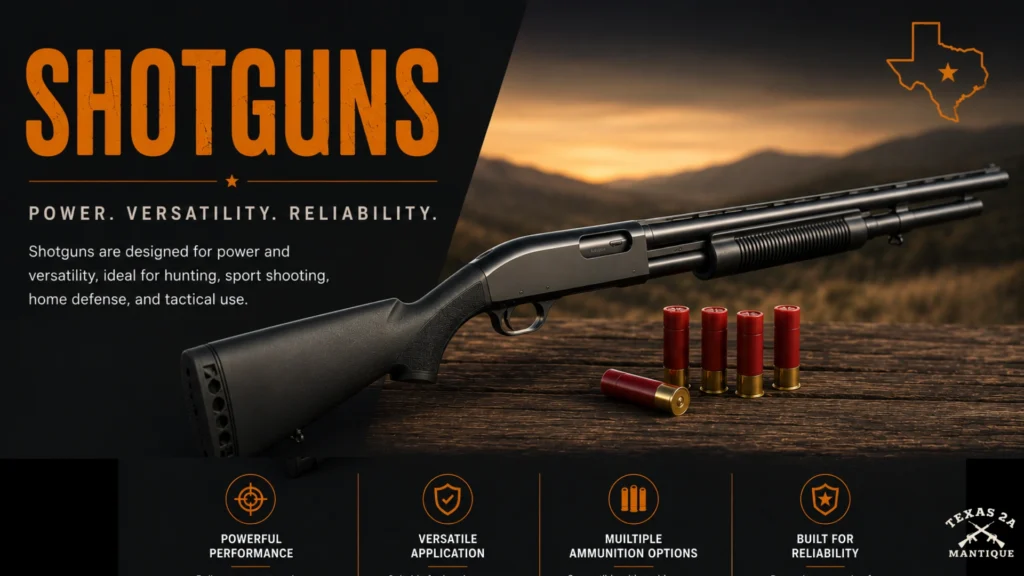
Shotguns are one of the most versatile firearm categories, making them a popular choice for hunters, sport shooters, and recreational firearm enthusiasts. Unlike rifles and handguns, shotguns are designed to fire shotshells, which can be loaded with different types of projectiles depending on the intended purpose.
Because of their flexibility, shotguns are used in a wide range of shooting activities – from hunting birds and small game to clay target sports and recreational shooting. They are available in several action types and configurations, allowing buyers to choose a model that matches their experience level and shooting goals.
If you’re considering a shotgun, understanding the different types and their common uses is an important step before making a purchase.
What Is a Shotgun?
A shotgun is a shoulder-fired firearm designed to shoot shotshells rather than traditional rifle or handgun cartridges. Depending on the type of ammunition used, a shotgun can be suitable for various sporting and hunting applications.
Shotguns are known for their versatility and are commonly selected by firearm owners who enjoy outdoor activities and target shooting sports.
Common Uses of Shotguns
Shotguns are frequently used for:
- Hunting birds and game
- Clay target shooting
- Trap and skeet shooting
- Recreational shooting
- Sporting competitions
With the right ammunition and setup, a shotgun can be adapted for many different shooting activities.
Types of Shotguns
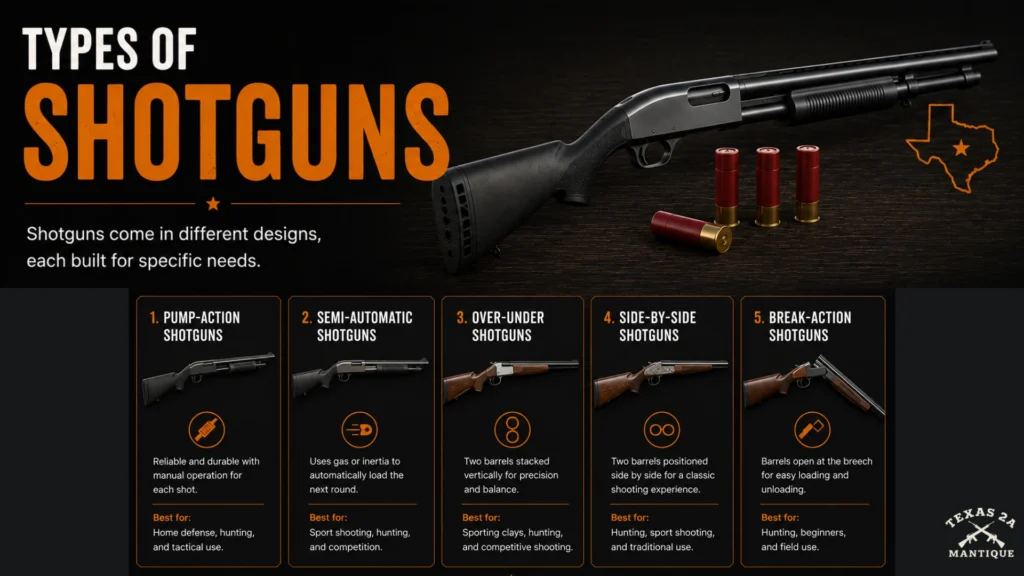
Like other firearms, shotguns are available in different action types. Each offers unique advantages depending on how you plan to use the firearm.
Pump-Action Shotguns
A pump-action shotgun requires the shooter to manually slide the fore-end backward and forward after each shot. This action ejects the spent shell and chambers the next round.
Pump-action shotguns are widely respected for their reliability and simple operation, making them one of the most popular shotgun designs available.
Common Uses
- Hunting
- Clay target shooting
- Recreational shooting
- Outdoor sporting activities
Advantages
- Reliable performance
- Durable construction
- Easy maintenance
- Available in many configurations
- Suitable for a variety of shooting activities
Many first-time shotgun buyers choose pump-action models because they offer dependable performance and long-term durability.
Semi-Automatic Shotguns
A semi-automatic shotgun automatically chambers the next shell after each shot, allowing the shooter to continue firing without manually cycling the action.
These shotguns are popular among sport shooters and hunters who appreciate quicker follow-up shots and smoother operation.
Common Uses
- Hunting
- Sporting competitions
- Clay target shooting
- Recreational shooting
Advantages
- Faster follow-up shots
- Smooth shooting experience
- Reduced manual operation
- Available in multiple sizes and configurations
Semi-automatic shotguns are an excellent option for shooters who participate in sporting events or spend a lot of time at the range.
Break-Action Shotguns
A break-action shotgun opens at the barrel, allowing shells to be manually loaded and unloaded. This design is commonly found in single-shot and double-barrel shotguns.
Although simple in design, break-action shotguns remain a favorite among many hunters and sporting enthusiasts.
Common Uses
- Hunting
- Clay target sports
- Recreational shooting
- Firearm training
Advantages
- Easy to operate
- Simple to inspect
- Reliable mechanical design
- Low maintenance requirements
Because of their straightforward operation, break-action shotguns are often appreciated by shooters who prefer traditional firearm designs.
Advantages of Shotguns
Shotguns continue to be one of the most popular firearm categories because they offer excellent versatility for a variety of shooting activities.
Some of the key benefits include:
- Suitable for multiple outdoor activities
- Reliable and durable designs
- Wide selection of models and action types
- Effective for hunting and clay target sports
- Easy to customize with accessories
- Available for both beginners and experienced shooters
Whether you’re interested in recreational shooting or outdoor sporting activities, a shotgun can be a practical addition to your firearm collection.
Things to Consider Before Buying a Shotgun
Before purchasing a shotgun, it’s important to evaluate how you plan to use it and which features best match your needs.
Intended Purpose
Think about your primary reason for buying a shotgun.
For example:
- Hunting
- Clay target sports
- Recreational shooting
- Sporting competitions
Your intended use will help determine the most suitable shotgun type and configuration.
Size and Fit
A shotgun should feel comfortable when shouldered and easy to control during shooting.
Consider:
- Overall weight
- Barrel length
- Stock fit
- Balance
- Comfort while handling
A properly fitted shotgun improves both comfort and shooting confidence.
Gauge Selection
Instead of caliber, shotguns are generally classified by gauge, which refers to the size of the shotgun bore.
Popular gauges include:
- 12 Gauge
- 20 Gauge
- .410 Bore
Each offers different shooting characteristics, recoil levels, and applications. Choosing the right gauge depends on your experience level and intended use.
Maintenance and Accessories
Like all firearms, shotguns require regular cleaning and proper storage to maintain reliable performance.
You may also want to consider accessories such as:
- Protective cases
- Cleaning kits
- Slings
- Choke tubes
- Eye and ear protection
Planning for these items helps support long-term firearm ownership.
Handgun vs. Rifle vs. Shotgun
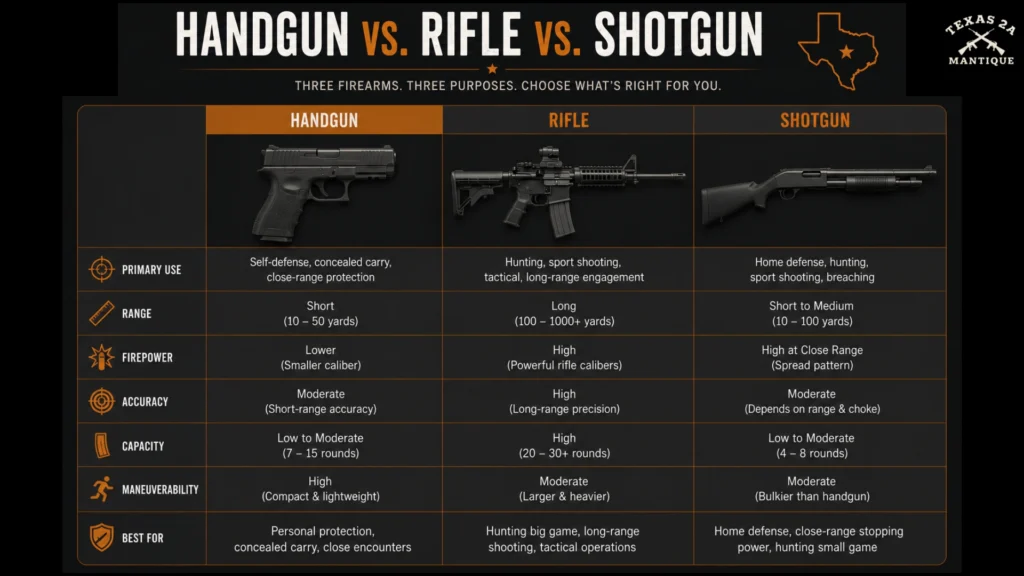
Now that you understand the three primary firearm categories, here’s a simple comparison to help you identify which type may best suit your needs.
| Feature | Handgun | Rifle | Shotgun |
| Size | Compact | Larger | Medium to Large |
| Primary Use | Personal protection, recreation | Hunting, target shooting | Hunting, sporting activities |
| Accuracy | Short to medium range | Medium to long range | Varies by ammunition and purpose |
| Portability | Excellent | Moderate | Moderate |
| Storage | Easy | Requires more space | Requires more space |
| Common Action Types | Semi-automatic, Revolver | Bolt-action, Semi-automatic, Lever-action | Pump-action, Semi-automatic, Break-action |
Each category has its own strengths, and the best option depends on your intended use, experience, and personal preferences.
Which Firearm Type Is Right for You?
There is no single firearm that is right for every buyer. The best choice depends on how you plan to use the firearm and what feels most comfortable in your hands.
Ask yourself:
- What is my primary purpose for buying a firearm?
- Which firearm category best matches my needs?
- Am I comfortable handling this firearm?
- Does it fit my experience level?
- Will it support my long-term shooting goals?
Taking the time to answer these questions can help you make a more informed decision and enjoy a better ownership experience.
At Texas 2A Mantique, we encourage customers to handle different firearm models, ask questions, and learn about their options before making a purchase. Our team is here to provide guidance and help you find a firearm that matches your goals while promoting responsible firearm ownership.
Final Thoughts
Understanding the different types of firearms is one of the most important steps for any new firearm buyer. Handguns, rifles, and shotguns each serve different purposes, and no single category is the best choice for everyone.
By learning how each firearm type is designed, where it performs best, and what factors to consider before buying, you’ll be better prepared to choose a firearm that fits your needs and experience level.
At Texas 2A Mantique, we’re committed to helping firearm owners make informed decisions through education, expert guidance, and quality products. Whether you’re purchasing your first firearm or expanding your collection, our goal is to make the buying process clear, confident, and responsible.

Leave a Reply