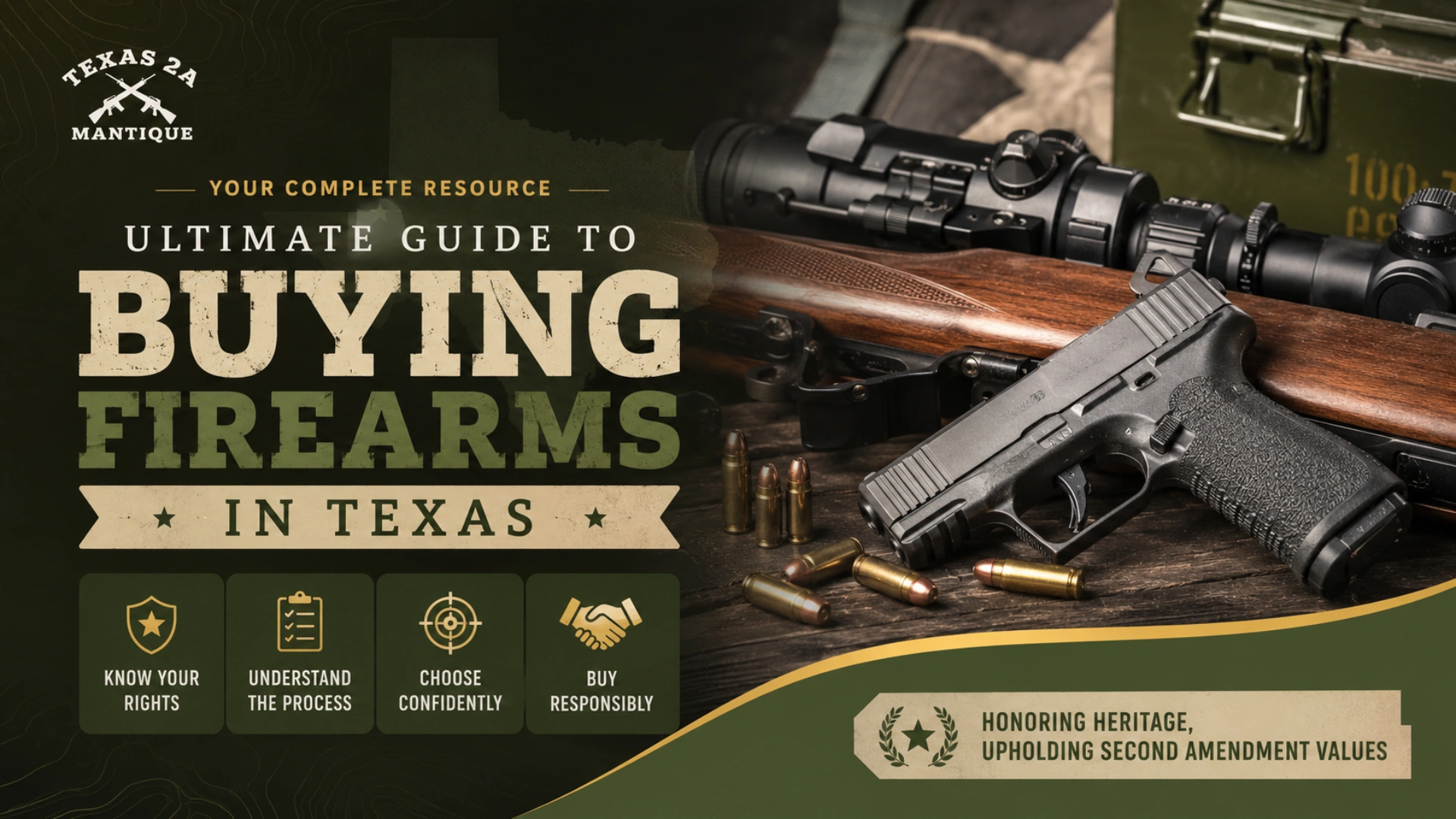
Texas has a long-standing tradition of responsible firearm ownership. From personal protection and recreational shooting to hunting and competitive sports, firearms are an important part of life for many Texans.
For first-time buyers especially, the process can feel overwhelming. With hundreds of firearm models, different calibers, multiple firearm types, and various features available, choosing the right option requires understanding your needs first.
At Texas 2A Mantique, we believe that responsible firearm ownership begins with education. A knowledgeable buyer is more confident, safer, and better prepared to choose a firearm that fits their lifestyle.
However, purchasing a firearm is a decision that should never be made without proper research.
Table of Contents
- Understanding Firearms: The Basics Every Buyer Should Know
- Different Types of Firearms Available in Texas
- Choosing a Firearm Based on Your Purpose
- Handgun vs Rifle: Which One Should You Buy First?
- Best Firearms for Beginners
- How to Choose the Right Firearm
- Things to Know Before Buying a Gun in Texas
- Firearm Calibers Explained: Understanding the Right Ammunition Choice
- Firearm Terminology Guide: Important Terms Every Buyer Should Know
- Common Mistakes First-Time Gun Buyers Make
- Complete Firearm Buying Checklist
- Firearm Safety Guide for New Owners
- Proper Firearm Storage: Protecting Your Family and Your Investment
- Maintaining Your Firearm: Keeping It Reliable
- Frequently Asked Questions About Buying Firearms in Texas
- Why Choose Texas 2A Mantique for Your Firearm Needs?
- Making the Right Firearm Decision
1. Understanding Firearms: The Basics Every Buyer Should Know
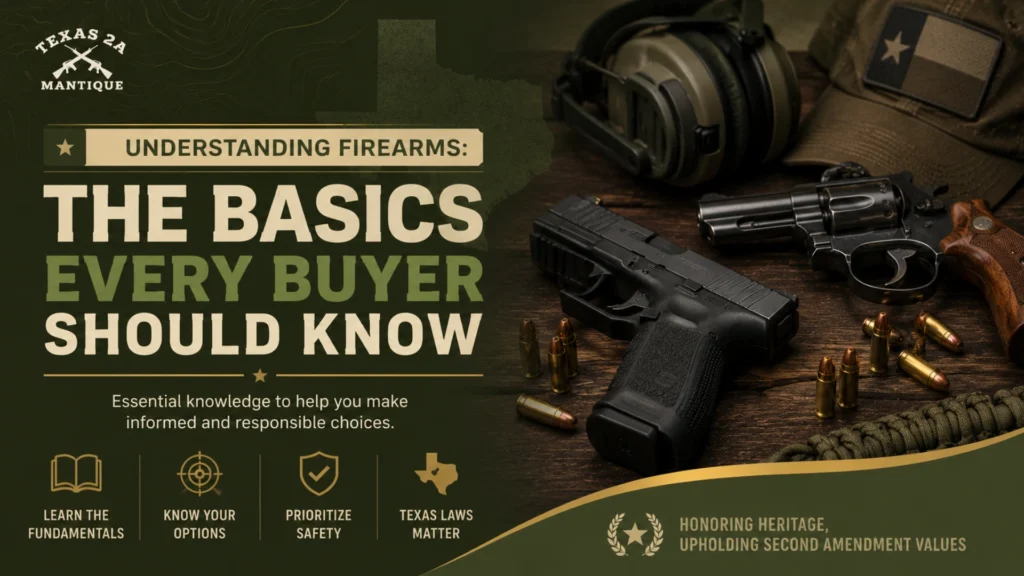
Choosing your first firearm starts with understanding the basics. Firearms come in different types, sizes, designs, and are built for different purposes such as personal protection, hunting, sport shooting, and recreation.
Before making a decision, buyers should understand key factors like:
- The purpose of the firearm
- Different firearm categories
- Size and handling comfort
- Reliability and maintenance requirements
The right firearm is not always the biggest or most powerful option – it is the one that matches your needs, experience, and intended use.
At Texas 2A Mantique, we help firearm buyers understand their options and make informed decisions based on their requirements.
Read the Complete Guide → Understanding Firearms: The Basics Every Buyer Should Know
2. Different Types of Firearms Available in Texas
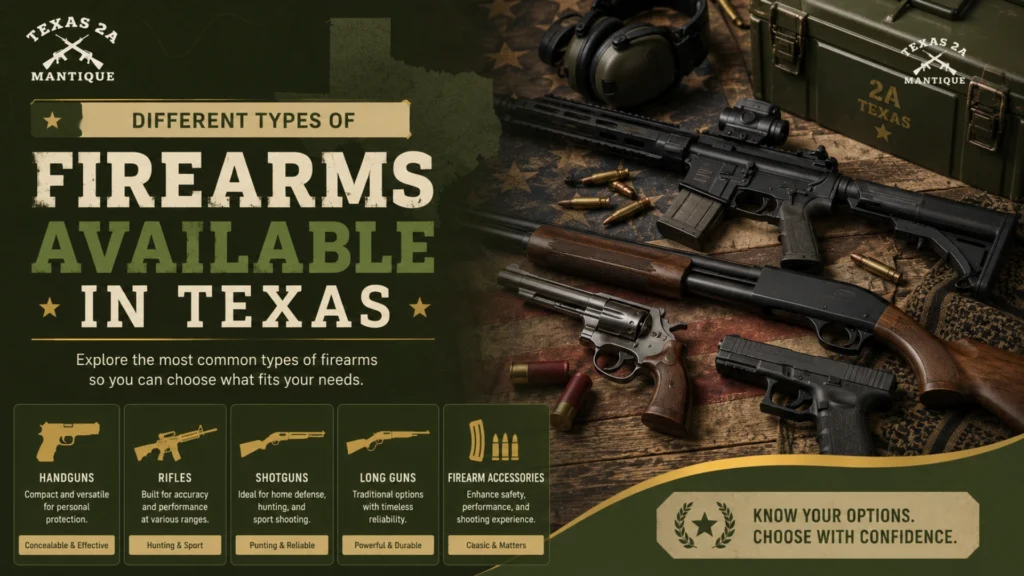
Firearms come in different types, and each one is designed for specific uses. Understanding the basic categories helps you choose the right firearm based on your needs and experience.
The three main firearm categories are:
- Handguns
- Rifles
- Shotguns
Handguns
Handguns are compact and easy to handle, making them popular for personal protection, training, and recreational shooting.
Common types include:
- Semi-Automatic Pistols – Popular for their compact design, versatility, and ease of use.
- Revolvers – Known for simple operation and reliable performance.
Rifles
Rifles are designed for accuracy and stability, making them suitable for hunting, target shooting, and competitions.
Common types include:
- Bolt-Action Rifles – Known for precision and reliability.
- Semi-Automatic Rifles – Popular for recreational and competitive shooting.
Shotguns
Shotguns are versatile firearms commonly used for hunting, sport shooting, and recreation.
Popular types include:
- Pump-Action Shotguns – Reliable and easy to operate.
- Semi-Automatic Shotguns – Offer smoother operation and faster follow-up shots.
At Texas 2A Mantique, we help firearm buyers understand different options and choose the right firearm based on their needs.
Read the Complete Guide → Different Types of Firearms Available in Texas: A Complete Guide
3. Choosing a Firearm Based on Your Purpose
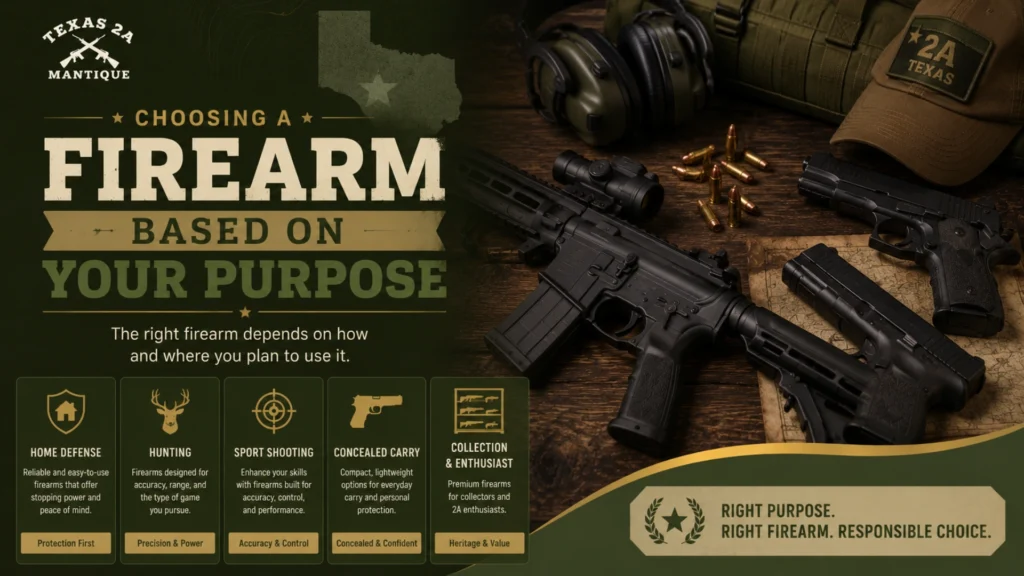
The right firearm depends on why you want to own one. Many new buyers make the mistake of choosing a firearm before understanding their actual needs.
Whether you are looking for personal protection, hunting, sport shooting, or your first firearm, choosing the right option will help you have a better and safer experience.
Personal Protection
For personal protection, buyers should consider:
- Reliability
- Comfort
- Ease of handling
- Proper training
- Safe storage
A protection firearm should be one you can confidently and responsibly handle.
Hunting
Hunting firearms are selected based on:
- Type of game
- Shooting distance
- Environment
- Caliber requirements
The right firearm for hunting depends on the specific conditions and purpose.
Sport Shooting
Sport shooters often look for firearms that provide:
- Accuracy
- Comfort
- Performance
- Ammunition availability
Different shooting activities may require different firearm features.
Beginners
First-time buyers should focus on:
- Easy operation
- Comfortable handling
- Manageable recoil
- Training opportunities
The best first firearm is not always the most powerful one — it is the one that matches your needs and helps you build confidence safely.
At Texas 2A Mantique, we help buyers understand their goals and choose a firearm that fits their experience and requirements.
Read the Complete Guide → Choosing a Firearm Based on Your Purpose
4. Handgun vs Rifle: Which One Should You Buy First?
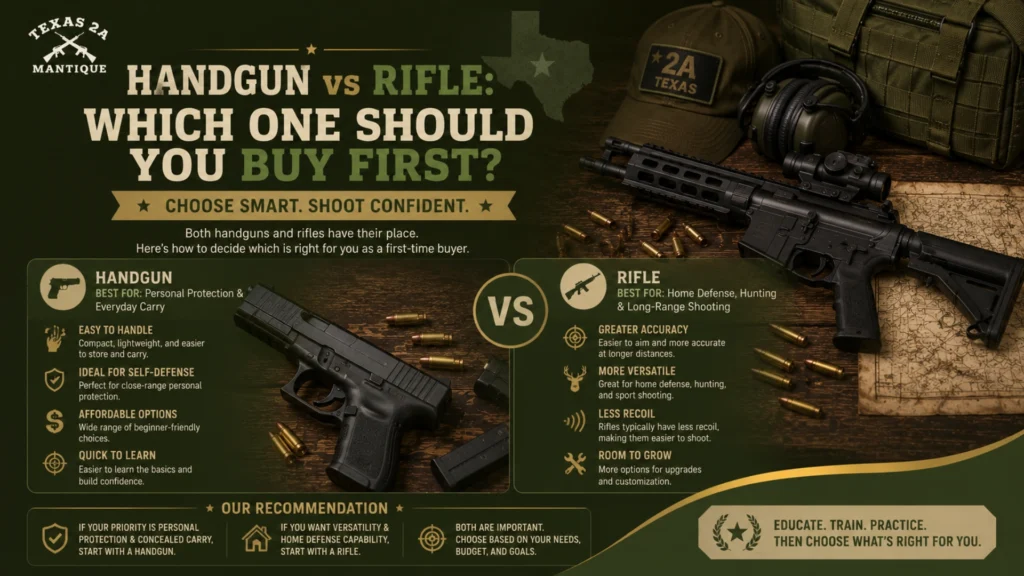
One of the most common questions from first-time firearm buyers is: Should I choose a handgun or a rifle?
The right choice depends on your purpose, experience level, comfort, and how you plan to use the firearm. There is no single option that works best for everyone.
At Texas 2A Mantique, we help buyers choose a firearm based on their specific needs rather than trends.
Handguns: Compact and Versatile
Handguns are popular because of their compact size and easy handling. They are commonly used for:
- Personal protection
- Home defense
- Training
- Recreational shooting
Rifles: Stability and Accuracy
Rifles are designed for better stability and longer-distance shooting. They are commonly used for:
- Hunting
- Target shooting
- Sport shooting
- Competition
The best firearm is the one that matches your needs, comfort, and experience level.
Read the Complete Guide → Handgun vs. Rifle: Which One Should You Buy First?
5. Best Firearms for Beginners
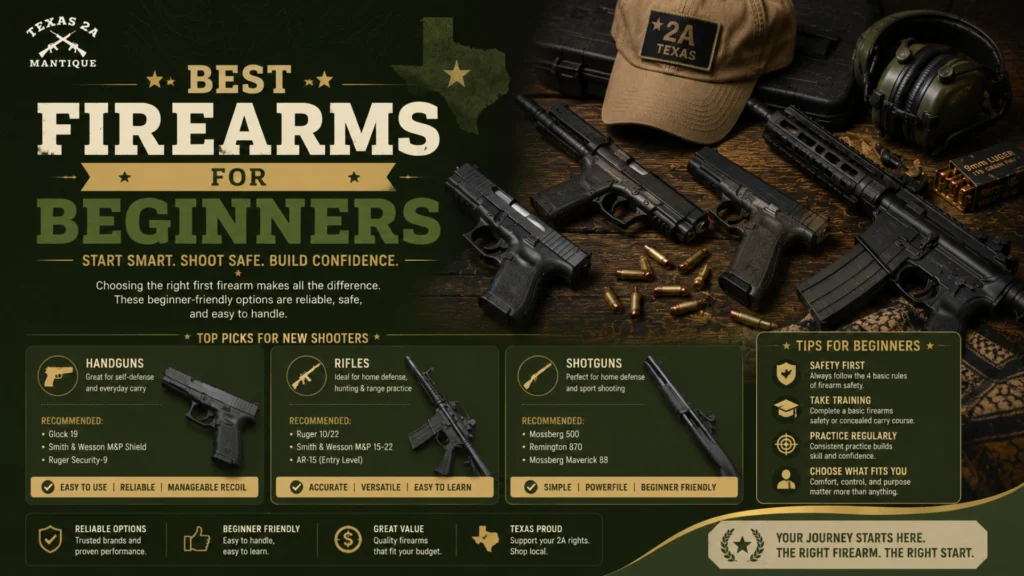
Buying your first firearm is an important decision. Instead of choosing based only on appearance or popularity, beginners should focus on finding a firearm that is comfortable, reliable, and easy to use.
A good beginner firearm should offer:
- Comfortable handling
- Simple operation
- Manageable recoil
- Reliable performance
- Access to proper training
The right firearm helps new owners build confidence and develop safe shooting habits.
What Makes a Firearm Beginner-Friendly?
Comfortable Handling
A firearm should feel natural and comfortable in your hands.
Consider:
- Grip size
- Weight
- Controls
- Overall comfort
A proper fit improves control and makes learning easier.
Manageable Recoil
Recoil is the movement felt when firing a firearm. Beginners often prefer firearms with manageable recoil because they provide:
- Better control
- More comfortable practice
- Improved accuracy
Simple Operation
New firearm owners should choose an option that is easy to understand and maintain.
Important factors include:
- How the firearm operates
- Safety features
- Basic maintenance requirements
Beginner Handgun Considerations
Many first-time buyers choose handguns because they are versatile and easy to store.
When selecting a beginner handgun, consider:
- Size and comfort
- Ease of control
- Suitable caliber
- Training opportunities
A handgun should provide a balance between comfort, control, and intended use.
Beginner Rifle Considerations
Rifles are popular among beginners because they offer stability and accuracy.
When choosing a beginner rifle, consider:
- Purpose (hunting, target shooting, or recreation)
- Weight and handling comfort
- Caliber suitability
- Shooting distance
At Texas 2A Mantique, we help first-time buyers understand their options and choose a firearm that matches their experience, goals, and comfort level.
Read the Complete Guide → Best Firearms for Beginners
6. How to Choose the Right Firearm
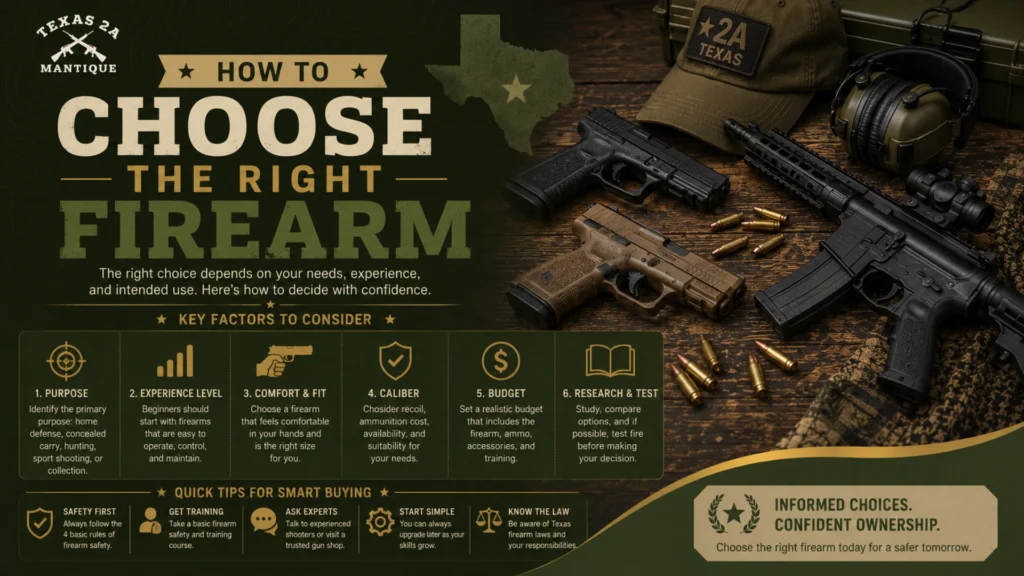
Choosing the right firearm depends on your purpose, experience, comfort, and budget. The best firearm is one that fits your needs and helps you use it confidently and responsibly.
At Texas 2A Mantique, we help customers understand their options and make informed firearm decisions.
- Identify Your Purpose
- Match Your Experience Level
- Test Before Buying
- Think Long-Term
The right firearm is a long-term investment that matches your goals and lifestyle.
Read the Complete Guide → How to Choose the Right Firearm
7. Things to Know Before Buying a Gun in Texas
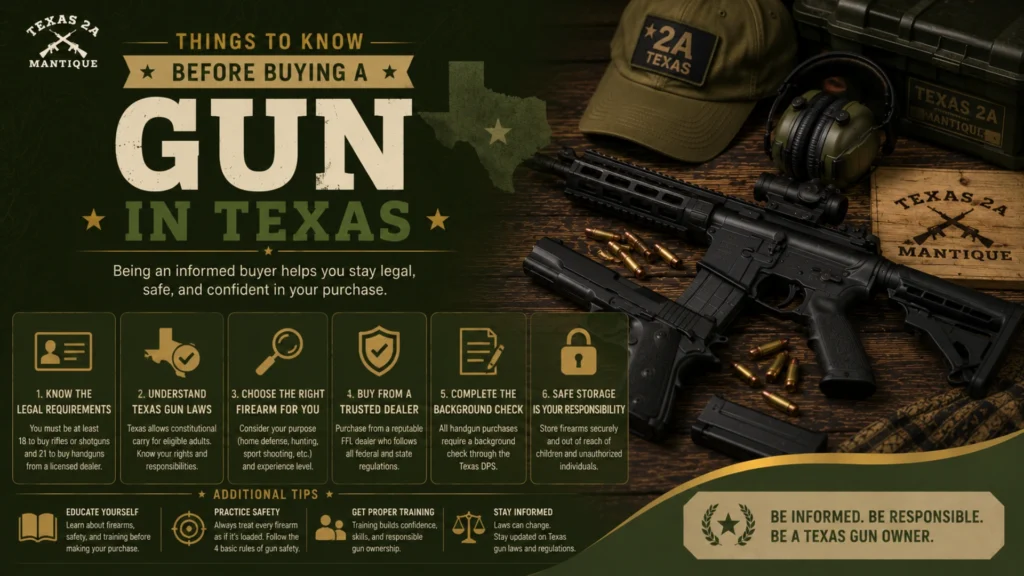
Buying a firearm is an important decision that comes with responsibility. Before making a purchase, buyers should understand the basics of ownership, regulations, and long-term costs.
Understand Firearm Regulations
Firearm requirements can vary, so responsible buyers should stay informed about:
- Current regulations
- Purchase requirements
- Transportation guidelines
- Safe ownership practices
Always verify the latest information before purchasing a firearm.
Choose a Trusted Firearms Dealer
Selecting the right firearms store makes the buying process easier and more reliable.
A trusted dealer should provide:
- Knowledgeable guidance
- Quality firearm options
- Customer education
- Professional support
At Texas 2A Mantique, we help customers make informed decisions by providing guidance based on their needs and experience.
Read the Complete Guide → Things to Know Before Buying a Gun in Texas
8. Firearm Calibers Explained: Understanding the Right Ammunition Choice
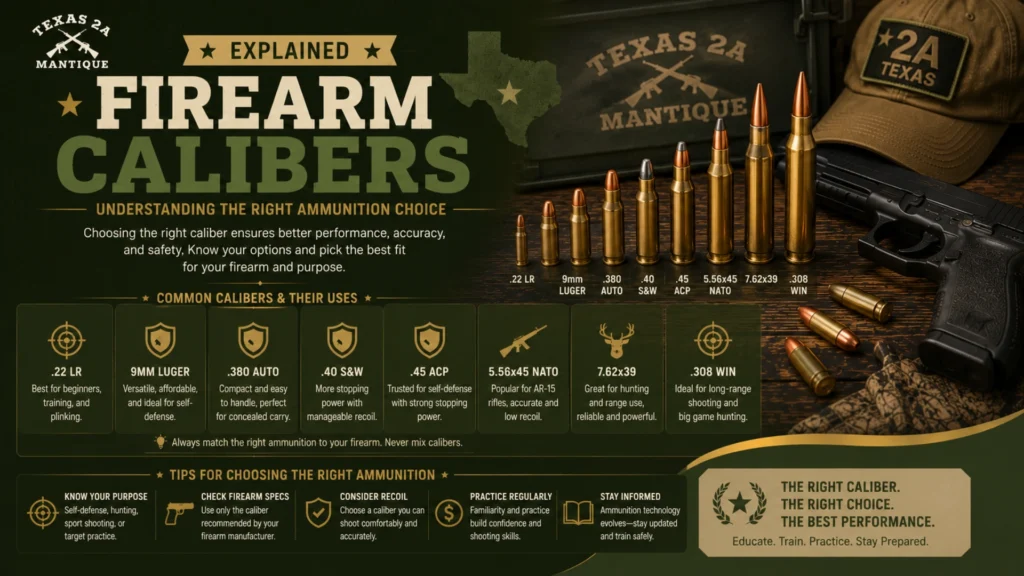
Understanding firearm caliber is an important step when choosing the right firearm. Terms like 9mm, .45 ACP, .223 Remington, 5.56 NATO, and .308 Winchester describe different ammunition sizes designed for different purposes.
The right caliber can affect:
- Recoil
- Accuracy
- Shooting comfort
- Ammunition availability
- Intended use
At Texas 2A Mantique, we believe understanding firearm basics helps customers make confident and responsible decisions.
What Is Firearm Caliber?
Caliber refers to the size of ammunition a firearm is designed to use. Different calibers are made for different applications, including:
- Beginner training
- Personal protection
- Hunting
- Long-distance shooting
There is no single “best” caliber for everyone. The right choice depends on your experience, firearm type, purpose, and comfort level.
Common Handgun Calibers
.22 LR
A popular beginner-friendly caliber commonly used for:
- Training
- Target shooting
- Recreational practice
Benefits:
- Low recoil
- Affordable ammunition
- Easy to control
9mm
One of the most widely used handgun calibers.
Benefits:
- Balanced recoil
- Easy ammunition availability
- Good overall performance
Its versatility makes it a popular choice among both new and experienced shooters.
.380 ACP
Commonly found in compact handguns.
Benefits:
- Lightweight firearm options
- Manageable recoil
- Easy handling
.45 ACP
A larger handgun caliber known for its traditional design and performance.
Characteristics:
- Larger bullet size
- More recoil compared to smaller calibers
- Popular among experienced shooters
Common Rifle Calibers
.223 Remington / 5.56 NATO
Commonly used for:
- Recreational shooting
- Target practice
- Training
Benefits:
- Manageable recoil
- Widely available ammunition
.308 Winchester
Popular for:
- Hunting
- Precision shooting
- Longer-distance applications
Benefits:
- Strong performance
- Versatile use
.30-06 Springfield
A traditional rifle caliber commonly used for:
- Hunting
- Outdoor shooting
It remains popular because of its reliability and versatility.
Consider ammunition cost and availability, as regular practice is an important part of responsible firearm ownership.
At Texas 2A Mantique, we help buyers understand firearm options, calibers, and features so they can choose the right firearm for their needs.
Read the Complete Guide → Firearm Calibers Explained: Understanding the Right Ammunition Choice
9. Firearm Terminology Guide: Important Terms Every Buyer Should Know
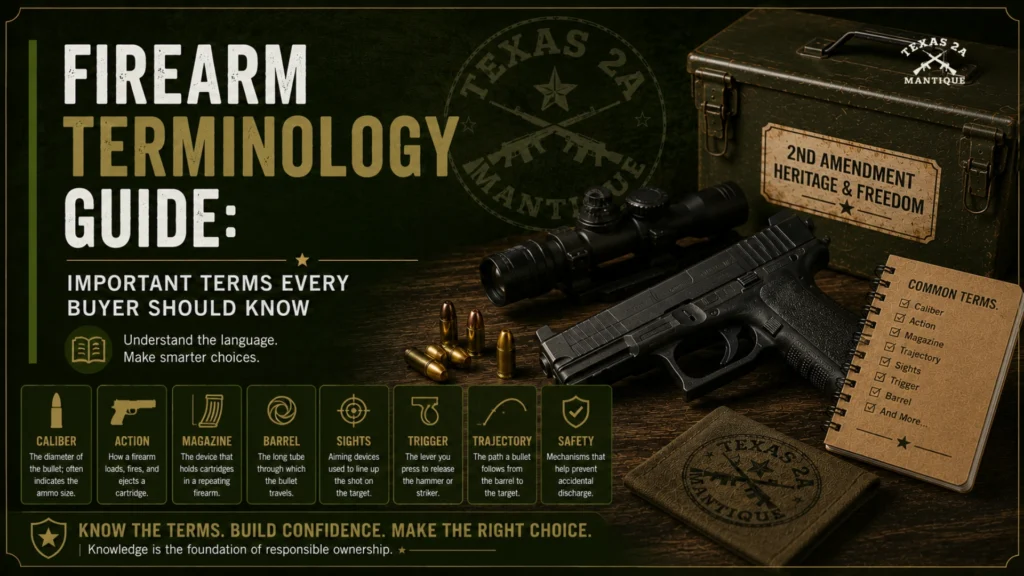
Understanding basic firearm terminology helps buyers make better decisions and communicate more confidently when choosing a firearm.
Here are some common terms every firearm buyer should know:
Action
The action is the mechanism that loads, fires, and ejects ammunition.
Common types include:
- Semi-automatic
- Bolt-action
- Revolver
- Pump-action
Barrel
The barrel is the part of the firearm through which the projectile travels.
It can affect:
- Accuracy
- Weight
- Handling
Chamber
The chamber is where the ammunition is placed before firing. A firearm must properly chamber ammunition to operate safely.
Magazine
A magazine stores and feeds ammunition into a firearm.
Note: A magazine and a clip are different components, although the terms are often used incorrectly.
Trigger
The trigger activates the firing mechanism. Proper trigger control is an important part of safe firearm handling.
Safety
A safety mechanism helps reduce the risk of accidental firing. However, safe handling practices should always come first.
Grip
The grip is where the shooter holds the firearm.
A comfortable grip helps improve:
- Control
- Stability
- Confidence
Recoil
Recoil is the backward movement felt when firing a firearm.
It can be affected by:
- Firearm size
- Caliber
- Ammunition type
- Firearm design
Sights
Sights help the shooter aim accurately.
Common types include:
- Iron sights
- Red dots
- Optics
- Scopes
At Texas 2A Mantique, we help firearm buyers understand important terms and features so they can make informed purchasing decisions.
Read the Complete Guide → Firearm Terms Explained
10. Common Mistakes First-Time Gun Buyers Make
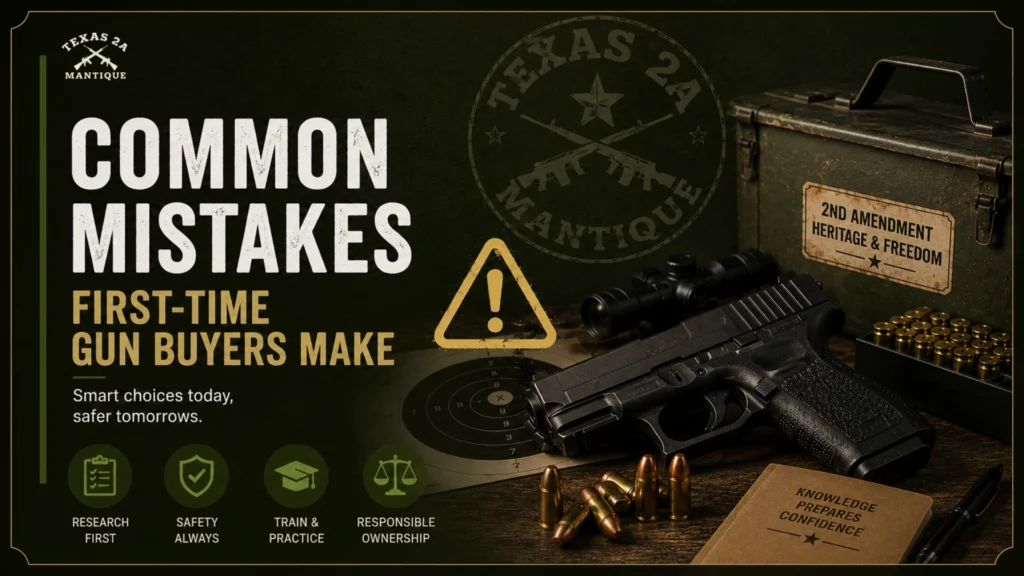
Buying your first firearm is an important decision, and avoiding common mistakes can help you make a smarter choice.
Here are some mistakes new buyers should avoid:
1. Buying Without Understanding Your Purpose
Before purchasing a firearm, understand why you need one.
Ask yourself:
- What will I use it for?
- Which features are important?
- Does it match my needs?
Your purpose should always guide your decision.
2. Choosing Only Based on Price
Price matters, but it should not be the only factor.
Consider:
- Quality
- Reliability
- Comfort
- Maintenance
- Long-term value
A firearm is a long-term investment, not just a one-time purchase.
3. Skipping Training
Proper training is an important part of responsible firearm ownership.
Training helps improve:
- Safe handling
- Firearm operation
- Shooting skills
- Storage practices
4. Choosing the Wrong Fit
Every shooter is different. A firearm should match your:
- Hand size
- Comfort level
- Experience
- Handling ability
A comfortable firearm helps improve control and confidence.
5. Ignoring Long-Term Costs
New buyers should also consider additional expenses, including:
- Ammunition
- Cleaning supplies
- Storage solutions
- Accessories
- Training
6. Not Practicing Regularly
Owning a firearm requires continued practice.
Regular practice helps improve:
- Confidence
- Safety awareness
- Handling skills
At Texas 2A Mantique, we help first-time buyers understand their options and make informed firearm decisions based on their needs and experience.
Read the Complete Guide → Common Mistakes First-Time Gun Buyers Make
11. Complete Firearm Buying Checklist
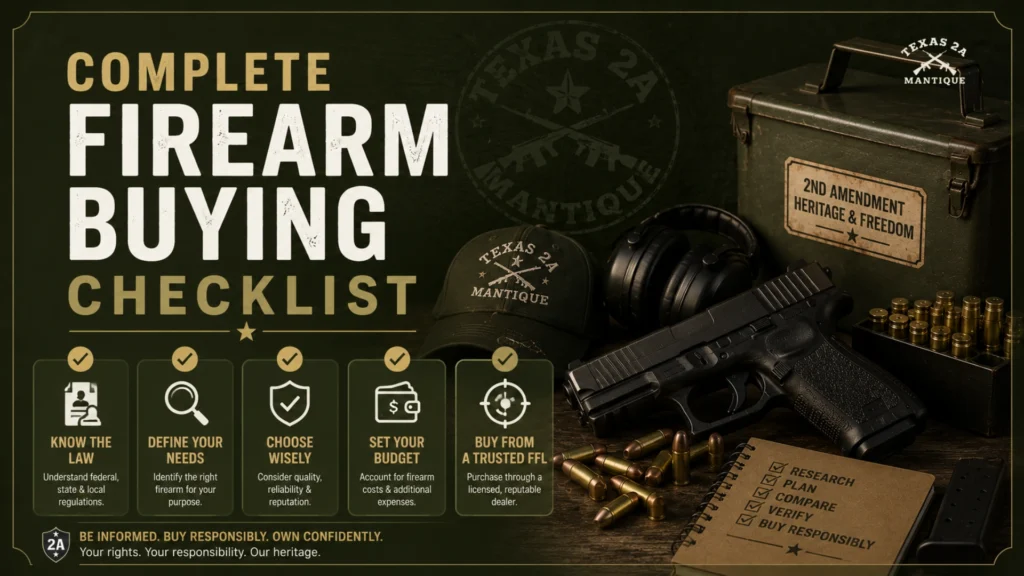
Before purchasing a firearm from a trusted Texas firearms store, use this checklist to make a more informed decision.
Step 1: Identify Your Purpose
- Personal protection
- Home defense
- Hunting
- Sport shooting
- Recreation
- Collection
Step 2: Research Your Options
- Understand handgun, rifle, and shotgun differences
- Compare firearm models
- Learn about calibers
- Review important features
- Consider manufacturer reputation
Step 3: Check Comfort and Handling
Before buying, consider:
- Does the firearm feel comfortable?
- Does the grip fit properly?
- Are the controls easy to use?
- Is the weight manageable?
A firearm should feel natural and comfortable to handle.
Step 4: Plan Your Budget
Consider all ownership costs, including:
- Firearm price
- Ammunition
- Training
- Maintenance supplies
- Storage solutions
- Accessories
Step 5: Prepare for Responsible Ownership
After purchase:
- Learn proper operation
- Complete safety training
- Practice regularly
- Store securely
- Maintain properly
Texas 2A Mantique: Helping Texans Make Informed Firearm Decisions
Choosing a firearm is a personal decision, and having the right knowledge makes the process easier.
At Texas 2A Mantique, we help first-time buyers and experienced firearm owners make confident decisions through:
- Education
- Safety awareness
- Expert guidance
- Understanding customer needs
Whether you are buying your first handgun, looking for a rifle, or expanding your collection, Texas 2A Mantique is committed to helping you find the right firearm for your goals.
Read the Complete Guide → Complete Firearm Buying Checklist
12. Firearm Safety Guide for New Owners
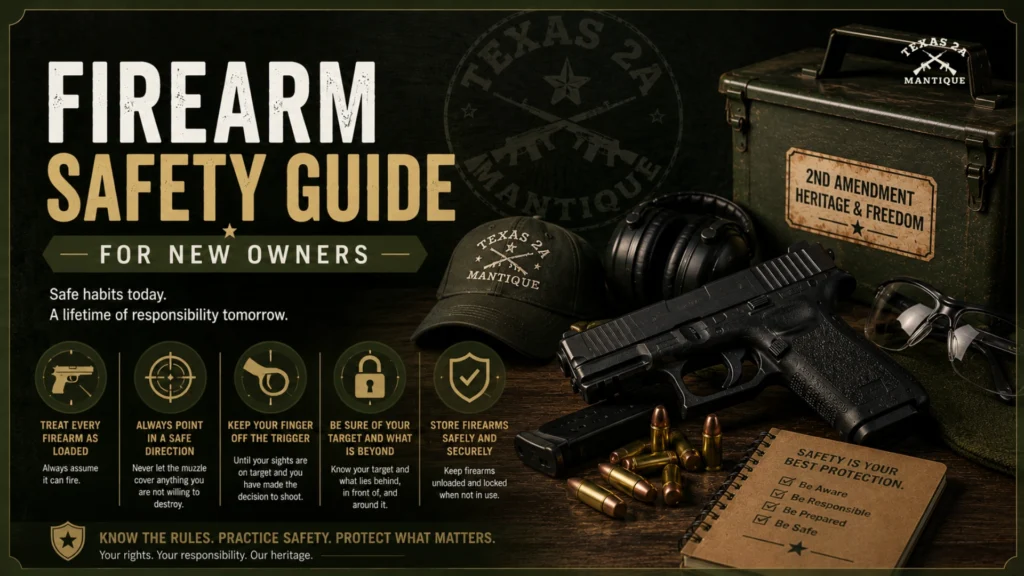
Responsible firearm ownership starts with safety. A firearm requires proper knowledge, training, and careful handling.
At Texas 2A Mantique, we believe buying a firearm is only the first step. Learning how to safely handle, store, and maintain your firearm is an important part of responsible ownership.
1. Treat Every Firearm as Loaded
Always handle a firearm as if it is loaded.
Safe habits include:
- Checking the firearm before handling
- Understanding its condition
- Following proper handling practices
2. Keep Your Finger Off the Trigger Until Ready
Keep your finger outside the trigger guard until you are ready to shoot.
Remember:
- Finger off the trigger
- Maintain control of the firearm
- Follow safe handling practices
3. Always Point the Firearm in a Safe Direction
A firearm should always be pointed in a direction where an accidental discharge will not cause harm.
Always be aware of:
- Your surroundings
- People nearby
- What is beyond your target
4. Know Your Target and What Is Beyond It
Before firing, always understand your complete shooting environment.
Consider:
- Your target
- The area behind it
- Possible risks
Safety awareness is one of the most important responsibilities of every firearm owner.
At Texas 2A Mantique, we encourage every firearm owner to prioritize safety, education, and responsible handling practices.
Read the Complete Guide → 10 Essential Firearm Safety Rules
13. Proper Firearm Storage: Protecting Your Family and Your Investment
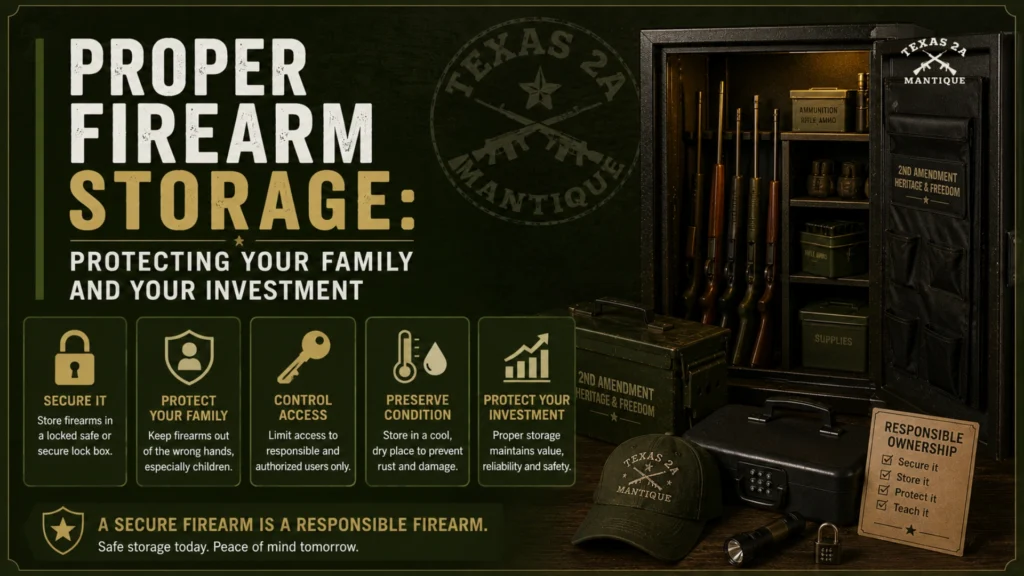
Safe firearm storage is an important part of responsible ownership. A firearm should always be stored securely to prevent unauthorized access while protecting its condition.
Why Proper Storage Matters
Secure storage helps:
- Prevent unauthorized access
- Protect family members and visitors
- Maintain firearm condition
- Reduce safety risks
Common Storage Options
Gun Safes
Provide secure storage with benefits such as:
- Controlled access
- Better protection
- Organized storage
Locking Devices
Additional locking solutions can provide an extra layer of security.
Ammunition Storage
Ammunition should also be stored responsibly in a secure and organized location.
Read the Complete Guide → A Complete Guide to Safe and Secure Firearm Storage
14. Maintaining Your Firearm: Keeping It Reliable
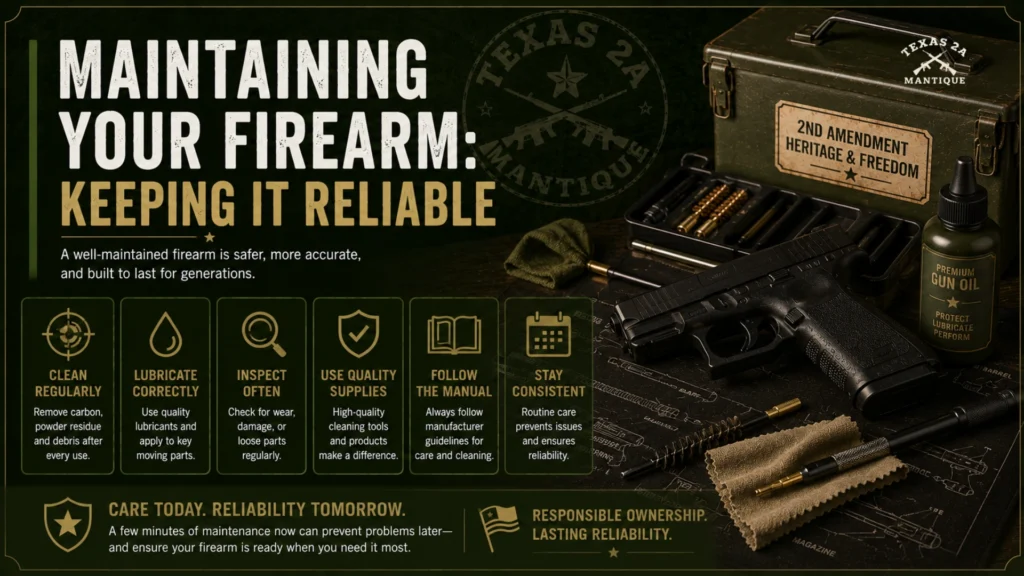
Regular maintenance helps keep your firearm reliable and in good condition.
Proper care supports:
- Reliable operation
- Longer lifespan
- Better performance
Basic Maintenance Includes:
Cleaning
Helps remove residue, dust, and debris.
Inspection
Regularly check:
- Moving parts
- Wear areas
- Overall condition
Proper Storage
A clean and securely stored firearm stays protected over time.
Read the Complete Guide → How to Maintain Your Firearm
15. Frequently Asked Questions About Buying Firearms in Texas
How Do I Choose My First Firearm?
Your first firearm should match your:
- Purpose
- Experience level
- Comfort
- Budget
Focus on finding an option that is easy to handle and supports safe learning.
Should My First Firearm Be a Handgun or Rifle?
It depends on your goals.
Handguns are often chosen for:
- Compact size
- Easy storage
- Versatility
Rifles are often chosen for:
- Hunting
- Outdoor shooting
- Longer-distance accuracy
The right choice depends on your needs.
What Is the Best Firearm Caliber for Beginners?
The best caliber depends on your purpose and comfort level.
Beginners often consider:
- Manageable recoil
- Comfortable shooting
- Ammunition availability
Training and practice are just as important as caliber selection.
How Much Should I Spend on My First Firearm?
Consider the complete ownership cost, including:
- Firearm
- Ammunition
- Training
- Maintenance
- Storage equipment
Choose quality and suitability over only choosing the lowest price.
Do I Need Training Before Buying a Firearm?
Training is highly recommended for new firearm owners.
It helps improve:
- Safe handling
- Firearm operation
- Shooting skills
- Maintenance knowledge
How Do I Know Which Firearm Fits Me?
A firearm should feel comfortable and easy to control.
Consider:
- Grip size
- Weight
- Controls
- Intended use
- Overall comfort
What Should I Know Before Buying a Firearm?
Requirements may vary, so buyers should always confirm current purchasing guidelines and work with a trusted firearm dealer for proper guidance.
Read the Complete Guide → Frequently Asked Questions About Buying Firearms in Texas
16. Why Choose Texas 2A Mantique for Your Firearm Needs?
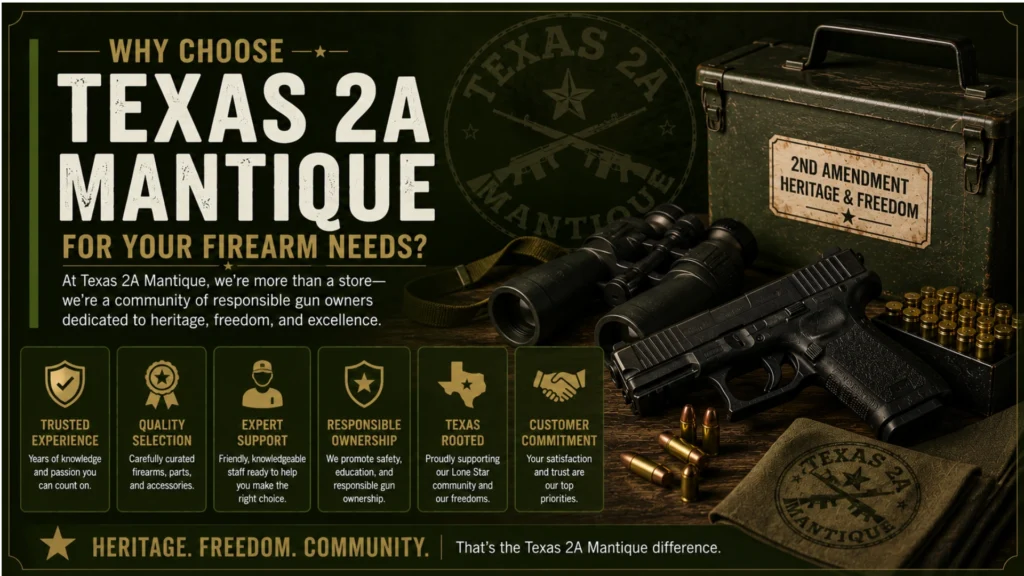
Choosing the right firearm store is an important part of your buying journey.
At Texas 2A Mantique, we focus on helping customers make informed decisions through knowledge, support, and personalized guidance.
Expert Guidance
We help buyers understand:
- Different firearm types
- Key features
- Available options
- Ownership considerations
Quality Selection
Whether you are looking for:
- Handguns
- Rifles
- Firearm accessories
- Shooting equipment
Texas 2A Mantique helps you explore options that match your needs.
Supporting Texas Firearm Owners
Texas has a strong firearm community built around:
- Responsible ownership
- Outdoor activities
- Sport shooting
- Personal protection
We are committed to supporting Texas firearm enthusiasts with trusted guidance and a customer-focused experience.
Read the Complete Guide → Why Choose Texas 2A Mantique for Your Firearm Needs?
17. Making the Right Firearm Decision
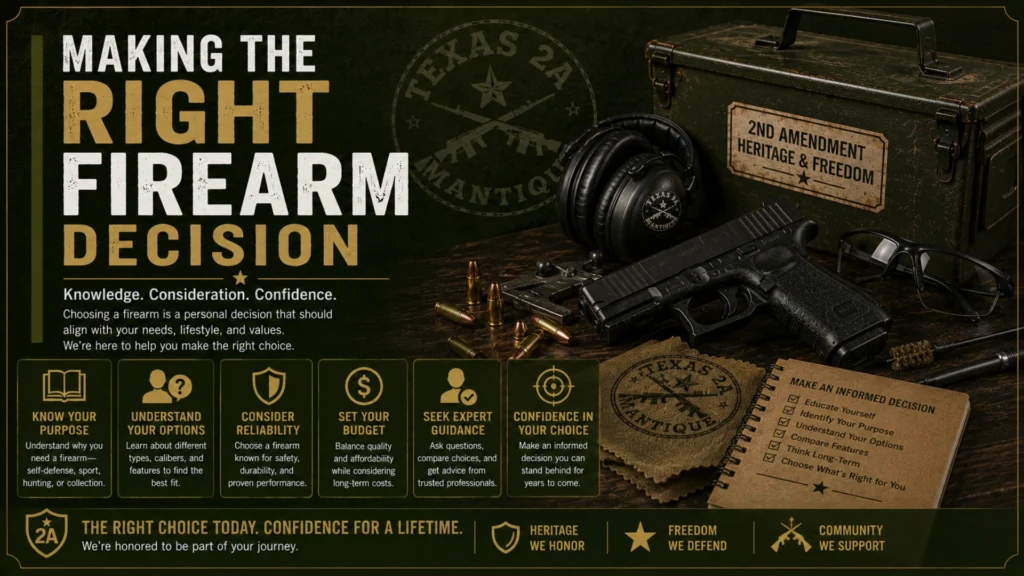
Buying a firearm requires careful consideration and preparation.
The right firearm depends on:
- Your purpose
- Experience level
- Comfort
- Training commitment
- Long-term goals
There is no single firearm that is perfect for everyone. The best choice is the one that fits your needs and helps you become a confident, responsible owner.
At Texas 2A Mantique, we believe responsible firearm ownership begins with education. Understanding firearm types, calibers, safety practices, and ownership responsibilities helps you make a better decision.
Whether you are purchasing your first firearm or expanding your collection, Texas 2A Mantique is here to support your firearm journey.
Read the Complete Guide → Making the Right Firearm Decision
Leave a Reply