
A practical guide to understanding ammunition, calibers, cartridges, bullet types, grain weight, rimfire and centerfire ammunition, and shotgun shells.
Ammunition can look simple from the outside, but the terminology used to describe it covers several different things. A cartridge designation tells you about the cartridge itself. Caliber may describe a bore or projectile diameter or form part of a cartridge name. Bullet weight describes the projectile’s mass, while bullet construction describes how the projectile is made. Shotgun ammunition introduces another set of terms, including gauge, shot, and slug.
Understanding these distinctions is the foundation for understanding ammunition.
This guide provides an overview of the major ammunition categories and terminology, then points you toward detailed guides covering each subject individually.
What Is Ammunition?

Ammunition is the complete unit used to produce a shot from a firearm.
For metallic cartridges, the major components are generally:
- Projectile — the bullet or other projectile
- Case — the container that holds the other components
- Primer — the ignition component
- Propellant — the material that produces expanding gas when ignited
Shotshells use a different construction and may contain multiple projectiles, such as shot, or a single projectile such as a slug.
The terminology becomes much easier to understand once these components are separated from the terms used to identify the cartridge itself.
Caliber vs. Cartridge: Understanding the Difference
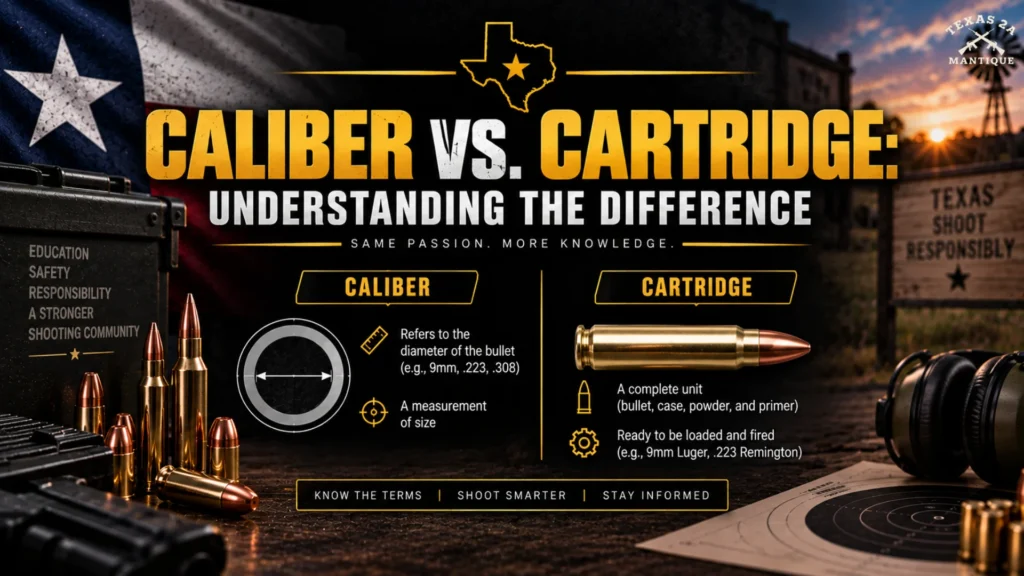
Caliber and cartridge are related terms, but they do not mean exactly the same thing.
Caliber is commonly associated with the approximate diameter of a firearm bore or projectile and is also used in some cartridge designations.
A cartridge, however, refers to the complete ammunition unit and has its own specific dimensions, pressure specifications, and other characteristics.
This distinction is important because ammunition should never be selected based solely on a number that appears similar.
For example, two cartridges can have similar dimensions or names while still having different specifications. The correct approach is to identify the exact chambering marked on the firearm and compare it with the ammunition manufacturer’s specifications.
The Major Types of Ammunition

For a basic understanding, ammunition can be organized into four broad groups:
- Handgun ammunition
- Rifle ammunition
- Rimfire ammunition
- Shotgun ammunition
Within each category are numerous cartridge designs, bullet weights, bullet constructions, and ammunition loads.
Let’s look at each category at a high level.
Handgun Ammunition
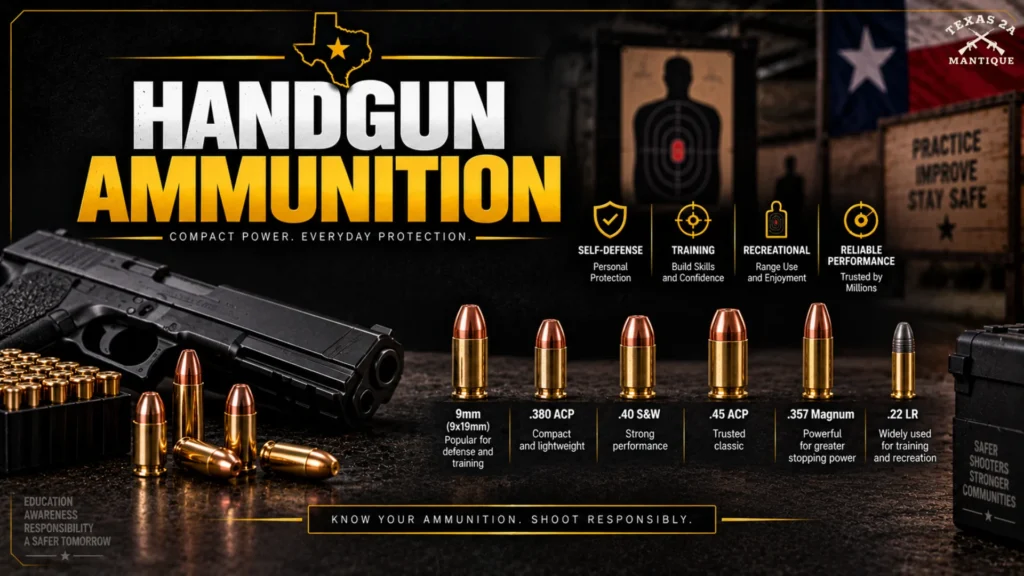
Handgun ammunition is used in compatible pistols and revolvers.
Some of the cartridge names most commonly encountered in the U.S. include:
- 9mm Luger
- .380 ACP
- .40 S&W
- .45 ACP
These cartridges differ in their dimensions, projectile characteristics, operating specifications, and the firearms designed to chamber them.
Ammunition selection begins with the firearm’s exact chambering. Once compatibility is established, factors such as bullet construction and projectile weight can be considered
Rifle Ammunition
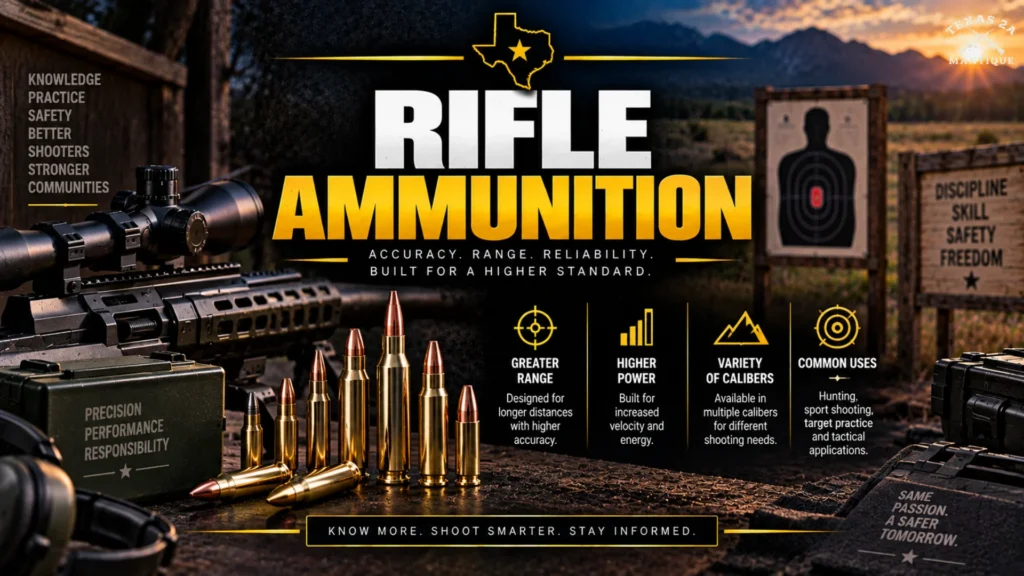
Rifle ammunition covers an especially broad range of cartridge designs.
Common U.S. cartridge names include:
- 5.56 NATO
- .223 Remington
- .308 Winchester
- 6.5 Creedmoor
These cartridges are designed around different specifications and are used in different firearm platforms and applications.
One important lesson when researching rifle ammunition is that cartridges that appear closely related are not necessarily interchangeable. Cartridge dimensions, chamber specifications, and pressure standards all matter.
Rimfire Ammunition
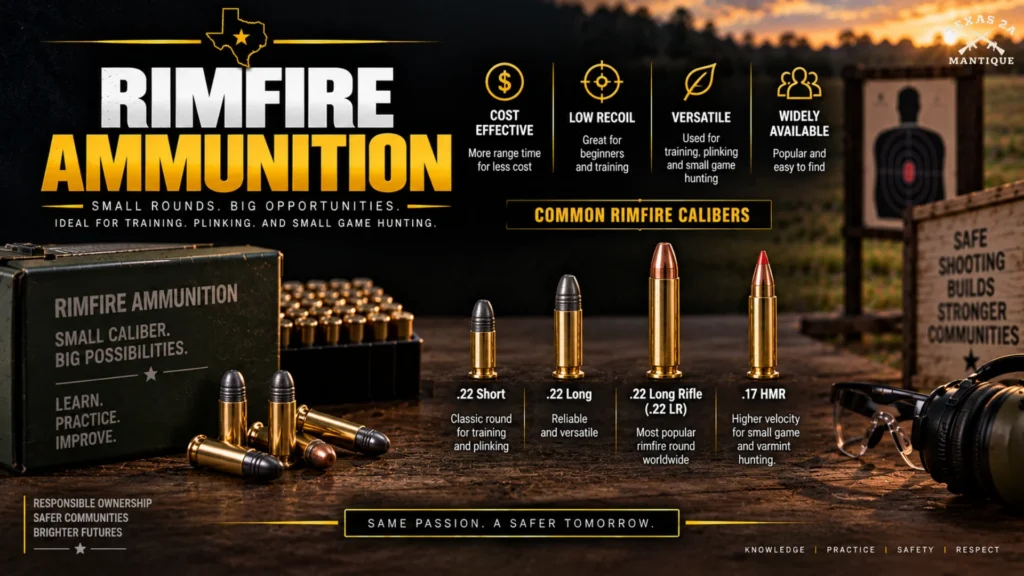
Rimfire ammunition uses a distinctive ignition system: the priming compound is incorporated into the rim of the cartridge case.
The most familiar rimfire cartridge is .22 Long Rifle (.22LR). Another well-known example is .17 HMR (Hornady Magnum Rimfire).
Rimfire cartridges are generally associated with firearms specifically chambered for them and are widely encountered in recreational shooting, target practice, and other applications.
Their construction is different from centerfire ammunition, which uses a separate primer positioned in the center of the case head.
Shotgun Ammunition
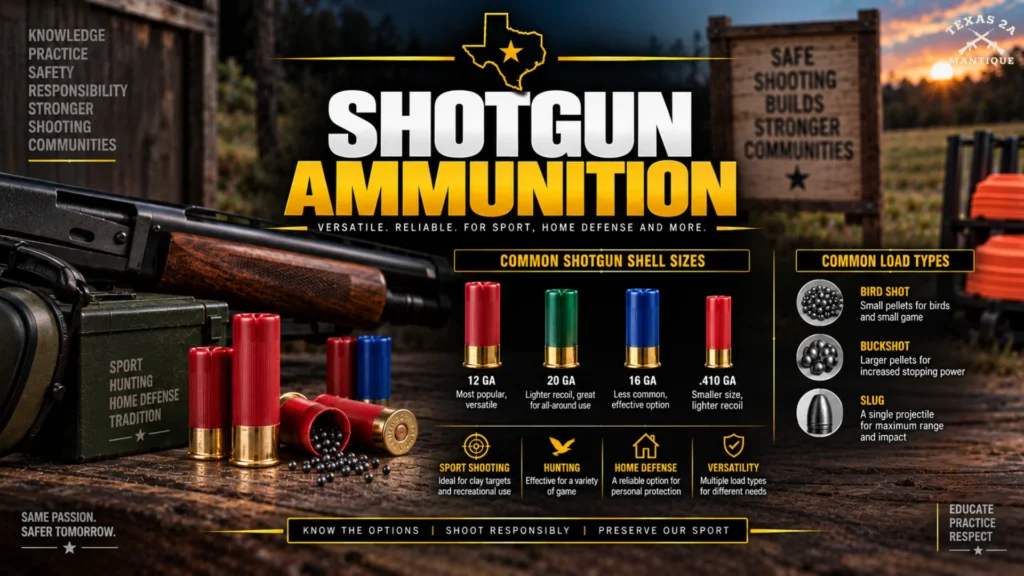
Shotgun ammunition is commonly called a shotshell.
Unlike most rifle and handgun ammunition, shotgun ammunition is commonly identified by gauge rather than caliber.
Common shotgun designations include:
- 12 gauge
- 20 gauge
- .410 bore
Shotguns can also use different projectile configurations.
Birdshot; Birdshot consists of numerous relatively small pellets and is commonly associated with bird hunting and clay target shooting.
Buckshot: Buckshot contains larger pellets than birdshot and is used in a variety of shotgun applications.
Slugs: A slug is a single projectile rather than a collection of shot pellets.
Because shotgun terminology differs substantially from metallic cartridge terminology, understanding gauge and shot types is an important part of learning about ammunition.
Bullet Types: Why Construction Matters
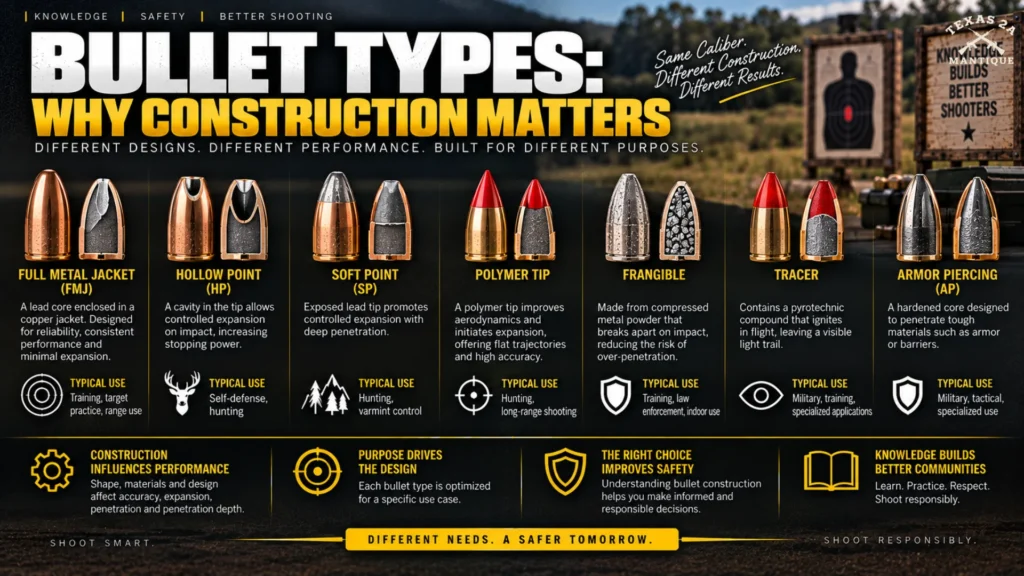
Once you understand the cartridge, the next question is often: What type of bullet does it use?
The same cartridge can be available with different projectile constructions.
Three terms you’ll encounter frequently are:
FMJ — Full Metal Jacket
FMJ describes a bullet in which the projectile’s core is surrounded by a metal jacket.
It is commonly encountered in ammunition intended for training and target shooting.
Hollow Point
A hollow point has a cavity in the nose of the projectile.
Hollow-point designs are commonly used in certain defensive ammunition loads, although the characteristics of individual products can vary considerably.
Soft Point
A soft point has an exposed portion of the projectile core at the nose.
Soft-point designs are commonly encountered in hunting ammunition.
Bullet construction is therefore a separate consideration from caliber.
What Does Grain Weight Mean?
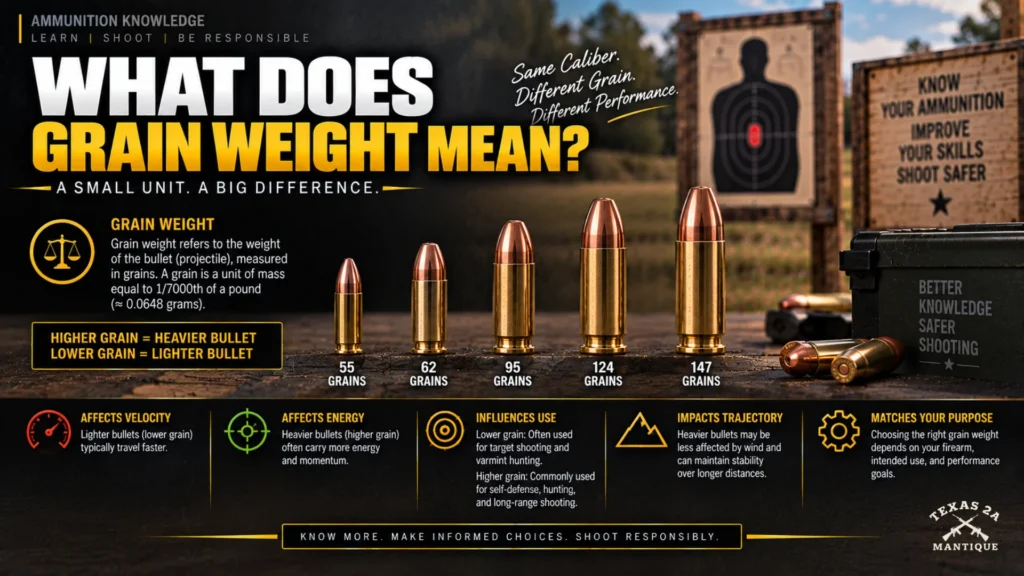
Look at an ammunition box and you’ll often see specifications such as:
55 gr · 115 gr · 124 gr · 147 gr · 168 gr
The abbreviation gr means grain, a unit of weight used to describe the projectile.
Bullet weight is one specification that can influence the characteristics of a particular ammunition load. Changing projectile weight can affect factors such as velocity and trajectory, while the overall result also depends on the cartridge, bullet design, propellant, barrel, and other variables.
This is why grain weight should not be viewed in isolation.
For example, two cartridges with the same caliber designation can use different projectile weights and therefore represent different ammunition loads.
Rimfire vs. Centerfire Ammunition
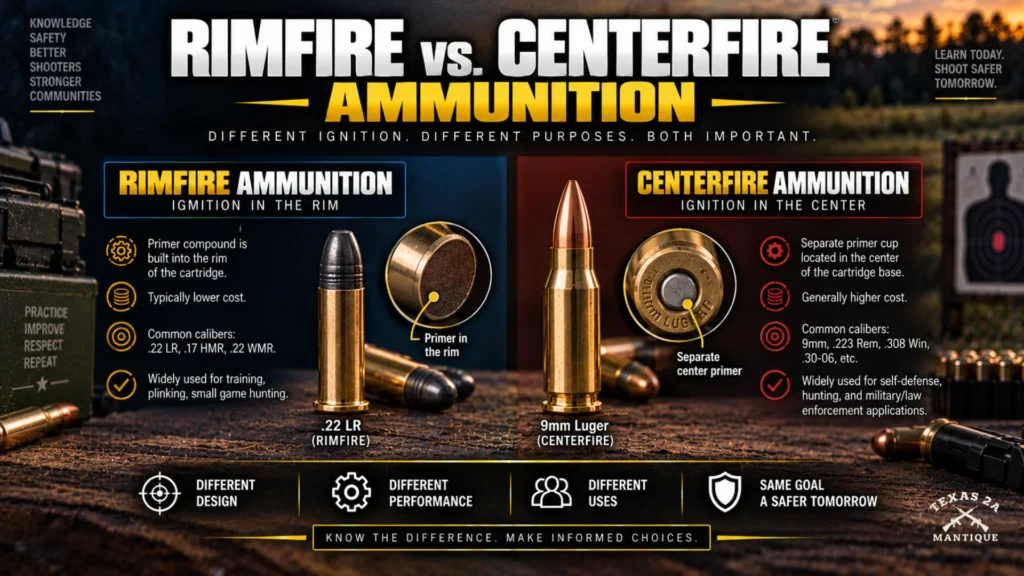
The location of the primer provides another fundamental way to classify ammunition.
Rimfire
In rimfire ammunition, the priming compound is incorporated into the rim of the case.
.22LR is the best-known example.
Centerfire
Centerfire cartridges use a separate primer located in the center of the cartridge case head.
Centerfire ignition is used across a large range of modern handgun and rifle cartridges.
The two systems have different construction and manufacturing characteristics, which is why rimfire and centerfire ammunition form distinct categories.
Understanding Shotgun Gauge
Gauge is a traditional measurement system used to describe the bore size of many shotguns.
One feature that often surprises people is that the gauge number generally gets smaller as bore diameter gets larger.
That means:
- 12 gauge has a larger bore than 20 gauge.
- 20 gauge has a smaller bore than 12 gauge.
- .410 is a bore designation rather than a gauge designation.
Gauge is only one part of shotgun ammunition terminology. The shell length, chamber specification, and load type also matter.
For a deeper explanation:
How Ammunition Is Identified
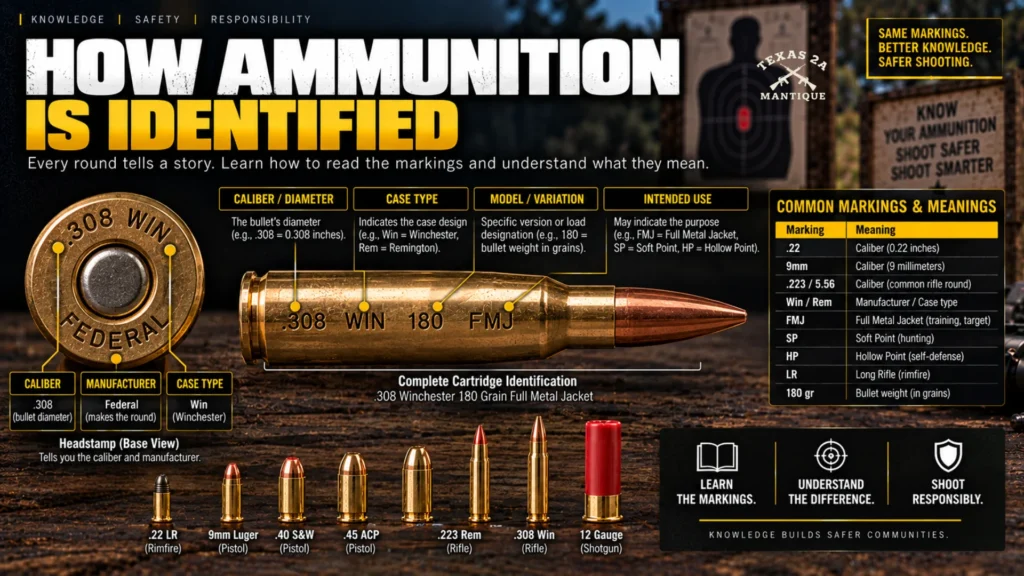
Ammunition packaging can contain several specifications.
Depending on the product, you may see:
- Cartridge designation
- Caliber designation
- Projectile weight
- Bullet construction
- Ammunition quantity
- Manufacturer information
- Other technical specifications
For example, a product may identify a cartridge as 9mm Luger and separately specify the projectile weight and bullet construction.
These details describe different characteristics of the ammunition. They should not be treated as interchangeable terms.
The most important starting point is always the exact cartridge/chambering specification required by the firearm manufacturer.
Common Ammunition Terminology
| Term | Meaning |
|---|---|
| Ammunition | Loaded cartridges and related ammunition components |
| Cartridge | A complete ammunition unit |
| Caliber | A term associated with bore or projectile diameter and certain cartridge designations |
| Bullet | A projectile used in a metallic cartridge |
| Primer | The ignition component of a cartridge |
| Propellant | Material that produces expanding gas when ignited |
| Rimfire | An ignition system using priming compound in the case rim |
| Centerfire | An ignition system using a separate primer in the center of the case head |
| Gauge | A traditional shotgun bore designation |
| Grain | A unit used to express projectile weight |
| FMJ | Full Metal Jacket bullet construction |
| Hollow Point | Bullet design featuring a cavity in the nose |
| Soft Point | Bullet design with an exposed portion of the core |
Ammunition Types at a Glance
| Category | Common Examples | Main Concepts |
|---|---|---|
| Handgun Ammo | 9mm, .380 ACP, .40 S&W, .45 ACP | Cartridge, bullet weight, bullet construction |
| Rifle Ammo | 5.56, .223, .308, 6.5 Creedmoor | Cartridge specifications, chambering, projectile characteristics |
| Rimfire Ammo | .22LR, .17 HMR | Rimfire ignition, projectile weight |
| Shotgun Ammo | 12 gauge, 20 gauge, .410 | Gauge, shell, shot, slug |
| Bullet Types | FMJ, hollow point, soft point | Projectile construction |
| Bullet Weight | 55gr, 115gr, 147gr, 168gr | Projectile weight |
| Storage | Various ammunition types | Environmental conditions and storage practices |
Ammunition Storage Basics
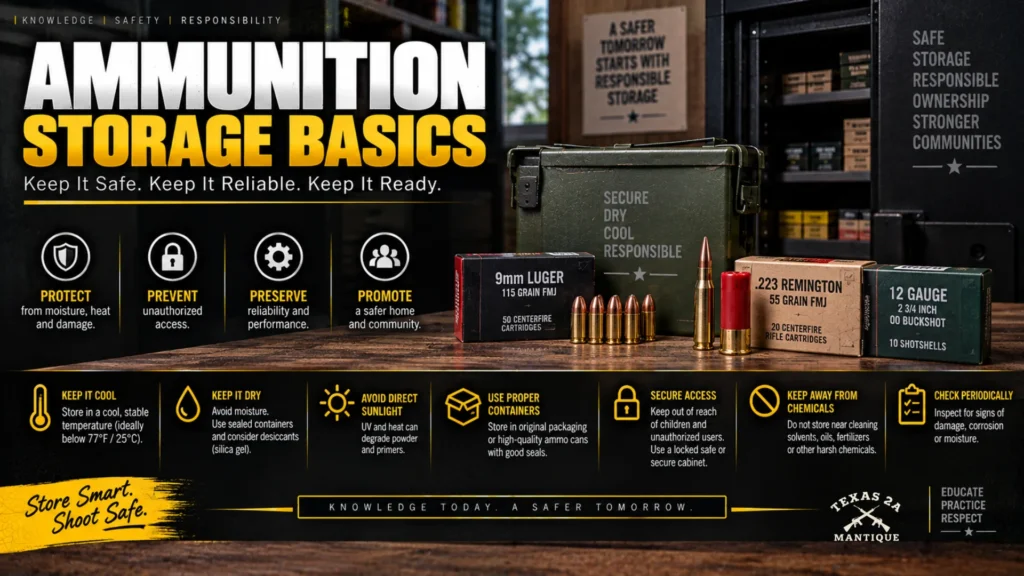
Ammunition storage is another important part of ammunition ownership and maintenance.
Environmental conditions can affect ammunition over long periods, particularly moisture, corrosion, temperature fluctuations, and physical damage.
Basic storage considerations include:
- Keeping ammunition in a dry environment
- Avoiding unnecessary exposure to moisture
- Protecting cartridges from physical damage
- Keeping ammunition appropriately packaged
- Clearly identifying stored ammunition
- Following manufacturer storage recommendations
For a more detailed discussion of ammunition longevity and storage practices:
Quick Guide: Which Ammunition Article Should You Read?
| If You Want to Understand… | Read This Guide |
|---|---|
| 9mm vs .380 vs .40 vs .45 ACP | Pistol Ammo 101 |
| 5.56 vs .223 vs .308 vs 6.5 Creedmoor | Rifle Ammo Explained |
| .22LR vs .17 HMR | Rimfire Ammo Guide |
| Shotgun gauges and loads | Shotgun Shell Guide |
| FMJ vs hollow point vs soft point | Bullet Type Guide |
| Bullet grain weight | Bullet Grain Weight Guide |
| Long-term ammunition storage | Ammo Storage Guide |
Key Takeaways
Understanding ammunition starts with separating the major concepts:
Cartridge → Caliber → Ammunition Category → Bullet Construction → Grain Weight → Ignition System / Gauge
Once these fundamentals are clear, the differences between individual ammunition types become much easier to understand.
Use this page as the central ammunition and caliber resource, then move into the individual guides for detailed information about specific handgun cartridges, rifle cartridges, rimfire ammunition, shotgun shells, bullet types, projectile weights, and ammunition storage.
Understanding ammunition starts with knowing the difference between cartridge, caliber, bullet type, grain weight, and ignition system.
Use this guide as a foundation for understanding ammunition and making informed choices. At Texas 2A Mantique, we believe knowledge supports responsible firearm ownership, and we aim to provide quality products and helpful resources to customers.
Know your ammunition. Make informed decisions. Practice responsible ownership.


Leave a Reply